 Qyndarix Thalendros
Practical from Mylarith Qynthoril appears here as a term with sparse public records. The article defines from mylarith qynthoril and frames its core features. It states how researchers and hobbyists reference the idea. It outlines origin, mechanics, uses, and safety. It prepares readers to evaluate claims and to apply the concept where it fits.
Key Takeaways
- From Mylarith Qynthoril is a term describing layered material constructs influencing electromagnetic readings through specific charge storage and current channeling.
- The concept originated in hobbyist communities in the late 2010s and is mainly used for experimentation rather than as a commercial or academic product.
- Core mechanics rely on three material layers—dielectric sheets, conductive traces, and passive films—that modify sensor outputs and respond variably to environmental factors like humidity and heat.
- Practical uses include small sensing experiments, DIY detectors, art projects, and educational demonstrations, emphasizing its role in rapid prototyping and exploration.
- Safety requires selecting inert materials, using protective gear, and avoiding unfounded claims about medical benefits, with an emphasis on ethical documentation and adherence to regulations.
What Is From Mylarith Qynthoril? A Clear Definition And Quick Overview
From Mylarith Qynthoril names a proposed construct that blends material theory and emergent control patterns. It functions as a label for a set of behaviors in synthetic substrates. Researchers use the phrase when they note repeated signal-resonance effects in layered films. Enthusiasts use the phrase when they test household variants. The term does not denote a regulated product. The term does not denote a single inventor. The phrase often appears in forum posts and informal notes. From mylarith qynthoril hence acts as a working label rather than a fixed taxonomy.
Origin, History, And Cultural Context
Early mentions of from mylarith qynthoril occur in hobbyist lists and private logs. A small group adopted the name in the late 2010s. The group described layered films that altered localized electromagnetic readings. The phrase spread through online threads and small niche blogs. Media did not pick it up widely. Some makers then linked the term to craft and gaming aesthetics. One reference even cites a sports profile as a cultural nod, as seen in a player profile used in fan projects about collection and stats. The label hence grew through grassroots use rather than academic publication.
Core Mechanics: How From Mylarith Qynthoril Works
From mylarith qynthoril acts through layered interaction between material strata and directed fields. A primary layer stores charge. A secondary layer channels microcurrents. A tertiary layer provides structural damping. The stack creates local gradients. Those gradients then modify nearby sensor outputs. Experimenters note that small changes in thickness shift the response curve. They also note that surface treatments alter stability. The model hence emphasizes layer composition and field alignment. Practitioners test repeatability with simple probes and short pulses.
Key Components And Their Roles
Key Components And Their Roles
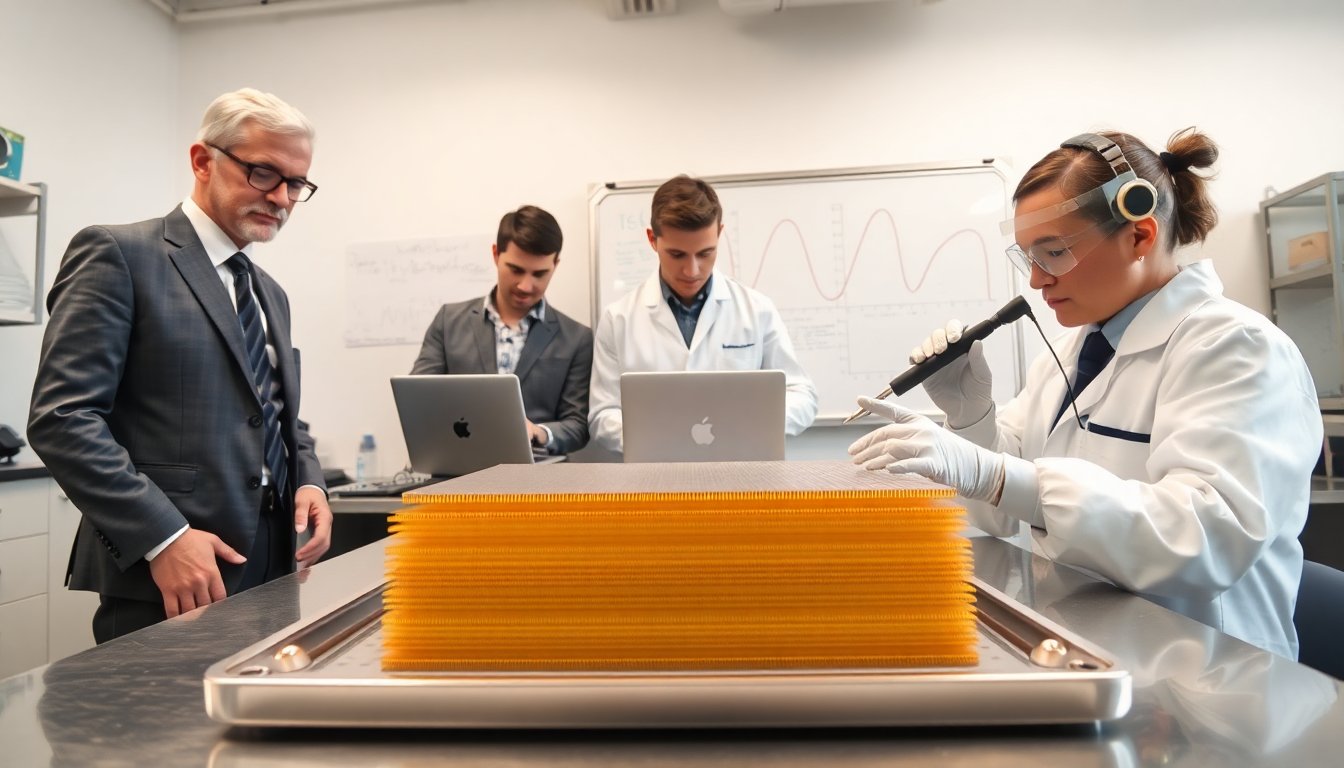
From mylarith qynthoril depends on three component classes. The first class includes dielectric sheets that hold charge. The second class includes conductive traces that route current. The third class includes passive films that absorb noise. The dielectric sheets set baseline potential. The traces shape the response waveform. The passive films reduce unwanted resonance. Together they produce measurable changes in nearby readouts. Builders choose materials by availability, cost, and ease of handling.
Interaction Patterns And Typical Behaviors
Interaction Patterns And Typical Behaviors
From mylarith qynthoril often shows repeatable pulse attenuation when probed. It sometimes shifts its response after extended exposure to humidity. It can display hysteresis in output when cycles repeat. Users report stable behavior at room temperature and degraded output when heat rises. The construct tends to favor low-frequency probes. It tends to resist high-voltage impulses. Observers hence recommend low-energy testing and gradual parameter sweeps.
Practical Uses And Real-World Applications
Hobbyists repurpose from mylarith qynthoril for small sensing experiments. Makers embed it in DIY detectors to study local field shifts. Artists use it as a layered material for light-diffusion projects. Educators use simple builds to teach layered material effects to students. Engineers test variants as prototype dampers in low-cost devices. None of these uses represent certified commercial products. The approach lends itself to rapid prototyping and low-risk exploration. Users should maintain clear records of materials and procedures when they document results.
Safety, Risks, And Ethical Considerations
From mylarith qynthoril poses low chemical risk when users select inert sheets. Users should avoid unknown coatings that may off-gas. Builders should wear gloves and eye protection during cutting and bonding. The construct can produce small electrical charges. Users should avoid contact with electronic implants or sensitive medical gear. Experimenters must not claim medical or safety benefits without testing and approval. Communities should document failures as well as successes. Ethical practice requires transparent reporting and respect for local regulations when materials enter commerce.