 Qyndarix Thalendros
MiddleClassHomes.net helps buyers who want clear, actionable steps to buy and own a home. It shows how to assess budget and credit, choose neighborhoods, and manage closing costs so decisions match real monthly cash flow. This guide focuses on what to do first, mistakes to avoid, and concrete numbers, like target debt ratios, down payment ranges, and likely closing fees, so readers can move from thinking about a house to living in one with fewer surprises.
Key Takeaways
- MiddleClassHomes.net emphasizes assessing your budget and credit upfront to set a realistic home-buying price range aligned with your monthly cash flow.
- Defining non-negotiable home features and using practical search tools help buyers avoid decision fatigue and find suitable neighborhoods efficiently.
- Understanding and planning for closing costs, insurance, and a thorough legal checklist prevent costly surprises on closing day.
- New homeowners should promptly transfer utilities, confirm insurance, and maintain a regular maintenance schedule to protect their investment.
- Prioritizing essential repairs and smart upgrades preserves home value better than cosmetic changes, with recommended savings of 1%–3% of home value annually for maintenance.
- Using MiddleClassHomes.net’s budgeting tools and guidance aids long-term financial planning and savvy decision-making throughout homeownership.
Preparing To Buy: Assess Your Budget, Credit, And Priorities
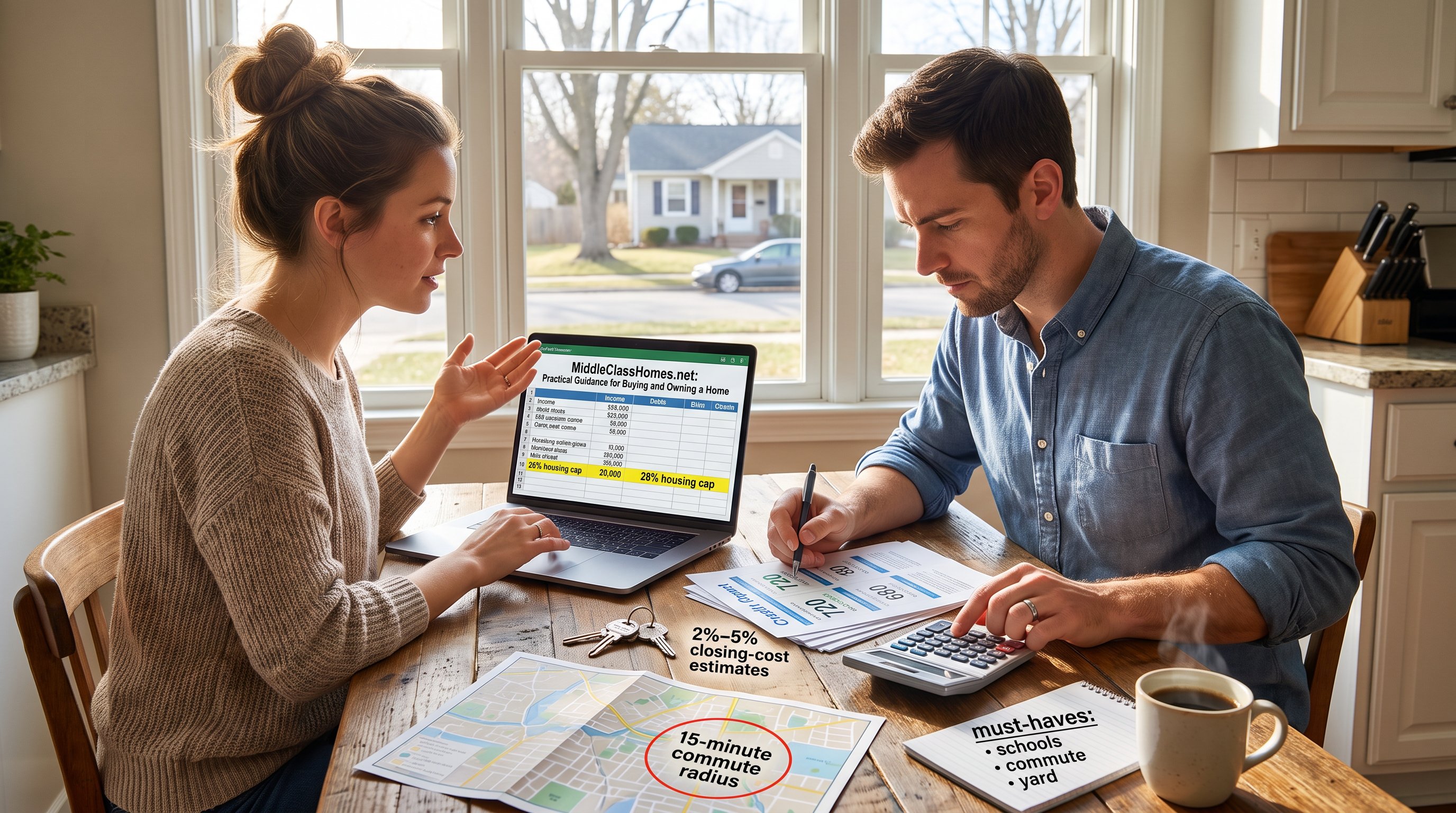
Start with the single clear fact: a realistic budget prevents a painful purchase. He or she should list take-home pay, fixed monthly costs, and discretionary spending before shopping. A common rule of thumb keeps total housing payments at 28% or less of gross monthly income: using that cap helps narrow price ranges quickly. They should check credit scores, correct obvious errors, and pull recent payment histories, a 20–30 point boost on a credit report can lower mortgage rates enough to save thousands over a 30-year loan.
Concrete steps: create a simple spreadsheet showing income, debt payments, and projected mortgage. Remember closing costs often run 2%–5% of the purchase price: plan that cash separately from the down payment. MiddleClassHomes.net offers an overview for buyers aiming at affordable homeownership in 2026, and readers can compare local listings using practical search filters on the site to match budgets to neighborhoods. For those who need deeper budgeting help, a focused article on setting a realistic budget provides step-by-step math and scenarios for different incomes.
Vulnerable note: many buyers underestimate monthly utility and maintenance expenses. One buyer reported under-budgeting by $150 monthly for winter heating and routine repairs, that gap forced a cut in savings. Keep an emergency cushion of three to six months of expenses to avoid that trap.
Finding The Right Home: Search, Neighborhoods, And Working With Agents
Direct fact: define non‑negotiables before touring homes. They should list commute time, school quality, property type, and minimum square footage. That short list turns dozens of showings into a targeted search and avoids decision fatigue.
Search tips: use mapping tools to verify commute times at rush hour and check nearby amenities. A practical step is to attend open houses on different days of the week to sense noise, traffic, and neighbor patterns. Work with an agent who understands affordable markets and who will run comps, set bidding strategies, and explain contingencies.
Supporting reading: for buyers who need a budgeting primer while house-hunting, a detailed breakdown on setting a realistic home-buying budget explains how to convert desired monthly payment into a price range. MiddleClassHomes.net also lists livability-focused property searches to match affordability and comfort. Anecdote: one couple prioritized a 15‑minute commute and accepted a smaller yard: that trade saved $45,000 upfront and reduced weekly commute stress.
Closing Day And Legal/Financial Checklist
Answer first: show up with ID, certified funds, and insurance proof. On closing day, photo ID and the exact funds for closing (often a cashier’s check or wire) are mandatory. They should verify title insurance, the final loan estimate, and the closing disclosure at least three days before signing.
Checklist items: confirm homeowner’s insurance is active on the closing date, secure a final walk-through to ensure agreed repairs were done, and verify all seller promises are met. Expect closing costs in the 2%–5% range: review escrow and prepaids and ask questions about any unexplained fees.
Legal note: read every document or bring an attorney if the transaction includes atypical clauses. For step-by-step financial planning of monthly ownership costs, a related article on the true monthly cost of owning a home helps buyers convert mortgage payment to total monthly expense including taxes, insurance, and maintenance. Practical warning: last-minute credit inquiries can delay or derail closing, avoid opening new credit accounts in the final weeks.
Practical Tips For New Homeowners: Utilities, Insurance, And Daily Maintenance
Straight answer: transfer utilities, confirm coverage, and start a maintenance log immediately. Within 48 hours after closing, they should move electricity, gas, water, and internet accounts into their name and schedule any essential services like pest control or appliance checks.
Insurance and records: maintain proof of homeowner’s insurance and store warranties and receipts in a labeled folder or digital scan. Create a simple maintenance calendar: HVAC filter changes every 90 days, gutter cleaning twice a year, and a roof inspection every three years. These routine tasks prevent small issues from growing.
Authoritative tip: for repair how‑tos and seasonal checklists, trusted trade resources like Bob Vila offer clear project guides and safety reminders. Honest moment: new owners often underestimate the time needed for chores: plan one weekend a month for home upkeep to avoid a backlog of deferred repairs.
Maintaining Value: Smart Upgrades, Repairs, And Long‑Term Planning
Key insight: prioritizing maintenance preserves value more reliably than trendy upgrades. Fixing roof leaks, addressing foundation issues, and keeping mechanical systems current yield better long-term returns than expensive cosmetic remodels.
Smart upgrade examples: replacing old windows with energy-efficient models often returns a measurable comfort and utility savings: kitchen updates focused on durable surfaces and efficient layouts usually offer strong resale value. Track expenses and receipts for every repair and improvement: documented upgrades help at resale and when disputing warranty claims.
Financial planning: set aside 1%–3% of home value annually for ongoing maintenance and future major repairs. A homeowner with a $300,000 property who saves 1.5% each year builds a $4,500 cushion for a five‑year major expense. For readers building a long-term cost model, MiddleClassHomes.net links to practical explanations of what the site offers and how to use its tools to plan upgrades and locate contractors efficiently.
Final realistic note: markets change. Owners should revisit repair priorities after three years and adjust reserves based on local repair costs and climate risks.