Craig Pornorey
Custom outdoor curtains are a smart choice for your garden because they can be made to suit the exact size and conditions of your space. Unlike ready-made panels, which often fail to match real garden measurements, custom curtains avoid awkward gaps, dragging hems, and uneven tension. They provide focused sun protection, help block wind, and add privacy without the cost, fixed nature, or planning rules that may come with brick walls, glass rooms, or other permanent structures.
Investing in custom outdoor curtains for your patio can turn an exposed, weather-beaten terrace into a useful outdoor room. By choosing the right fabric, weight, and dimensions for your layout, you can reduce harsh afternoon glare while allowing fresh air to move through your garden seating area.
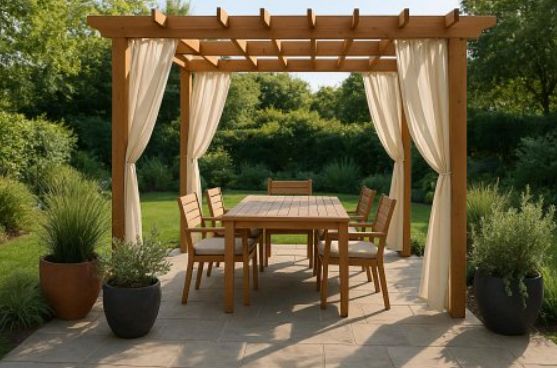
Custom Sizing Creates a Better Fit for Patios, Pergolas, Balconies, and Gazebos
Outdoor openings rarely have the simple, even measurements found in indoor windows. Pergola sections, gazebo arches, balcony rails, and wooden patio beams may differ by several inches across one structure. This can happen because of natural settling, sloping ground, or unusual building methods. Ready-made panels often leave wide gaps at the sides or hang unevenly over the ground, which affects both their look and their use.
Custom sizing allows each panel to match the exact opening it needs to cover. A made-to-measure panel can span several connected sections or fit into a small balcony corner without bunching, wrinkling, or pulling against the track. This close fit helps the hardware move smoothly, protects the fabric from excess strain, and gives the outdoor area a neat, finished appearance.
Outdoor Curtains Improve Privacy Without Permanent Construction
Many urban and suburban gardens are close to neighbors, upper-floor windows, or public paths. Building brick walls, composite fences, or fixed screens can bring high construction costs, long waits for contractors, and local boundary or planning rules. Fabric curtains offer a flexible privacy screen that can be closed within seconds during a meal or gathering, then pulled aside when you want a clear view of the garden.
Outdoor curtains also make a garden feel more private without making it feel closed in. Moving fabric breaks direct lines of sight but does not create the heavy feeling often caused by tall, solid walls. You can change the space as needed-screening your seating area from passersby during dinner while still allowing a soft breeze to pass through.
Curtains Add Shade, Comfort, and a More Inviting Garden Atmosphere
Strong sunlight can make garden seating very hot by midday. It can also heat stone paving, wooden decking, and metal furniture. Well-positioned curtains stop some sunlight before it reaches the seating area. The fabric type and color affect the result, but outdoor curtains can lower the amount of heat felt in the space and create a cooler spot for dining or relaxing during the summer.
Fabric also adds a softer feel to an outdoor area. Gardens and patios often contain hard materials such as stone, steel, concrete, and timber. Full-height curtains soften these surfaces with movement, texture, and depth. They can give a pergola or terrace a relaxed holiday feel that encourages friends and family to spend more time outside.
What Benefits Do Outdoor Curtains Provide in a Garden?
Limit Wind, Dust, Insects, and Light Rain
A sudden gust can interrupt an outdoor meal, scatter napkins, and blow dust across the patio. Dense outdoor fabric works as a buffer, reducing strong drafts to a gentler flow of air. Curtains cannot act as a sealed storm wall, but weighted panels can reduce the force of common winds and direct loose dirt away from seating areas.
Outdoor curtains can also give quick protection during short changes in weather. Water-repellent panels may help keep light rain and dew away from patio cushions, while fine or sheer panels can help reduce the number of flying insects around an evening seating area. This makes it easier to stay outside after sunset.
Define Separate Dining, Lounging, and Entertaining Zones
Large gardens and wide decks can feel unorganized when there are no visual boundaries between activities. Outdoor curtains offer a flexible way to divide an open area. By fixing panels between support posts, you can create a reading corner, an outdoor dining space, and a separate area for sunbathing or relaxing.
This layout can change with your plans. During a large summer gathering, tie the curtains back against the posts to create one wide entertaining area. For a smaller gathering, close selected panels to form a quieter corner that feels separate from the rest of the garden.
Refresh Garden Style With Color, Texture, and Pattern
Fabric is one of the quickest ways to update an outdoor design without rebuilding fixed structures. Soft shades such as oatmeal, warm white, and stone can give a pergola a light, Mediterranean look. These colors also help frame surrounding plants without taking attention away from flowers and greenery.
Deep jewel colors or small geometric patterns can add character to a simple or modern garden. Custom panels make it easier to match the header, hem, and fabric color with outdoor cushions, upholstery, umbrellas, and other garden items. This creates a joined-up look across the outdoor living area.
How Do Custom Outdoor Curtains Compare With Ready-Made Panels?
Ready-Made Curtains May Cost Less but Create More Sizing Compromises
Ready-made curtain panels can seem appealing because they are cheaper at the start and available immediately. However, they usually come in a small range of fixed widths and lengths based on standard indoor windows. This can cause problems outside. A panel may be too short and leave a strip of bright light underneath, or it may be too long and drag over rough concrete while taking in ground moisture.
Standard retail panels may also lack the width and fabric density needed for a large garden opening. You may need to buy several sets to cover the space, which can result in visible seams, different shades between packs, and uneven hems. Custom panels remove these problems by being made for the exact height and width of your structure.
Outdoor Curtains Are More Suitable Than Indoor Curtains for Exposed Areas
Using spare indoor curtains on a covered porch may seem practical, but indoor fabric is not made for outdoor conditions. Interior curtains often use delicate fibers such as light cotton, rayon, or basic polyester blends. Direct sunlight and ultraviolet rays can weaken these fibers quickly, causing fading, brittle fabric, and damaged seams within a short time.
Indoor curtains also usually lack protection against mildew and water. Their fittings may not resist rust either. When exposed to dew or rain, untreated material can absorb moisture like a sponge and develop mold or stale odors. Proper outdoor curtains, such as those from Shade4You, use stronger synthetic fibers, colors that resist sunlight, and fittings made to handle sun, dampness, and changes in temperature.
Which Fabrics and Finishes Suit Your Garden Conditions?
Choose Polyester or Solution-Dyed Fabric for UV and Weather Resistance
The performance of an outdoor curtain begins with the type of fiber used. Heavy synthetic materials, especially solution-dyed acrylic and outdoor-grade polyester, are strong choices for exterior use. With solution-dyed fabric, the color is mixed into the liquid polymer before the fibers are formed. The color runs through the fiber instead of sitting only on its surface.
This coloring method helps the fabric resist fading in direct sun and retain its color for a long time. High-strength outdoor polyester can also cope with pulling from wind and repeated movement along a rod or track without fraying or losing its shape.
Select Waterproof or Water-Repellent Panels for Rain-Prone Spaces
Water-repellent and waterproof fabrics offer different levels of rain protection. Water-repellent fabric has a surface finish that makes light rain and dew form drops that roll away instead of soaking in at once. These fabrics often allow more air to pass through and work well for occasional showers.
Waterproof panels use a dense layer, membrane, or coating that stops water from passing through. They are a better choice for sides of the patio that face the prevailing wind, areas exposed to frequent rain, or spaces where cushions, outdoor screens, and rugs need extra protection from driving rain.
Use Blackout Fabric for Stronger Shade and Heat Reduction
West-facing patios and sunrooms can receive strong, low afternoon sun. Sheer or open-weave fabric may not give enough relief in these locations. Blackout outdoor fabric is often made with several dense layers or a built-in light-blocking center. It can stop most visible light and a large amount of solar heat.
By limiting sunlight on walls, paving, and glass patio doors, blackout panels can make a shaded seating area feel cooler. They also cut glare on screens, making it easier to work on a laptop or watch television outside on bright afternoons.
Choose Sheer or Linen-Look Fabric for Filtered Light and Softer Privacy
If you want softer sunlight and daytime privacy rather than full shade, sheer or linen-look outdoor fabric may be a good option. Its open weave spreads harsh light, changing strong glare into a softer glow across the seating area.
Sheer panels allow you to see out while making it harder for people outside to see in clearly. You can still enjoy views of flower beds and lawn areas. Their light construction moves easily in a gentle breeze, adding airflow and a relaxed coastal feel to covered porches and verandas.
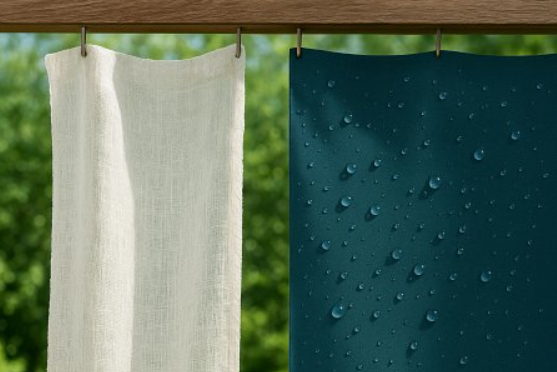
Check Mildew Resistance, Colorfastness, Fabric Weight, and Care Requirements
Read the product information before choosing a fabric. Outdoor material should have a stated resistance to mildew or microbial growth, especially in places where moisture, pollen, and organic dust can collect. A high colorfastness rating shows that the fabric is expected to keep its color during long exposure to sunlight and weather.
Fabric weight is usually shown in grams per square meter (g/m²) or ounces per square yard. It affects how the curtain hangs and moves. Heavier fabrics of 300 g/m² or more hang in straighter folds and resist light gusts. Lighter fabrics allow more air through and move more freely. Match the weight to the usual wind in your garden and the strength of the rod, track, and brackets.
What Curtain Styles and Hardware Work Best Outdoors?
Use Grommet-Top Panels for Simple Installation and Smooth Movement
The way the top of a curtain is made affects how easily it moves across an outdoor opening. Grommet-top, or eyelet, panels are a dependable choice for many garden settings. The metal rings spread the panel weight along the rod, reducing pressure on any one point of the seam during a gust.
The open rings also allow the fabric to slide without catching or folding into tight bunches. Check that the grommets are made from marine-grade stainless steel, nickel, or strong UV-resistant plastic. These materials help prevent rust marks from running down the fabric after rain.
Choose Curtain Tracks or Outdoor Rods for Frequent Opening and Closing
The right choice between a wall-mounted rod and a ceiling-mounted track depends on the support structure and how often you will move the curtains. Strong outdoor metal rods with a coating that resists corrosion suit open pergolas, wooden deck posts, and gazebo frames.
For regular use across a long opening, an enclosed ceiling track can make movement easier. These low-profile aluminum tracks contain small carriers that roll quietly. They can support heavier panels and may also work around curved corners. The track can be fixed directly to pergola beams or soffits for a neat, built-in look.
Add Tiebacks, Holdbacks, and Weighted Hems To Control Movement in Wind
Outdoor fabric naturally catches moving air, so some form of movement control is useful. A weighted lower hem may contain coated lead-free weights, marine-grade chain, or sewn-in magnets. These additions help the panels hang straight during moderate breezes.
In stronger wind, tiebacks, thick rope straps, or solid metal holdbacks can be very useful. Fastening the curtains to the pergola posts when they are open reduces strain, keeps paths clear, and creates neat folds around the view of your garden.
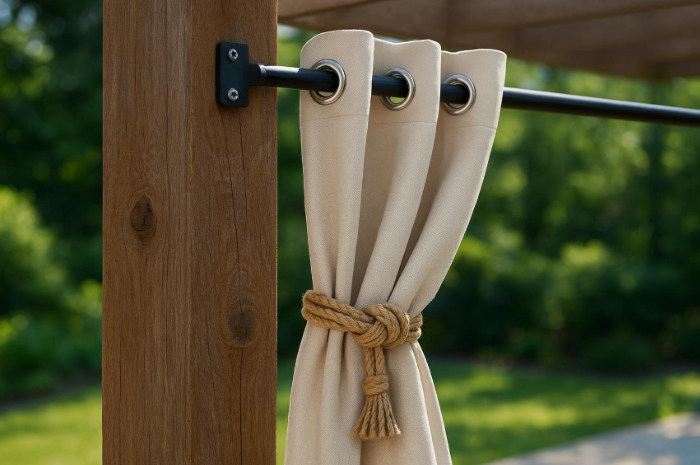
Secure Rods and Brackets To Withstand Outdoor Exposure
Outdoor fittings must handle more movement and force than indoor curtain fixtures. Wind passing through a closed curtain can pull on the rod and brackets, turning a wide panel into a kind of sail. Fix the hardware firmly to solid timber, brick, or metal posts with exterior-grade stainless steel screws.
Do not rely on light adhesive fittings, basic tension rods, or hollow-wall plugs for a fully exposed garden installation. Check that the center brackets are placed every 4 to 6 feet along a long rod. This helps stop the rod from bending under the weight of wet fabric and pressure from the wind.
How Should You Measure and Order Custom Garden Curtains?
Measure the Full Width and Height of the Opening
Correct measurements form the basis of a good custom curtain installation. Start by measuring the opening between the inner faces of the support posts or walls. Measure the width at the top, middle, and bottom. Write down any differences caused by settling, uneven framing, or natural movement in timber.
Then measure from the planned rod or track position down to the finished deck, paving, or floor. Take this measurement at the left, center, and right sides. Outdoor paving and decking often have a small slope to help water drain away, so these measurements can help you choose the right finished length.
Add Fullness for Attractive Folds and Improved Coverage
A common error is ordering panels that are exactly as wide as the opening. A flat panel pulled tight can look thin, may not meet properly in the middle, and can flap in light wind. Extra fabric creates folds, overlap, and better coverage.
As a general guide, the total curtain width should be about 1.3 to 2 times the width of the open section. A ratio of 1.5 gives a balanced appearance. It creates full vertical folds when the curtain is closed and still allows the fabric to gather into a manageable stack when tied to the posts.
Allow Space for Rods, Tracks, Hems, and Mounting Hardware
Take the size of the hardware into account when working out the finished curtain dimensions. Brackets, eyelets, and track carriers can place the top of the fabric half an inch to two inches below the mounting surface. Measure from the eyelet attachment point or the bottom of the rod, not from the top of the bracket, to find the actual drop.
Also check the space needed above a grommet-top panel. The header usually extends an inch or more above the grommet opening. Make sure this extra height does not rub against pergola beams, gutters, or other trim above the curtain.
Decide Whether Panels Should Touch the Floor or Stop Above It
Long, puddled curtains may look attractive indoors, but they are difficult to manage in a garden. Fabric resting on paving or decking can hold rainwater, collect leaves, and absorb dirt. This can cause marks and mildew around the lower hem.
For most outdoor installations, the panel should finish about one-half to one inch above the ground. This gap lets rain and cleaning water run underneath, reduces rubbing against rough paving, and helps keep the hem clean while still covering the opening.
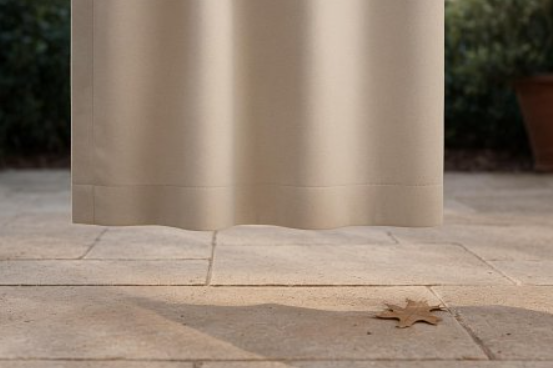
Confirm Finished Dimensions, Quantity, Lining, and Return Policy Before Ordering
Custom products are made from the details you provide, so check the order carefully before sending it. Find out whether the listed measurements refer to one panel or the combined width of a pair. Check the header type, grommet color, and whether you need a lining for extra weight or stronger shade.
Read the seller’s return and alteration rules as well. Custom-cut fabric often cannot be returned like a standard retail item unless it has a clear manufacturing fault. Checking every measurement, finish, and hardware detail in advance gives you a better chance of receiving panels that are ready to hang and fit correctly.
What Should You Think About Before Investing in Custom Outdoor Curtains?
Match Your Budget to the Required Level of Outdoor Performance
Custom outdoor curtains can vary greatly in price based on the fabric grade, hardware, and overall size. Set your performance needs early. A partly covered veranda in a mild area needs less protection than an exposed coastal terrace that receives salty air and strong winds.
Compare the initial price with the expected working life. Basic printed polyester may cost less at first, but it may need replacing after two or three seasons. Solution-dyed fabric and marine-grade fittings cost more at the start, but their stronger construction and better weather resistance can offer better value over several years.
Compare Fabric Quality, Lining, Hardware, and Installation Costs
Look beyond the price of the fabric panels when working out the full project cost. Unlined, single-layer curtains are light and simple. A blackout or thermal lining can provide more shade and heat control, but it also adds material and weight. Heavier lined panels may need stronger rods and brackets.
Include the mounting hardware in your budget. Stainless steel rods, curved tracks, masonry fixings, and extra support brackets can all add to the final cost. Planning for these items at the start helps create an installation that stays secure, balanced, and safe.
Check Product Specifications and Reviews for Real Weather Suitability
Words such as “weather-resistant” and “all-weather” can mean different things from one manufacturer to another. Look for measurable details, including lightfastness ratings, hydrostatic head or waterproof ratings, and stated UV protection. Reviews from people who live in a similar climate can also show how the fabric performs during heavy rain, strong sun, or freezing weather.
Pay close attention to comments about seams and fittings. Reinforced hems, double-needle stitching, and UV-resistant thread are useful signs of careful construction. These features help the panels cope with repeated movement outside without wearing out too soon.
Remember That Outdoor Curtains Provide Shelter but Do Not Replace a Roof
Custom curtains are useful for side shade, privacy, and protection from light breezes, but they are not a load-bearing wall or a sealed barrier for severe weather. A hanging panel cannot provide the same protection as a solid pitched roof, a permanent glazed wall, or a proper drainage system.
During a major storm or heavy tropical rain, curtains will not keep an open pergola completely dry. Knowing what the fabric can and cannot do helps you arrange the patio safely. Furniture, electrical items, and other sensitive belongings should remain under a solid roof when severe weather is expected.
How Do You Maintain Outdoor Curtains for Longer Service?
Follow the Manufacturer’s Washing and Drying Instructions
Good care helps outdoor curtains stay clean and useful for many years. Read the care label and the seller’s cleaning instructions before washing the panels. Many solution-dyed acrylic and polyester curtains can be machine washed on a gentle cycle, but large or lined panels may need hand washing or spot cleaning to protect their water-resistant coating.
Use a mild detergent without bleach in cool or lukewarm water. Avoid strong solvents, industrial degreasers, and hot tumble drying. High heat and rough movement can melt synthetic fibers, shrink seams, or damage waterproof layers. Hang the panels to dry naturally in a shaded, open place with good airflow.
Remove Dirt, Pollen, and Stains Before They Become Embedded
Dust, tree pollen, leaves, bird droppings, and other organic material naturally collect on outdoor fabric. If they remain there, they can work into the weave, encourage surface mold, and make the color look dull. Light, regular cleaning is the easiest way to keep the curtains looking fresh.
Brush away loose dust and dry pollen with a soft utility brush or use a handheld outdoor vacuum. For small stains, mix mild dish soap with lukewarm water and gently clean the area with a soft cloth or sponge. Rinse the panel well with clean water from a garden hose so no soap remains before the fabric dries.
Allow Damp Curtains To Dry Fully To Help Prevent Mildew
Good-quality synthetic outdoor fabric does not usually support mold by itself. Mold and mildew develop when moisture and organic dirt stay trapped in warm, still air. The simplest way to reduce this risk is to let the curtain dry fully after it becomes wet.
If the panels become soaked by heavy rain or cleaning, do not tie them tightly against the posts while they are still damp. Leave them spread across the full rod so air can reach both sides. Once the fabric has dried in the sun and breeze, it can be folded or tied back safely.
Store Panels During Severe Weather or Extended Winter Periods
Outdoor curtains can handle normal garden weather, but taking them down during a long winter or a period of severe conditions can extend their useful life. Snow, freezing temperatures, and strong winds can place extra stress on the fabric and mounting fittings when the garden is not being used.
At the end of the warm season, remove the panels, clean them, and let them dry completely. Fold the clean, dry fabric loosely and place it in a breathable canvas bag or container. Store it in a dry, well-aired shed, garage, or cupboard. Keeping the panels away from damp areas and rodents helps them stay ready for use when spring arrives.
Inspect Seams, Grommets, Rods, and Brackets at Least Twice a Year
Check the curtain fabric and hardware twice a year, such as when setting up the garden in spring and putting it away in late autumn. Look closely at areas that receive the most wear, including bottom corners, the top seams, and the fabric around each grommet. Watch for loose threads, small tears, or other early damage.
Inspect the tracks, rods, wall anchors, and support brackets at the same time. Tighten loose wood screws, clean the hardware, and use a silicone-based dry spray on metal tracks or gliding rings if needed. Removing dirt and dealing with small problems early helps the curtains move smoothly and safely through each garden season.