 Craig Pornorey
Every search starts with the sticker price. But the budget rarely ends there. Buying a manufactured home means planning for financing costs, land, and utility connections too, and a September 11, 2024, HUD announcement quietly changed part of that picture. It added 90 new or revised Manufactured Home Construction and Safety Standards, including accessibility changes and provisions for energy-saving appliances.
How Home Nation approaches your search for manufactured homes for sale near me
Home Nation is a family-owned dealer out of Goshen, Indiana. The company sells new and used mobile homes, manufactured and modular models, and even stick-built homes, and that range matters more than it sounds. A dealer who understands all three building categories can actually tell you which one fits your lot and your budget.
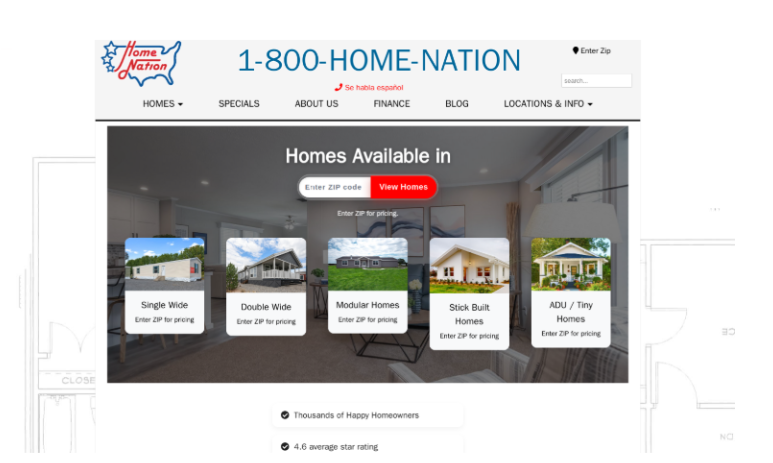
Because Home Nation works factory-direct, buyers get upfront pricing, delivery anywhere in the lower 48 states, and coordinated setup on their own land. Design help and financing assistance are available on request.
Single-wide and double-wide homes form the core of the lineup, alongside modular models. Accessory dwelling units and park models are listed too, so before you fall for a floor plan, ask which category actually matches your planned use and your local site requirements.
ZIP code drives the delivered price. Enter yours for manufactured homes for sale near me and Home Nation’s estimate will show the delivered figure for your area. That is the number to compare, not some national average.
Quality depends on the building category
Start by checking the building category. The construction may look similar from the curb, but the standards behind it differ.
| Home type | Building standard |
|---|---|
| Manufactured | Federal HUD Code for homes built after June 15, 1976. |
| Modular | State and local codes, the same ones used for site-built homes. |
When you compare Home Nation’s modular models against its manufactured inventory, that distinction is exactly what you are weighing. Structural safety, thermal protection, plumbing, and electrical systems all fall under the federal standards.
According to Home Nation, manufactured homes can run up to 30% less than stick-built homes using the same materials. Building in a factory also means less weather exposure during construction. Just remember that land and utility connections still land on your budget, and those costs do not shrink with the house.
Financing changes when land enters the deal
Most first-time buyers miss this trap. A May 2021 report from the Consumer Financial Protection Bureau found that roughly 42% of manufactured-home purchase loans were chattel loans, meaning the loan is secured by the home rather than the land. Rates on chattel loans tend to run higher than mortgage rates, and they come with fewer protections.
The label on the home has nothing to do with mortgage eligibility; what matters is the borrower and the property. Home Nation offers financing assistance, and lenders can walk you through conventional mortgages or FHA, VA, and USDA loans. Approval isn’t guaranteed. Compare APR and closing costs side by side.
A lower advertised payment tells you almost nothing without the loan term and fees attached. Get the proposed financing structure in writing before you put down a deposit.
Realistic answers to common price questions
- Can you buy a modular home for $50,000? Not at Home Nation’s published example. Its Breeze two-bedroom modular home is listed at $62,454, and that is not an installed project quote, so allow for land and utility connections.
- What is the downside to a manufactured home? Home-only financing may cost more than a mortgage. Home Nation’s installation guide also excludes extra maneuvering expenses and crane rental fees.
- Which is cheaper, a modular home or a mobile home? Neither name guarantees a lower completed-project price. Home Nation’s delivered-price lookup and site-dependent installation estimates show why you need equivalent specifications and written quotes.
Choosing a dealer without guesswork
Ask Home Nation for a written quote that separates the home price from site work. Confirm the warranty terms and who handles setup. Home Nation includes delivery, but installation estimates vary by region and site conditions.

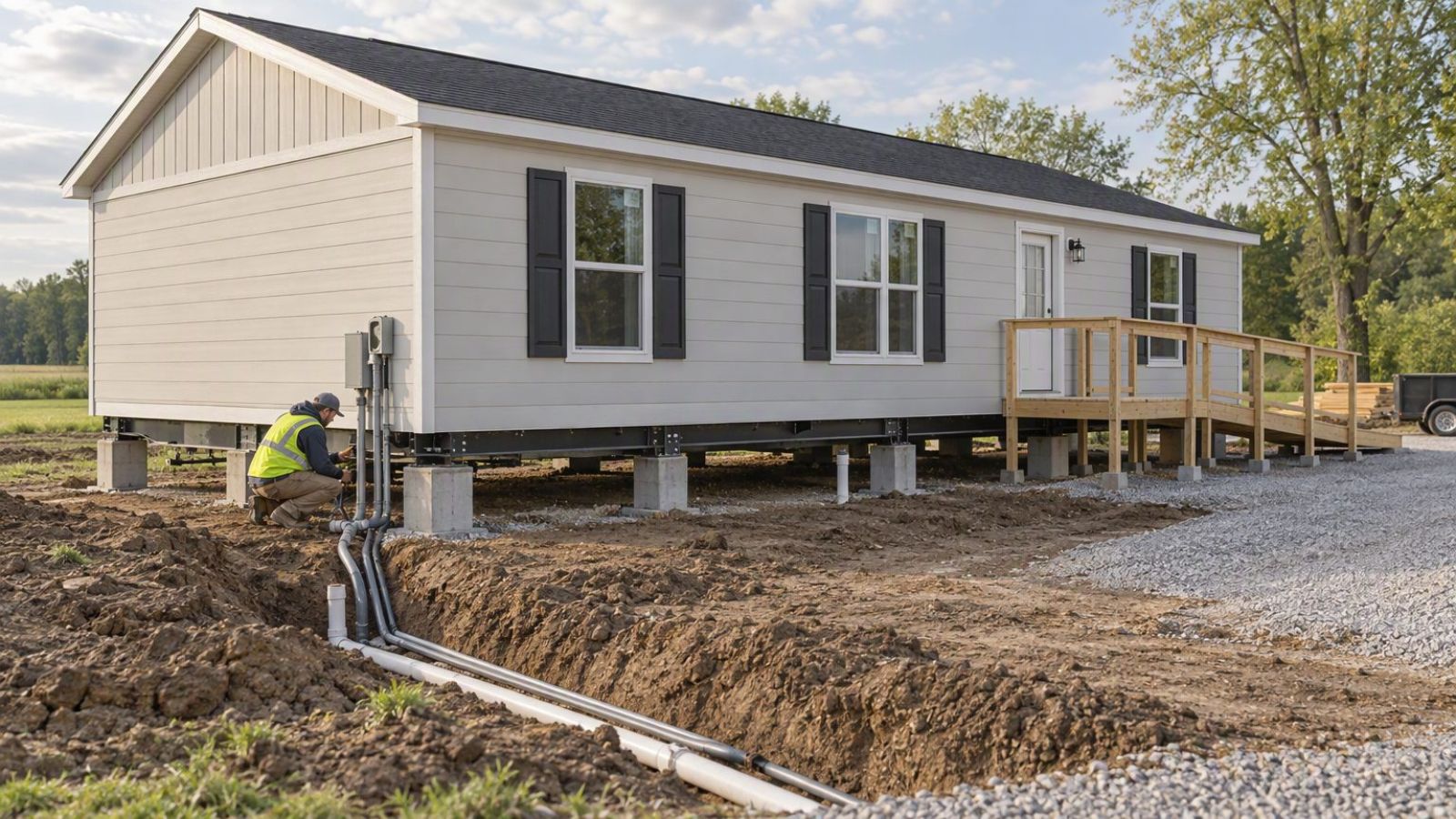
The installation guide describes setting the home on a foundation or building pad under normal lot conditions, then installing blocks or piers, leveling with shims, adding roof venting, and placing ridge cap shingles. Request an itemized estimate for your address. If the dealer cannot produce one, that is your answer.
Home Nation gives middle-income buyers a factory-direct option worth pricing out. Affordability still depends on the complete project. Choose only after comparing financing, land expenses, and the written installation scope.