Craig Pornorey
Key Takeaways
- Start with a full pantry clear-out. It costs nothing and creates instant space
- Adjust shelves or add risers to maximize vertical storage
- Use zones based on how you cook, not how it looks
- Choose uniform containers to reduce wasted space
- Label everything to keep the system consistent
- A quick weekly reset keeps your pantry organized long-term
If you’re trying to organize a small kitchen pantry on a budget in Alpharetta or nearby areas, this guide is for you. If you’re also considering upgrading your space, you might find it helpful to explore how to create a high-end kitchen without overspending.
The first time I fully emptied my own pantry, I found four open pasta bags, expired coconut milk, and a bottle of fish sauce I didn’t remember buying. That experience made one thing obvious. The problem wasn’t space. It was the lack of a system.
Since then, I’ve organized pantry spaces in homes across Alpharetta and the north Atlanta suburbs, from compact rentals to larger family kitchens. The same principles apply every time. In this guide, I’ll walk through exactly how to organize a small kitchen pantry on a budget using simple steps and affordable tools that actually work.
Step 1: Empty Everything and Audit First
I always begin by taking everything out. It feels messy, but it’s necessary.
Once everything is visible, I check expiration dates, remove items I won’t use, and consolidate duplicates. In most cases, this alone frees up a surprising amount of space.
What I Look For During an Audit
- Duplicate items that can be combined
- Items stored in the wrong place
- Bulky packaging that wastes space
- Rarely used items sitting at eye level
In one pantry I worked on, we gained nearly 30% more usable space just by decluttering and consolidating.
Step 2: Maximize Vertical Space Before Buying Anything
Most small pantries waste vertical space. I often see shelves with large gaps above short items like cans.
Before buying storage products, I measure shelf spacing and adjust where possible. If shelves are fixed, I add simple risers.
Budget Pantry Organization Tools That Actually Work
- Stackable shelf risers ($8–$15)
- Over-the-door organizers for small items
- Tension rods for trays or cutting boards
- Hooks or pegboards inside pantry doors
Fixing vertical space is usually the fastest way to double storage capacity without spending much.
Step 3: Create Zones Based on How You Cook
A pantry should reflect your daily habits, not a Pinterest layout.
I organize using five simple zones:
- Everyday cooking staples
- Baking supplies
- Canned and jarred goods
- Snacks
- Breakfast items
Each zone gets its own shelf or section. This removes guesswork and speeds up meal prep.
Suggested Layout for Small Pantries
- Eye level: oils, sauces, pasta, rice
- Upper shelves: less-used items
- Lower shelves: heavy or bulk items
- Door storage: snacks and small packets
- Floor bin: onions and potatoes
Once zones are set, everything has a clear home.
Step 4: Use Consistent Containers Without Overspending
Uniform containers make a bigger difference than most people expect. They stack better, save space, and make inventory easier to see.
I’ve organized entire pantries using dollar store bins with excellent results.
What I Look for in Containers
- Square or rectangular shapes
- Clear or translucent material
- Wide openings for easy access
- Similar heights within each zone
Irregular packaging is one of the main causes of clutter. Replacing it creates immediate visual and functional improvement.
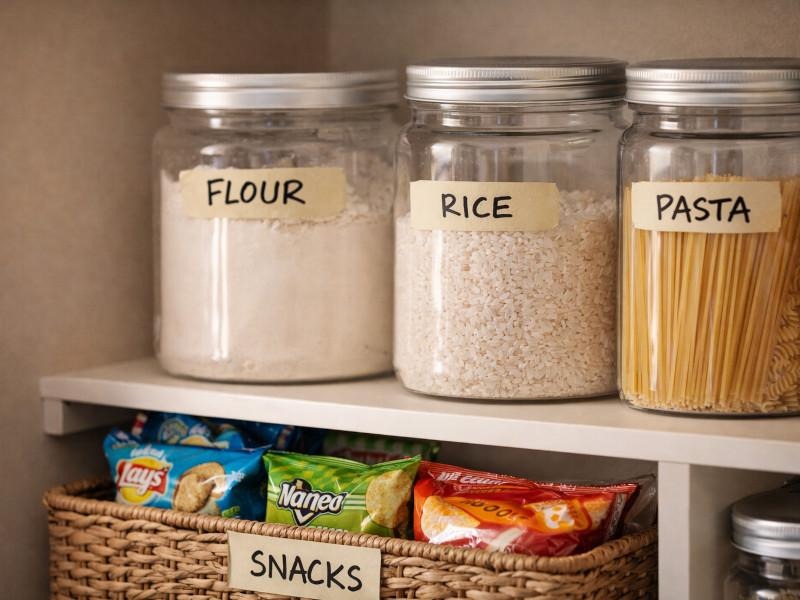
Alt text: Labeled pantry containers with clear jars and handwritten tags for flour, rice, and pasta in a small, organized kitchen
Step 5: Label Everything Clearly
Labeling is what keeps the system working over time.
Without labels, even a well-organized pantry falls apart quickly. With labels, everyone in the household knows where things belong.
You don’t need anything fancy. I often use masking tape and a marker.
Simple Labeling Tips
- Include item names on all containers
- Add fill dates for dry goods
- Use color coding for zones if needed
This step takes minutes but prevents long-term chaos.
Pantry Organization in Alpharetta and North Atlanta
Living in Alpharetta and the surrounding north Atlanta suburbs changes how I approach pantry organization.
Humidity plays a big role here. Dry goods stored in paper or thin plastic packaging tend to absorb moisture faster, especially in summer. I always recommend airtight containers for flour, cornmeal, sugar, and breadcrumbs.
Another factor is cooking style. Many households in this area keep a wider range of pantry items, including dry beans, canned goods, and baking ingredients. Without proper zoning, things get crowded quickly.
I’ve also seen how pantry organization becomes especially important when something breaks down in the kitchen. One homeowner I worked with had to rely heavily on pantry storage while waiting for refrigerator repair in Alpharetta, handled by Appliance EMT. Because their pantry was already well organized, they were able to cut down on waste and still plan meals without too much disruption.
What Actually Works in Small Pantry Organization
The most common issue I see is people organizing around an ideal lifestyle rather than their actual habits.
If you cook pasta three times a week, it should be front and center. If you bake twice a year, those items should be stored higher up.
Another mistake is buying storage products too early. I’ve seen people spend money on bins that don’t fit their shelves. Measuring and auditing first always leads to better results.
Finally, maintenance matters. I do a quick five-minute reset once a week. That small habit keeps everything in place and prevents clutter from building again.
Frequently Asked Questions
How much does it cost to organize a small pantry on a budget?
Most pantry setups cost between $20 and $50. If you reuse containers you already have, you can spend even less.
How do I organize deep pantry shelves?
Use pull-out bins or lazy Susans for items at the back. Keep taller items behind shorter ones so everything stays visible.
Are clear containers better than opaque ones?
In most cases, yes. Clear containers make it easier to track what you have and reduce food waste.
How do I maintain an organized pantry with a family?
Keep the system simple. Use clear labels and defined zones, and involve everyone in maintaining them. A weekly reset helps prevent clutter.
Are pantry organization kits worth it?
Usually not. Pre-made kits rarely match your exact space. Buying individual pieces based on your pantry dimensions works better.
What Works Long-Term in Pantry Organization
Organizing a small kitchen pantry on a budget in Alpharetta isn’t about buying more storage. It’s about building a system that reflects how your kitchen actually functions day-to-day.
In my experience, the biggest improvements come from simple changes. Clearing everything out, adjusting your space, and creating practical zones will have a greater impact than any expensive organizer. Consistent containers and clear labeling keep everything working long-term.
Start with what you have. Let your pantry layout guide your decisions. Once the system is in place, a quick weekly reset is all it takes to keep it running.
A well-organized pantry doesn’t need to look perfect. It just needs to work consistently, and that’s what makes it sustainable.