 Craig Pornorey
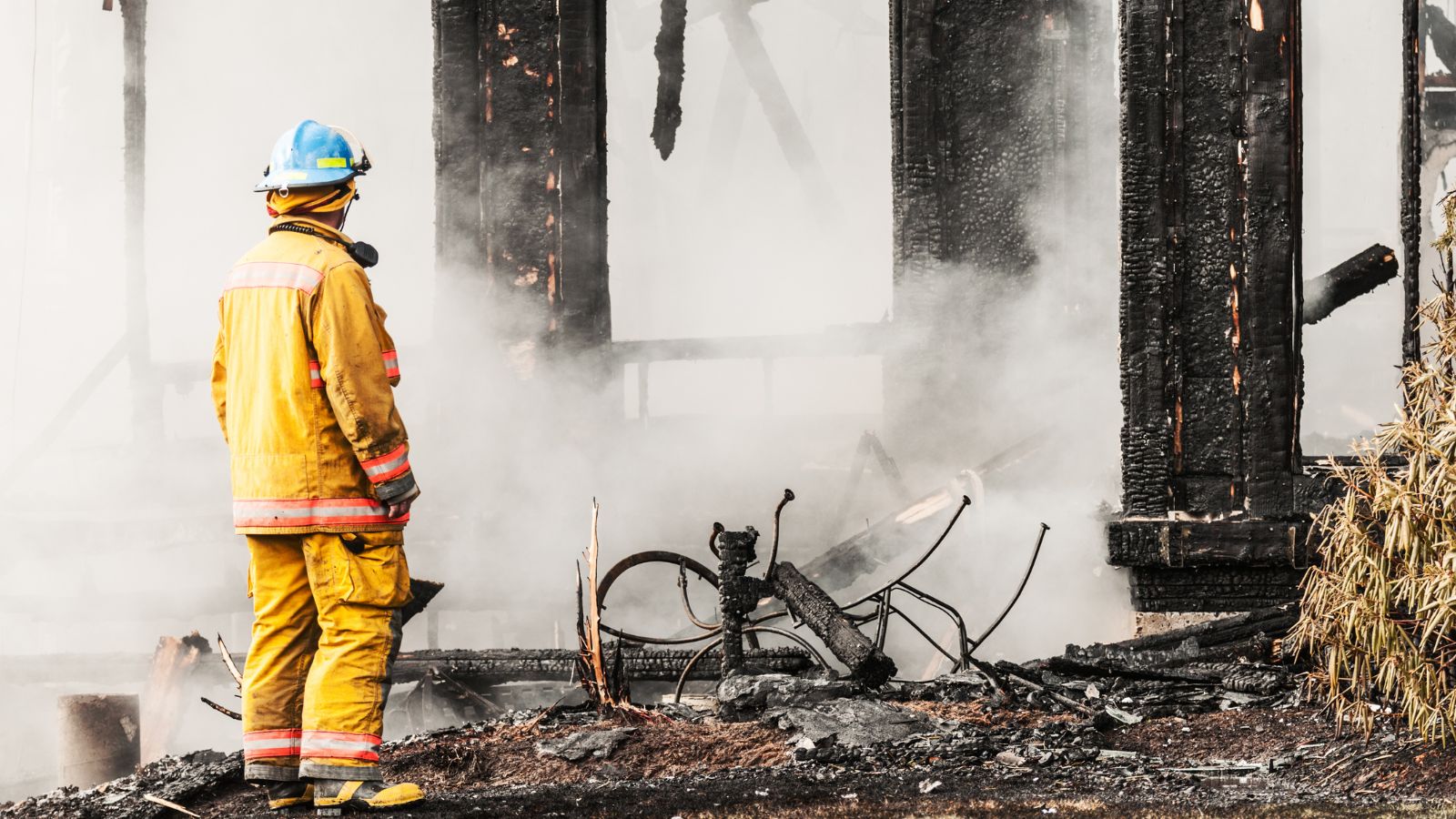
The fire department leaves, and from the curb the house looks survivable. One room is gone; the rest is standing. That impression almost never holds. Smoke travels through every cavity the building has, soot keeps corroding surfaces for weeks after the flames are out, and the water used to put the fire out has already soaked into floors two rooms away. Fire damage restoration is the work of handling all three problems at once — structure, smoke, and water — usually in that order. This guide covers what actually gets damaged, what can normally be saved, how the process runs, and which winter habits cause most house fires to begin with.
The Fire Is the Smallest Part of the Damage
Flame damage is localized. It burns what it touches and stops where it was stopped. Everything else that goes wrong in a house fire travels.
Heat and pressure push smoke into wall cavities, up through the attic, and straight into the HVAC return, which then distributes it to rooms the fire never reached. Heat alone warps vinyl, melts plastics, and crazes finishes well beyond the burn line. Then comes the water, and the holes the crew cut in the roof and walls to vent and reach the fire. A house with one burned room routinely has smoke in every room, water in the basement, and an opening in the roof.
What Smoke and Soot Actually Do
Soot Is Acidic and Keeps Working
Soot from burned synthetics — carpet, foam, electronics, plastics — is acidic. Left on surfaces it etches glass, pits chrome and stainless steel, permanently discolors grout and marble, and corrodes the contacts inside appliances and electronics. The important point for homeowners is that this damage continues after the emergency is over. What is cleanable in the first few days frequently becomes permanent staining within a couple of weeks, which is why fire jobs are urgent even though nothing is burning.
Odor Soaks Into Porous Materials
Smoke odor is not sitting on surfaces. It is absorbed into drywall, insulation, carpet padding, upholstery, and framing lumber. This is why painting over smoke damage fails: the paint seals nothing, and the smell returns the first warm, humid week of the following summer. Removing it means sealing the framing, and in many cases removing the absorbent materials entirely rather than trying to clean them.
The Water Damage Nobody Expects
Suppressing a working house fire puts hundreds to thousands of gallons of water into the structure in a short period. That water follows the same paths it always does — down through floor assemblies, into wall cavities, into the basement. Combine it with an open roof in November and you have a wet, unheated building.
Mold can establish on damp organic material within 24 to 48 hours, and that clock does not pause because there was a fire. In practice this means every fire job is also a water job: extraction, air movers, and dehumidification run alongside the soot cleaning rather than after it.
Inside the Restoration Process
The first task is not cleaning, it is securing the building. Board-up of broken windows and doors, roof tarping, and sometimes temporary fencing. This is partly safety and partly a condition of the policy — most require the homeowner to take reasonable steps to prevent further loss, and an open house invites both weather and theft.
Stabilization, water extraction, structural drying, soot cleaning, deodorizing, and reconstruction are six different trades, and coordinating them against an insurance timeline is the part homeowners find hardest. That is why Fire Damage Restoration is normally contracted as a single scope rather than six separate hires. Restorian Property Damage Restoration, for instance, carries a job from the board-up through the final rebuild across New Jersey, New York, and Connecticut.
Cleaning and Deodorizing
Soot removal is material-specific. Dry smoke from fast-burning fires lifts with chemical sponges; the greasy protein residue left by kitchen fires needs solvents and will smear if touched with water first. Contents are often cleaned off site, including by ultrasonic bath for hard items. The HVAC system has to be cleaned before it is run again, or the first startup redistributes soot through the house. Deodorizing follows, typically hydroxyl or ozone treatment plus a sealing primer on exposed framing.
Reconstruction
Only then does the rebuild start: replacing removed drywall, insulation, flooring, cabinetry, and whatever structural lumber failed inspection. This is also where licensing matters, since fire jobs routinely involve electrical and framing work rather than finishes alone.
What Is Usually Salvageable
- Structural lumber — often fine, since charring is frequently shallow and the member keeps its capacity once cleaned and sealed
- Hardwood flooring — sometimes, depending on water exposure more than on smoke
- Hard contents, dishes, and metal items — usually recoverable through off-site cleaning
- Photographs and documents — specialist freeze-drying and ozone treatment save more than people expect
- Electronics — generally written off, because soot inside the housing corrodes boards and contacts
- Mattresses and upholstered furniture — almost always discarded, since the odor is absorbed through the whole item
- Appliances with soot in the control boards — normally replaced rather than repaired
Preventing the Most Common Winter Fires
Home fires peak in the heating months, and the causes are consistent year to year.
- Space heaters: three feet of clearance from anything that burns, plugged directly into a wall outlet and never into an extension cord or power strip
- Chimneys and wood stoves: inspected and swept annually before the first fire of the season
- Furnace and boiler: serviced before the heating season rather than after the first failure
- Dryer vents: cleared of lint at the trap and along the full duct run
- Cooking: the single largest cause of home fires, and Thanksgiving is the peak day — never leave a stovetop unattended
- Candles: away from decorations and never left burning in an empty room
- Holiday lighting: indoor-rated strings indoors, nothing daisy-chained, and a real tree kept watered
Frequently Asked Questions
Does homeowners insurance cover fire damage restoration?
Fire is a covered peril under nearly every standard policy, including the water damage caused by suppression and the cost of securing the property afterward. Coverage limits, contents schedules, and additional living expenses while the house is uninhabitable vary considerably between policies.
Can smoke smell really be removed, or does everything have to go?
Most of it can be removed, but not by cleaning surfaces alone. It takes removal of the worst absorbent materials, treatment of the air and contents, and a sealing primer on exposed framing. Soft goods that held heavy smoke are usually the items that do not come back.
How long does the process take?
Stabilization and drying run roughly one to two weeks. Cleaning and deodorizing add several more. Reconstruction depends entirely on scope and can run from a few weeks to several months, usually paced by insurance approval rather than by the crew.
Can I go back in to get belongings?
Not until the fire department and then a contractor confirm the structure is safe. Beyond the obvious structural risk, soot is a respiratory irritant and burned synthetics leave genuinely hazardous residue. Anything retrieved early should be photographed in place first for the claim.
The thing worth understanding about a house fire is that the damage is not finished when the fire is. Soot keeps etching, odor keeps absorbing, and suppression water starts growing mold on a 48-hour clock. Almost everything that determines how much of the house survives happens in the week afterward, not during the fire itself. That is also the week when a homeowner is least equipped to manage six trades and an adjuster — which is the strongest argument for handing the whole sequence to one contractor.