 Qyndarix Thalendros
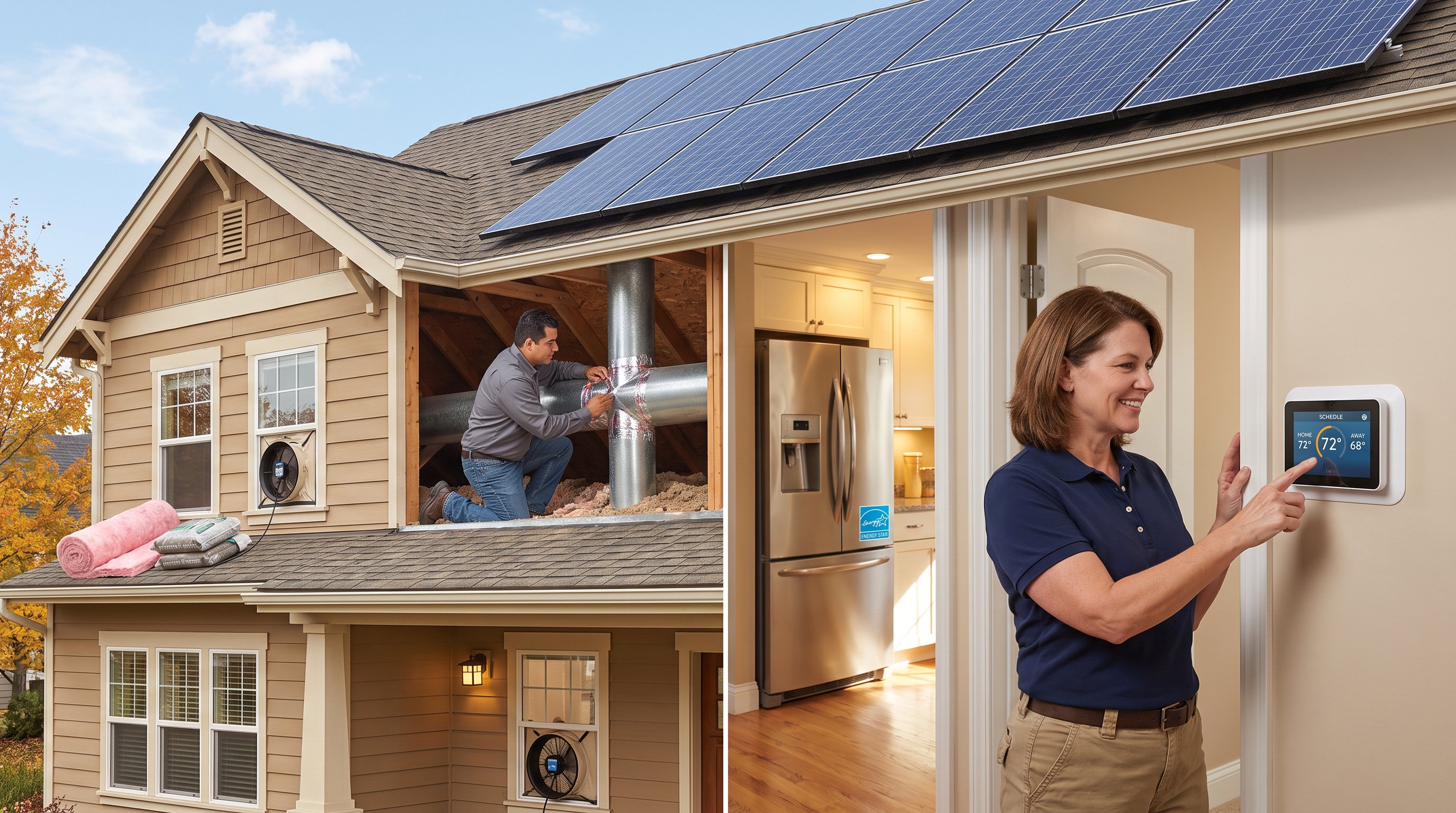
Energy-Efficient Upgrades That Can Lower Household Costs appear early in the year as a clear way to cut bills and increase comfort. This guide gives practical, prioritized steps for 2026 homeowners who want measurable savings, not vague promises. It shows which upgrades pay back fastest, which require pro help, and where small, honest mistakes can erase expected gains.
Key Takeaways
- Upgrading heating and cooling systems offers the fastest energy savings, often reducing household costs immediately.
- Installing a smart thermostat and optimizing zoning can lower HVAC energy use by 8–15%, but placement on interior walls is crucial for optimal savings.
- Sealing ducts and servicing HVAC systems prevent 20–30% energy loss, leading to faster payback and increased system longevity.
- Improving insulation and air sealing in attics, windows, and foundations cuts up to 40% of heat loss, significantly lowering heating demands.
- Replacing old appliances with high-efficiency models can reduce energy consumption by 20–50%, with substantial savings on electricity bills.
- Switching to LED lighting reduces lighting energy use by 75–90%, and installing solar panels can offset a large portion of household energy costs when appropriately sited.
Upgrade Heating And Cooling For Big, Immediate Savings
Fact: Heating and cooling consume about half of a typical home’s energy, so upgrades here deliver the fastest dollar savings. When a system runs less, bills fall immediately and comfort rises.
Install A Smart Thermostat And Optimize Zoning
A smart thermostat typically cuts HVAC energy use by 8–15% when used well. It learns schedules, reduces runtime during empty hours, and prevents thermostat wars between rooms. For a 2,000-square-foot home with electric heat, this can mean roughly $100–$300 saved in the first year depending on local rates and behavior. When installing, they discovered a common mistake: placing the thermostat in a hot hallway. That error made the thermostat call for extra cooling and erased expected savings. Install units on an interior wall at eye level and pair them to zoning dampers or multiple thermostats for distinct schedules.
For verification on real savings and setup tips, consult a detailed breakdown like the analysis of smart-thermostat savings that shows typical household reductions and setup best practices. smart-thermostat savings
Seal Ducts And Service HVAC For Peak Efficiency
Fact: Leaky ducts can waste 20–30% of forced-air heating or cooling. Sealing ducts and scheduling an HVAC tune-up reduces energy loss and can extend system life. A mid-range duct sealing job and basic servicing often pay back within 2–4 years in most climates.
Practical tip: During one project, a homeowner found two major duct tears in the attic after noticing weak airflow and a 15% rise in bills. Repairing those leaks cut run time by 18% and made upstairs rooms usable without blasting the system. Have a pro test duct tightness and seal with mastic or UL-approved foil tape, avoid cloth-backed duct tape, which degrades. Also replace filters regularly and confirm correct refrigerant charge: both are cheap fixes that protect expensive equipment.
Improve Insulation And Air Sealing To Stop Energy Loss
Fact: Up to 40% of heat loss in winter happens through thermal bypasses, gaps, leaks, and thin insulation paths. Stopping that flow is one of the most cost-effective upgrades.
Start by finding the weak spots: attic access, recessed lights, window and door perimeters, and the band joist where the foundation meets framed walls. A quick blower-door test reveals uncontrolled airflow: a pro can perform this for an average cost that often pays for itself through targeted fixes. Homeowners who added attic insulation from R-19 to R-49 in a cold-climate house saw seasonal heating demand drop by roughly 15–20%.
Practical example: A couple insulating their 1950s bungalow insulated attic kneewalls and added a gasket at the attic hatch. That one change removed drafts that caused cold feet at night and reduced their heating cycle length by two minutes per run, small per cycle, big across thousands of cycles each season. Use closed-cell spray foam for rim-joist gaps and dense-pack cellulose for existing wall cavities where access allows.
For guidance on entry points and realistic upgrade costs, homeowners may compare project estimates with cost references like the 2026 energy-efficiency cost guide. energy-efficiency costs
Replace Old Appliances With High-Efficiency Models
Fact: Replacing refrigerators, washers, dryers, and water heaters can reduce appliance energy use by 20–50% depending on age and technology. Prioritize the highest-use, oldest units first.
A 15-year-old refrigerator often uses 1.2–2.0 kWh/day: a new ENERGY STAR model commonly drops that to 0.6–1.0 kWh/day. If a homeowner replaced such a fridge, they reported saving about $60–$90 per year on electricity alone. For water heating, switching from a 12-year-old gas tank to a high-efficiency heat-pump water heater cut one homeowner’s water-heating bill by roughly 40%.
Be honest about lifetime costs: one owner bought a premium washer with a delicate-gear problem and spent $200 in warranty repairs the first two years, lesson learned: check repair history and parts accessibility, not just the label. Look for EnergyGuide labels, compare kilowatt-hours, and consider local rebates that often lower upfront costs.
Related planning helps: pairing appliance replacement with a home budget exercise reduces sticker shock. The budget primer on setting realistic home-buying and ownership costs gives a framework homeowners used to plan appliance upgrades. home budget guide
Switch To Efficient Lighting And Consider Solar Options
Fact: LED lighting cuts lighting energy use by about 75–90% versus incandescent bulbs and pays back in months in rooms used many hours daily.
Replace high-use fixtures first, kitchen, living room, porch. A household that converted 20 bulbs to LEDs tracked a 40% drop in lighting electricity within a month. Choose fixtures with dimmable drivers when pairing with controls: dimming extends bulb life and increases perceived comfort.
Solar options: rooftop photovoltaic (PV) systems now return value faster in many regions thanks to lower panel prices and better inverters. For a typical 6 kW system, net costs after incentives can be recouped in 6–12 years depending on local incentives and electricity rates. One homeowner in a high-rate area saw the system offset 70% of annual usage and cut bills by $1,400 the first full year.
A frank warning: improper panel placement or shading dramatically reduces output. During one install, an overlooked tree limb shaded 10% of the array and caused a 12% output loss: trimming and microinverters fixed the gap. For solar sizing and suitability, homeowners should check local policies and contractor references and consult resources about matching household energy needs. The site’s article on choosing household energy offers helpful decision steps. choosing household energy
Conclusion: Prioritizing Upgrades To Maximize Savings
Insight: Start with actions that reduce runtime, thermostat, duct sealing, and insulation, then target inefficient appliances and lighting. These steps stack: each measure amplifies the others and shortens payback times.
A realistic plan: 1) Install a smart thermostat and fix duct leaks: 2) add attic and rim-joist air sealing: 3) replace the oldest appliances and switch to LEDs: 4) evaluate solar if the site has good sun exposure. This sequence minimizes upfront cost and maximizes early savings.
Homeowners who want broader guidance on buying and owning decisions used a practical resource to align upgrades with long-term plans. For integrated advice on home ownership decisions and energy choices, consult the practical home guidance page. home guidance resource
For related topics, avoiding common HVAC errors and understanding monthly owning costs, see the in-depth pieces on common cooling problems and true monthly costs. cooling mistakes monthly costs