 Qyndarix Thalendros
Summer roof middleclasshomes plumbing checklist tips explains why owners restore cast-iron radiators and how they restore them safely. The guide lists tools, steps, and maintenance tips. It sets clear expectations for time, cost, and skill. It uses direct instructions and short sentences. It helps readers decide whether to restore, repair, or replace radiators.
Key Takeaways
- The middleclasshomes comprehensive guide radiator restoration highlights cost savings and improved heat output when restoring sound cast-iron radiators instead of replacing them.
- Restoration involves surface repair, including rust removal and leak fixing, using specific tools like wire brushes, rust removers, and epoxy filler for minor damage.
- Proper safety measures and preparation—such as shutting off water, wearing protective gear, and inspecting for asbestos—are crucial before starting radiator restoration.
- Painting with high-temperature primer and paint, followed by careful reassembly and pressure testing, ensures a durable and lasting radiator finish.
- Regular maintenance during heating seasons, like bleeding air and inspecting valves, helps prevent common problems and extends radiator life.
- Professional help is recommended for severe internal corrosion, repeated leaks, or structural concerns to ensure safety and radiator longevity.
Why Restore Your Radiator — Benefits, When It’s Worth It, And When To Replace
Restoring radiators saves money when the cast iron remains sound. The middleclasshomes comprehensive guide radiator restoration shows that restoration keeps original detail and improves heat output. Owners restore radiators when they find surface rust, minor leaks, or worn fittings. Owners replace radiators when they find large cracks, severe internal corrosion, or when replacement parts are unavailable. Restored radiators often last decades with proper care. Restoring preserves value in older homes and avoids the cost of full replacement plumbing. The middleclasshomes comprehensive guide radiator restoration recommends inspection for hairline cracks, flange condition, and valve compatibility before a project starts.
Tools, Materials, And Safety Checklist Before You Start
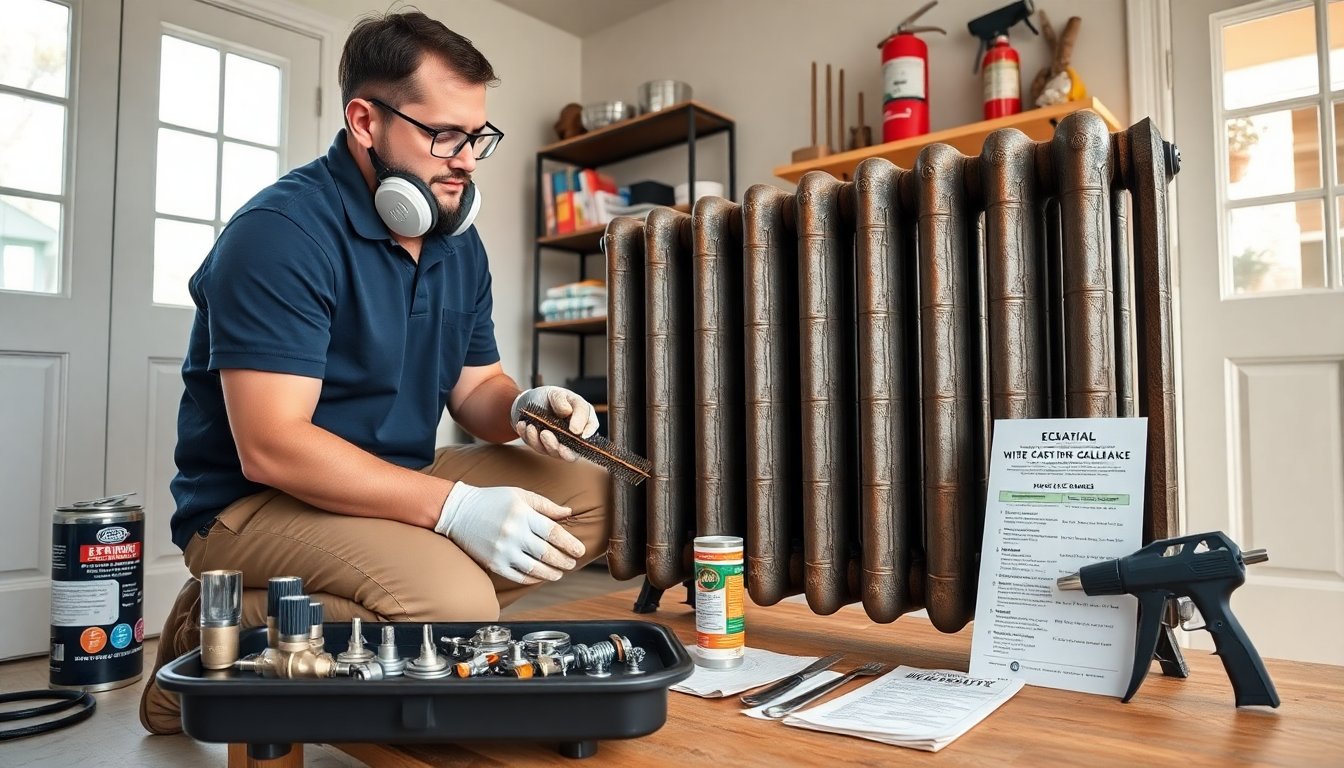
The middleclasshomes comprehensive guide radiator restoration lists tools first. Owners need wire brushes, rust remover, filler compound, pipe wrenches, thread sealant, caps, and a pressure tester. Owners need paint rated for high temperatures and a primer for metal. The guide lists safety items next. Users need goggles, gloves, a respirator, and a fire extinguisher. The guide warns to shut off water and drain the system before disassembly. The guide advises labeling sections and photographing each step for reassembly. The middleclasshomes comprehensive guide radiator restoration adds a checklist: inspect for asbestos pipe wrap, confirm utility shutoff, and ventilate the work area.
Step-By-Step Radiator Restoration Process
The middleclasshomes comprehensive guide radiator restoration breaks the work into clear steps. It separates surface repair and painting from testing and reassembly. The steps use short tasks and clear order.
Surface Repair: Removing Rust, Fixing Leaks, And Reconditioning Fittings
Owners remove radiators and place them on stands for safety. The middleclasshomes comprehensive guide radiator restoration instructs to use a wire brush and solvent to remove loose rust. The guide tells owners to apply a rust converter on remaining pits. For small pinhole leaks, the guide shows how to use epoxy filler or brazing where safe. The guide tells owners to inspect threads and valve seats. The guide tells owners to replace worn valves and packing. The guide shows how to use thread sealant and new washers at reassembly. The middleclasshomes comprehensive guide radiator restoration stresses testing fittings with low pressure before painting to find hidden leaks.
Painting, Reassembly, And Pressure Testing For A Long-Lasting Finish
The middleclasshomes comprehensive guide radiator restoration instructs to sand the metal to a dull finish after repairs. The guide tells owners to apply a metal primer and then high-temperature paint in thin coats. The guide advises curing paint per manufacturer instructions before handling. The guide instructs to reattach valves and fittings with correct torque and new sealant. The guide tells owners to mount the radiator and refill the system slowly. The guide instructs to bleed trapped air and then run a pressure test at recommended psi to confirm the repair. The middleclasshomes comprehensive guide radiator restoration recommends repeating the pressure test after the first heat cycle to confirm stability.
Routine Maintenance, Common Problems, And When To Call A Professional
Owners perform basic maintenance monthly during heating season. The middleclasshomes comprehensive guide radiator restoration lists tasks: bleed air, inspect for slow drips, and wipe down surfaces. The guide lists common problems next. Radiators develop airlocks, leaking valves, and uneven heat sections. The guide shows quick fixes: bleed air, tighten fittings, and swap valves. The guide states when to call a pro. Owners should hire a pro for internal corrosion, repeated leaks, or unknown structural cracks. The guide advises professional pressure testing and pressure vessel assessment when owners suspect internal failure. The guide notes that restoration work often improves heat and retains historic features. The guide also suggests that hobbyists who balance radiator work with home projects might use downtime to manage other tasks, such as following a simple basic fantasy guide while paint cures.