 Mylarith Qynthoril
Estimated cost: About $30 for string and marking paint, plus your ground cover
Estimated time: One weekend for layout and leveling
Difficulty: Easy to moderate
Tools: Tape measure, wooden stakes, mason's string, marking paint, a flat shovel and a 4-foot level
Last spring my kids asked for a trampoline every single day. I'd already been looking at swing sets, and my oldest wanted monkey bars "for when I'm bigger." Our yard is not big. So before buying anything I spent a Saturday out back with a tape measure and a ball of string, and that afternoon stopped me from ordering a trampoline that would have boxed in everything else.
Below is how I laid it out, including space for the pieces we haven't bought yet.
Go inside first. Stand where you cook or wash dishes and look out. Most afternoons that's where you'll be watching from, so the equipment has to sit inside that view.
I checked from the back slider too. The corner by the back fence I'd been picturing was half hidden behind our grill and a big hydrangea, so the whole play area moved about 15 feet toward the house.
While you're looking, note anything overhead or underground: power lines, low branches, sprinkler lines and the spot where water pools after a storm. Call 811 a few days before you dig and they'll mark buried utility lines for free.
The dimensions on the box cover the footprint. The open space around each piece takes up far more of the yard.
The U.S. Consumer Product Safety Commission's playground safety handbook calls for a use zone of at least 6 feet in every direction around play equipment. Swings need more. In front and behind, the zone should reach twice the height of the bar the swing hangs from. A swing beam about 8 feet tall needs roughly 16 feet clear in front and another 16 behind. Our swing set went from "that'll fit" to "hmm" in about five minutes once I did that math.
Trampolines vary by model, so check the manual for side clearance, and look up while you're at it. You don't want branches or wires above the mat. Monkey bars need open space at both ends where kids drop off.
Keep the swing zone separate from everything else. A kid running from the trampoline to the monkey bars shouldn't have to cut across in front of the swings.
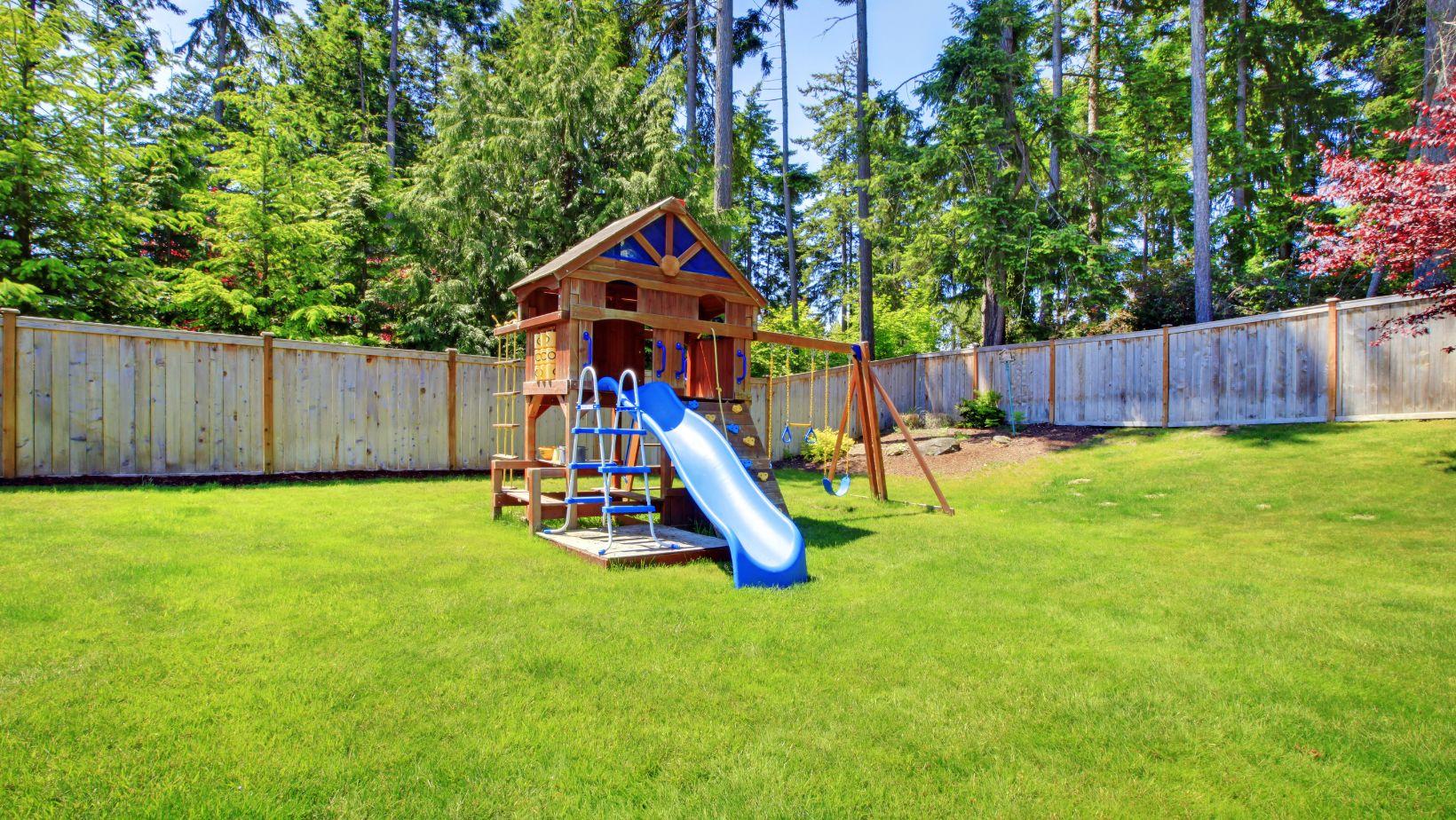
Start on paper with the dimensions of each piece. Then mark the open space each one needs on the lawn with string or spray paint, so a swinging seat or the trampoline enclosure isn't crowded by a fence, a tree, the shed or the patio edge. If you'd rather plan the whole zone around one brand, Vuly trampolines and swing sets are sold alongside the company's Quest monkey bars and playsets, and its US site has installation guides for each. Vuly Play is Australian-owned and tests its equipment in its own lab in Brisbane. I only learned that while digging through their install guides, which ended up being the most useful thing I printed all month. Whichever brand you go with, check the clearance figures in the installation guide against your string lines before you order anything.
I left my strings up for a week and walked around them every day. That told me more than any drawing did. The trampoline on my wish list pushed the swing zone right up against our side fence, so we went one size smaller.
A trampoline frame has to sit level so the weight spreads evenly across the legs. Swing set legs on a slope rock, and over time they work loose.
To check, drive a stake at each corner of the footprint and run a string between two of them. Hang a line level on the string. Raise the low end until the bubble centers, then measure from string to ground. That number is how far your yard drops across that piece. Ours dropped almost 4 inches on the swing side, which I would never have guessed by eye.
If it needs fixing, dig down the high side rather than piling dirt on the low side. Fresh fill settles after a few rains and you'll have the tilt back by summer. For a bigger area, rent a sod cutter for a day. Lifting grass by hand with a flat shovel is slow, sore work.
Plenty of families keep grass under the trampoline. It works, though the grass wears bare where kids climb on and off.
Swings and monkey bars are a different story. The CPSC says grass and dirt don't count as protective surfacing under climbing and swinging equipment. Its home playground guidance recommends loose fill, such as wood mulch or shredded rubber, at least 9 inches deep for equipment up to 8 feet high.
Wood mulch is cheaper and easy to find. It also breaks down and packs flat, so plan on topping it up every year or two. Rubber lasts longer and costs more up front. On a sunny afternoon it gets hot underfoot.
Edge the area so the mulch stays deep where it counts. Kids' feet dig a trench under every swing, and a rake every couple of weeks fills it back in.
Only the trampoline is in so far. The swing set and the monkey bars come later, the bars once our youngest can reach the second rung.
I marked the future spots with painted stakes at the corners. Those patches stay clear of new plantings and the fire pit we keep talking about.
If I did it again, I'd build the swing set's mulch border before the trampoline went in. Pushing a full wheelbarrow around a netted enclosure is awkward.
Staging it spreads out the cost. You also get to see how the kids use the yard before you commit to the next piece. The downside is explaining every few weeks why the stakes have to stay put.