 Mylarith Qynthoril
Few themes capture a child’s imagination like the ocean. It has everything a young explorer could want: whales the size of buses, glowing jellyfish, sunken ships and coral reefs bursting with color. The challenge for parents is that themed rooms often feel babyish within a couple of years. The good news? An under-the-sea room can easily grow with your child if you plan it right from the start.
Here is how to build an ocean-inspired bedroom that feels magical at five and still cool at twelve.
Start With a Calm Color Palette
The ocean gives you one of the most soothing palettes in nature, which makes it ideal for a bedroom. Think deep navy, teal, aqua, seafoam green and sandy beige. These shades are calming, help with bedtime routines and pair well with almost any furniture.
A simple rule works well here: choose one dominant shade (usually a blue), one supporting color (sand or soft white) and one accent (coral, sunny yellow or orange). The accent can live in pillows, rugs and toys, so it is easy to swap as your child’s taste changes.
Make One Wall the Star of the Show
Instead of covering every surface with sea creatures, focus the theme on a single feature wall. Usually this is the wall behind the bed, since it frames the room and is the first thing your child sees when they walk in.
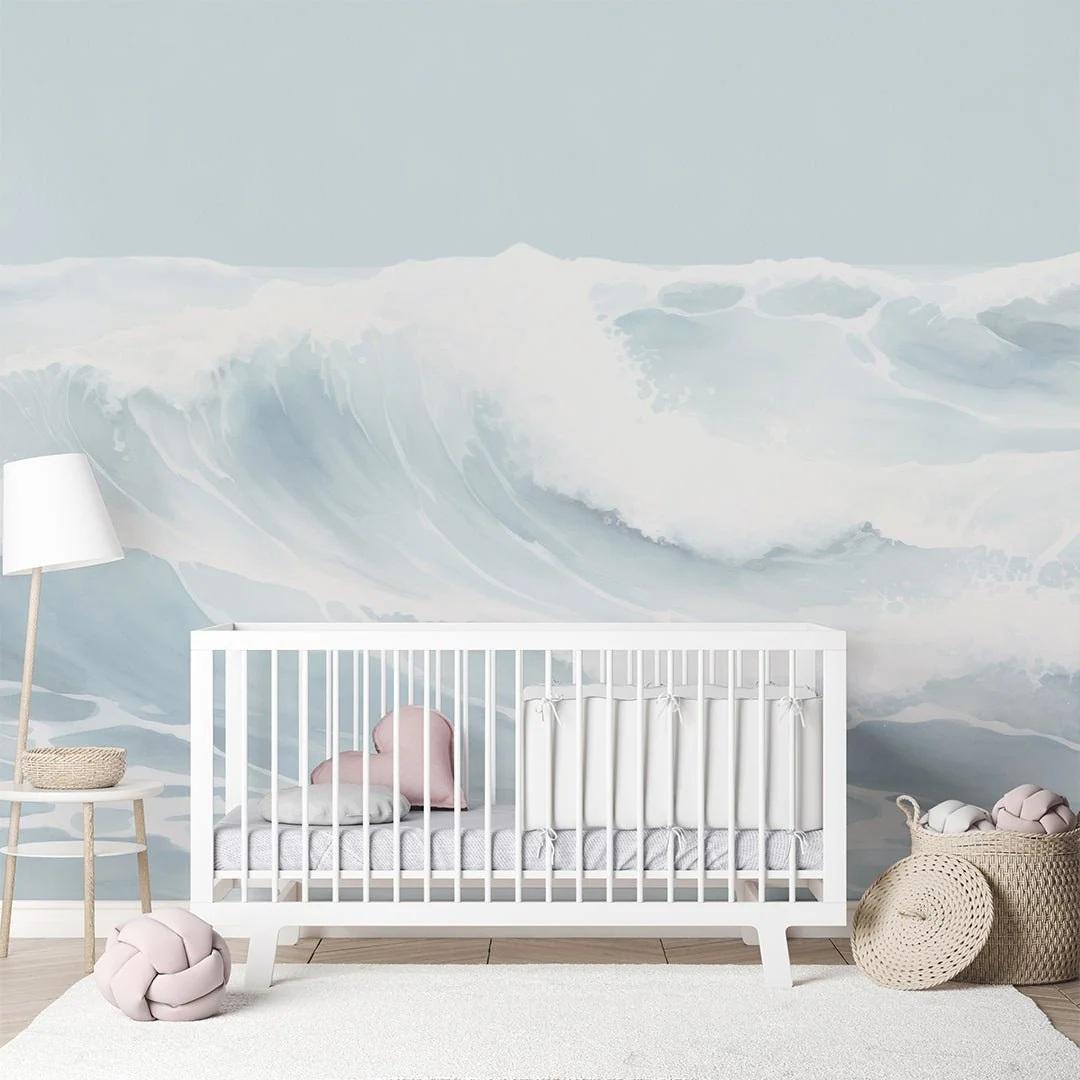
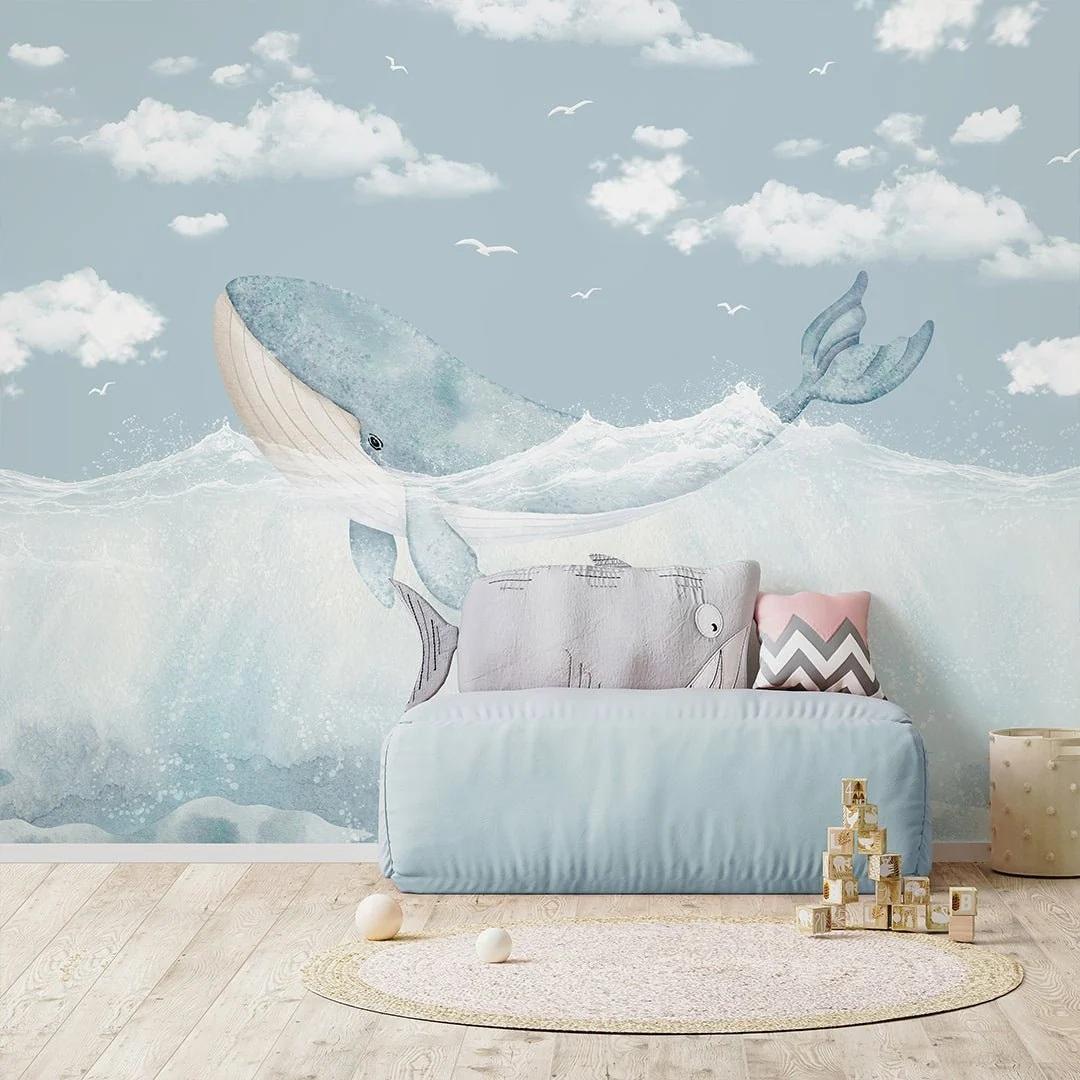
This is where ocean wallpaper really shines. A large-scale design with waves, whales or a soft watercolor seascape instantly transforms the space without needing extra decor. The rest of the walls can stay plain in a matching blue or neutral, which keeps the room from feeling busy.
When choosing a design, look for artwork that feels illustrative rather than cartoonish. Watercolor fish, vintage-style nautical maps or muted coral reefs will look charming for years, while bright cartoon characters tend to date quickly.
Choose Designs That Grow With Your Child
Age matters when choosing the main theme. Here is a quick guide:
- Toddlers and preschoolers love friendly, recognizable animals: smiling whales, turtles, octopuses and fish in bright, simple shapes.
- School-age kids enjoy more detail: scuba divers, submarines, shipwrecks and realistic sea life they can learn the names of.
- Tweens usually prefer something subtler, such as deep-sea gradients, abstract waves or moody underwater scenes that feel more grown-up.
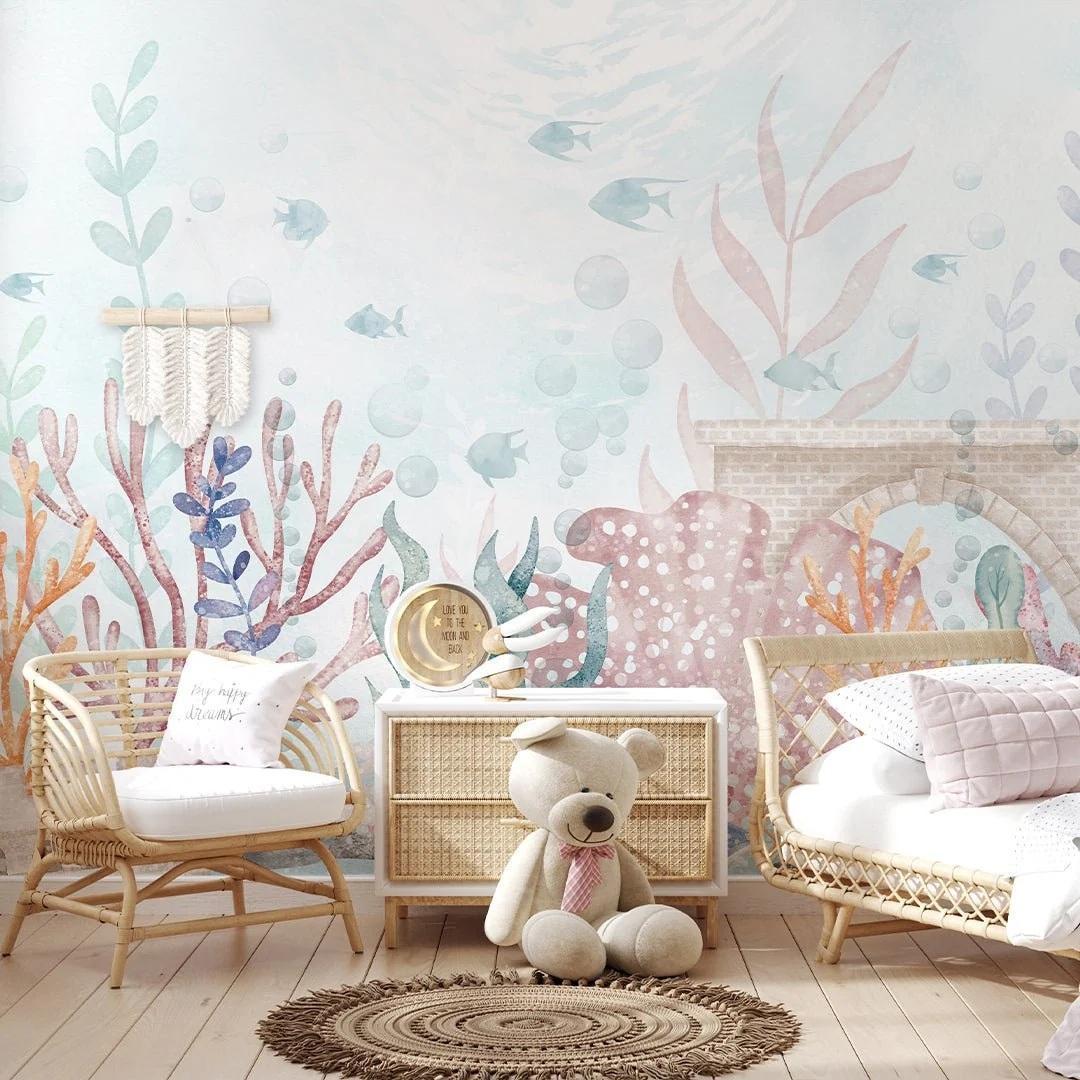
If you want the room to last, aim for the middle ground. Detailed underwater wallpaper with realistic coral, fish and light rays works for a curious six-year-old and still looks stylish to a teenager. Peel-and-stick options are especially practical for kids’ rooms, because you can replace the wall in an afternoon when your child is ready for a new look.
Add Texture and Natural Materials
To keep the room from feeling flat, layer in textures that echo the coast. A few ideas:
- A woven jute or sisal rug that feels like sand underfoot
- Rope baskets for toy storage
- Light wood furniture with a slightly weathered finish
- Linen or cotton bedding in soft stripes
- A canopy made of sheer fabric to suggest gentle waves
These natural materials balance the bold wall and make the space feel cozy rather than themed.
Use Lighting to Create an Underwater Mood
Lighting can make or break the ocean effect. A ceiling light with a frosted glass shade gives soft, diffused light, like sunlight filtering through water. For bedtime, consider a projector that casts slow-moving wave patterns on the ceiling, or a warm night light shaped like a jellyfish or a moon.
Dimmable bulbs are a smart investment. Bright light is useful for homework and play, while a low blue-tinted glow helps signal that it is time to wind down.
Bring In Playful Details (That Are Easy to Swap)
The small things are where you can have the most fun, because they cost little and are easy to change. Try:
- Framed prints of vintage marine illustrations
- A reading nook with a porthole-style round mirror
- Fish-shaped cushions or a whale plush on the bed
- A wall map of the world’s oceans for curious minds
- A small aquarium if your child is ready for a real pet
As your child grows, these details can be replaced with more mature pieces while the wall and color scheme stay the same.
Keep It Practical
Kids’ rooms take a lot of wear, so choose materials that are easy to clean. Washable wall coverings, stain-resistant rugs and furniture with rounded edges will save you stress. Leave plenty of open floor space for play, and use closed storage to hide clutter, because even the most beautiful ocean scene loses its charm under a pile of toys.
Final Thoughts
An under-the-sea bedroom does not have to be a short-lived phase. With a calm palette, one statement wall, natural textures and details you can easily update, you can create a space that sparks your child’s imagination today and still feels like their own retreat years from now. Dive in, and let the ocean set the tone.