 Craig Pornorey
Most kitchen remodel advice starts with a wish list and adds up the cost at the end, which is exactly how projects blow past their budgets. The more reliable approach runs the other direction. Start with the number you are willing to spend, treat it as fixed, and assign every dollar a job before any of it leaves your account. Spend the money on paper first, in order of what matters most, and stop when the number runs out.
Done that way, the budget stops being a ceiling you crash through and becomes a plan you work within. The short version: fix your total first, spend it on paper in order of priority, claim and control the cabinet line before anything else, and let the lowest-priority items live on whatever remains.
What Is the Most Expensive Part of a Kitchen Remodel?
You cannot allocate sensibly without knowing what dominates the bill, and one category dominates every kitchen: cabinetry. It runs roughly 35 to 40 percent of a typical remodel, more than labor, more than countertops, more than appliances. Nothing else comes close.
That single fact drives the whole backwards-budgeting method. Because cabinetry is the largest line, it is both where the biggest savings live and where overspending does the most damage, since no other category is large enough to absorb a cabinet overrun. So the first move is to claim and control this line before touching anything else. Decide the cabinet budget first, hold it down hard, and the rest of the plan has room to breathe. Let it run loose and the project is in trouble before you have bought a single appliance.
How to Save Money on Kitchen Cabinets
Controlling the cabinet line does not mean buying bad cabinets. It means buying the same quality through a cheaper channel, because the cabinet market charges wildly different prices for structurally similar products.
At the top, custom cabinetry runs $500 to $1,200 per linear foot installed. At the bottom, ready-to-assemble cabinetry of the same specification costs far less, roughly 30 to 50 percent below comparable pre-assembled lines and up to 50 to 75 percent below custom, and the gap comes from flat shipping, lower storage cost, and no factory assembly labor, not from thinner materials. Choosing a well-built RTA line over a semi-custom equivalent is the single most powerful move in a budget remodel, saving thousands on the largest line without sacrificing durability, as long as the cabinet is soundly built. Buying through a wholesale RTA cabinet supplier is how that lower price is reached, with plywood-box, solid-wood-frame construction at a cost that leaves money for everything downstream. The savings on this one category often fund a large part of the rest of the kitchen.
How to Allocate a Kitchen Remodel Budget
To see backwards budgeting in action, picture a fixed sum split by priority rather than by wish list. The exact dollars do not matter; the order and proportions do.
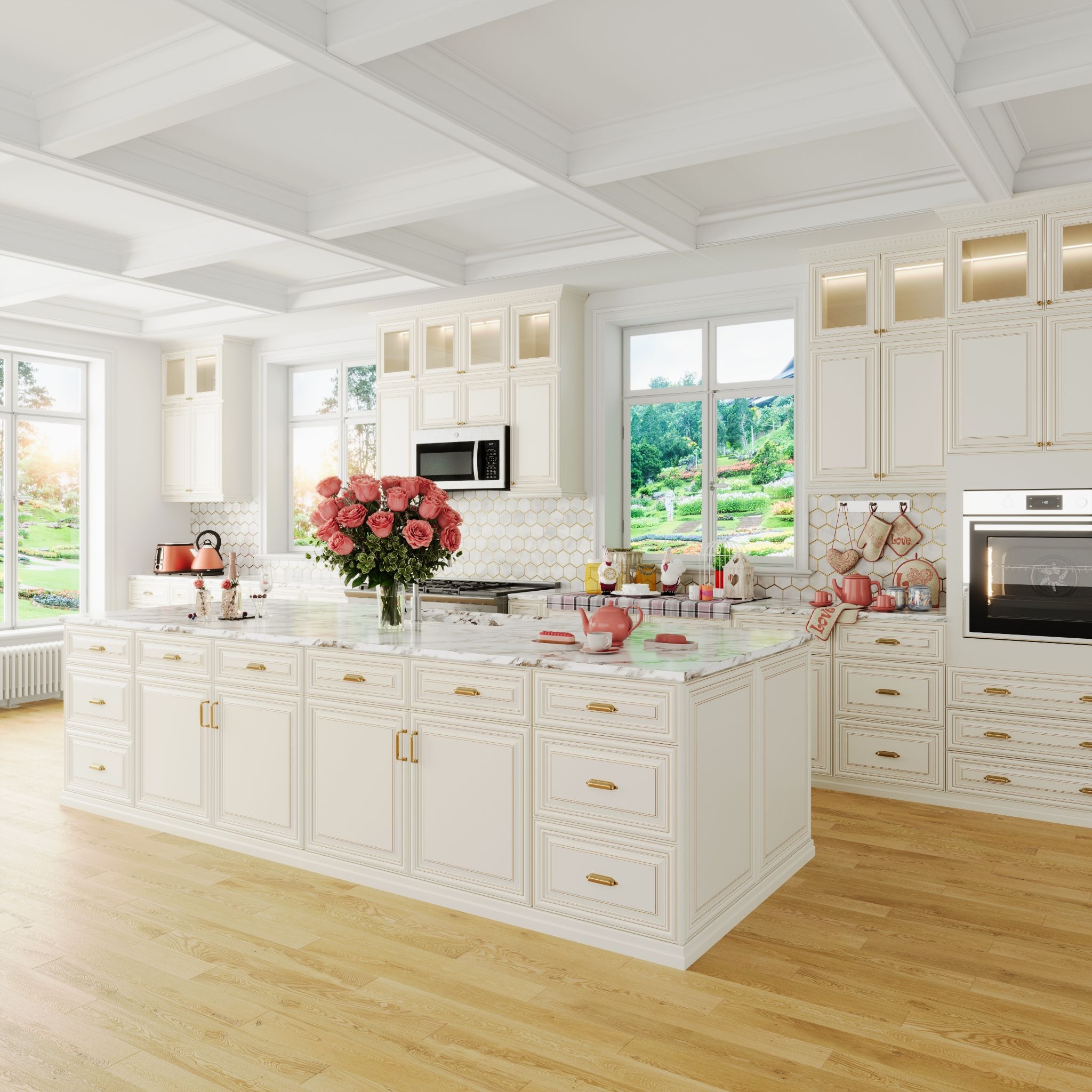
Roughly the first third to 40 percent goes to cabinetry, secured through the RTA route so that share buys quality rather than just quantity. The next portion goes to the cheap, high-visibility finishers: lighting, especially under-cabinet fixtures, and updated hardware and a faucet, all of which change how finished the room looks for relatively little money. After that, if budget remains, countertops, where a mid-tier quartz delivers nearly the look of premium stone at a fraction of the cost. Appliances and anything else come last, funded by whatever is left.
The principle underneath the proportions is simple: every dollar goes to what is seen and touched most, in descending order, and the categories that deliver little visible return wait at the back of the line or get cut.
More Ways to Stretch a Tight Kitchen Budget
A few choices make a fixed budget go further at every stage. Keeping the existing layout is the biggest of them: moving plumbing, gas, or electrical to relocate the sink or range adds substantial cost for a change buyers and family rarely notice, so keeping appliances roughly where they are protects the budget invisibly. Doing the labor that matches your ability is the second: cabinet assembly, painting, and sometimes installation itself convert paid labor into savings, if you have the time and patience. And choosing materials that read as premium without the premium price, mid-range quartz over exotic stone, is the third, since the visible difference rarely justifies the gap in a budget project.
Frequently asked questions about kitchen remodel budgets
How do I keep a kitchen remodel from going over budget? Budget backwards: fix the total first, then assign every dollar a job in order of priority before spending. Claiming and controlling the cabinet line first, the largest cost, is what keeps the whole project in bounds.
What is the most expensive part of a kitchen remodel? Cabinetry, at roughly 35 to 40 percent of a typical remodel. That makes it both the biggest savings opportunity and the line most capable of wrecking a budget if it runs unchecked.
Where do the biggest savings come from? Cabinetry, by a wide margin. RTA cabinets cost roughly 30 to 50 percent less than comparable pre-assembled lines, and up to 50 to 75 percent less than custom, which frees money for the rest of the kitchen without lowering quality.
Does keeping the existing layout really save much? Yes. Relocating plumbing, gas, or electrical is one of the costliest changes in a remodel, and the savings from keeping the footprint are often invisible in the finished room.
What should I spend on first? Cabinets, as the largest and most visible element, then the cheap finishers (lighting, hardware), then countertops, then appliances. Spend in descending order of what is seen and used most.
Backwards budgeting works because it forces the hard choices early, on paper, where they cost nothing to make, instead of late, at the register, where they cost real money and stress. Fix the number, claim the cabinet line, controlled through a smart RTA choice, fund the visible finishers next, and let the lower-priority items live on whatever remains. A kitchen planned in that order routinely looks like one that cost far more, because the money went where it shows and skipped where it does not.