 Craig Pornorey
Indoor plants do far more than add a splash of green to a room. They shape light, influence acoustics, and subtly shift the mood of any space they inhabit.
Understanding Space and Scale in Indoor Plant Design
Whether you gravitate toward a cluster of small pots on a windowsill or a few massive indoor plants anchoring your living room, the same core principles of light, scale, and consistent care apply. Getting those principles right is what separates a thriving indoor garden from a collection of struggling specimens—and that’s exactly what this guide is here to help you do.
Plant size is one of the most powerful tools in interior composition. A tall, broad-leafed specimen in an empty corner creates an instant focal point; a row of small pots along a narrow shelf adds rhythm without visual weight. Before committing to a large floor plant, it’s worth evaluating three practical factors:
- Light availability: the direction and intensity of your windows
- Floor space: clearance from walkways and furniture
- Proximity to heating or cooling sources, which can put real stress on sensitive foliage
Ceiling height matters too. A plant that reaches six feet looks commanding beneath nine-foot ceilings but can feel oppressive in a low-ceilinged studio apartment.
Matching Plant Size to Light and Microclimate
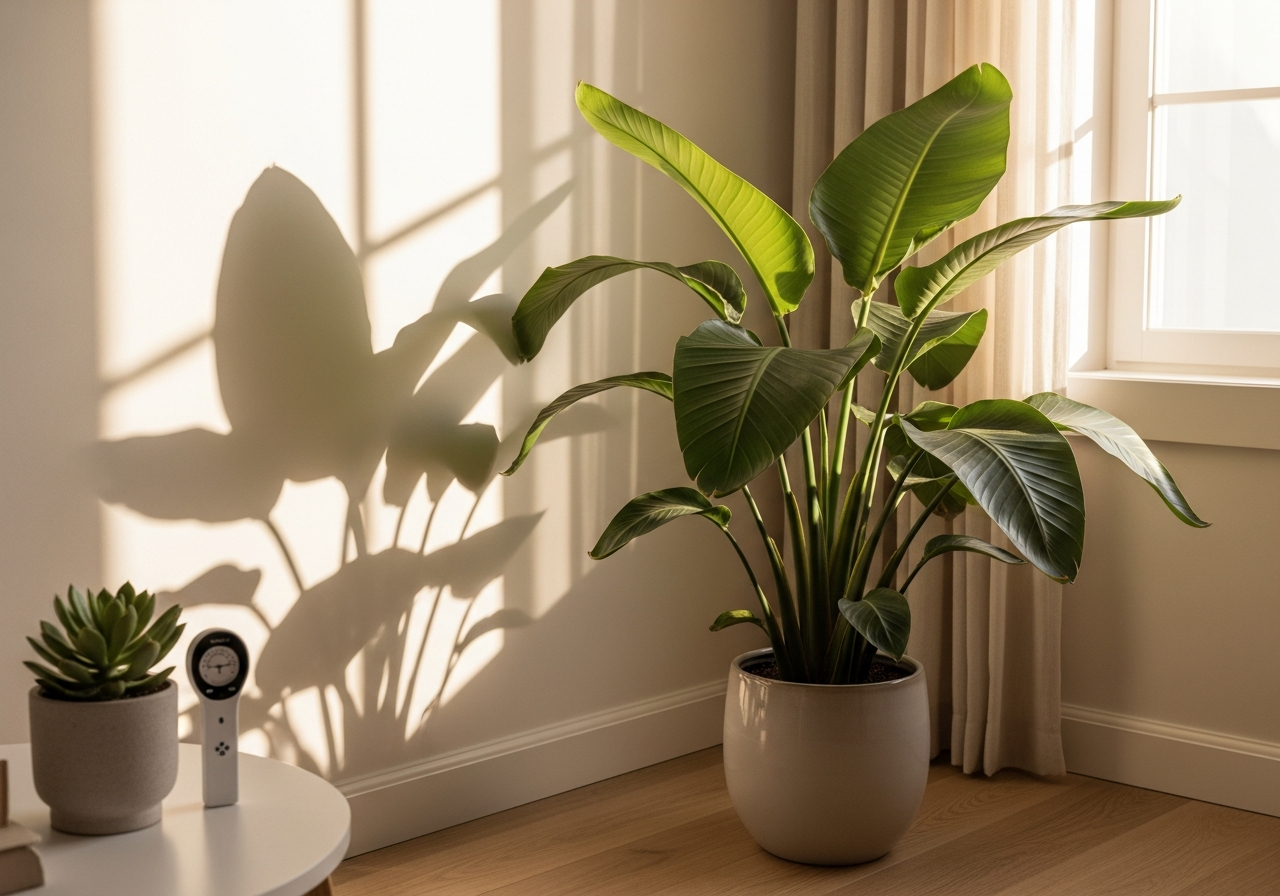
Larger plants carry more leaf surface area, which means they demand more consistent light. South- and west-facing windows typically deliver the strongest exposure, while east-facing windows offer gentler morning sun. Most large tropical species do best in bright, indirect light—close enough to a window for good intensity, but shielded from harsh midday sun that can scorch delicate foliage.
A simple shadow test can help you gauge your light levels: sharp, well-defined shadows indicate strong light, while faint or diffuse ones signal low light. Pale coloring and growth that leans noticeably toward a window are reliable signs that a plant needs repositioning.
Temperature and humidity are equally important. Many popular large-leafed species are tropical in origin and prefer stable warmth alongside moderate-to-high humidity. Grouping plants together naturally raises ambient moisture in the surrounding air. If a large plant near a drafty window starts dropping leaves, moving it even a few feet—and placing a pebble tray beneath its pot—can produce a noticeable recovery within weeks.
Key Takeaway: Large plants need a stable microclimate. Consistent light, moderate temperatures, and boosted humidity matter more than frequent watering.
Planning Layout: Positioning Large and Small Plants Together
One or two anchor plants surrounded by smaller specimens create layered depth without visual clutter. Corners, blank walls, and the space beside media units are ideal positions—spots where a large plant can breathe and be appreciated without crowding the room. Always leave enough clearance for routine maintenance, and make sure heavy containers are stable, particularly in homes with children or pets. Pots with drainage holes are non-negotiable; empty saucers promptly after watering to protect the roots.
Core Care Principles for Larger Indoor Plants
Large pots hold considerably more soil than small ones, which means they retain moisture far longer—making overwatering one of the leading causes of indoor plant decline. Always check the soil before you water: push a finger about two inches into the mix, or use a basic moisture probe. Water thoroughly until excess drains freely from the pot, then hold off until the upper layer of soil has dried before watering again.
Soil composition matters just as much as watering frequency. A well-draining mix—typically a combination of perlite, bark, and organic matter—prevents the waterlogging that starves roots of oxygen. Fertilize lightly during active growth and not at all during dormancy; excess fertilizer salts lead to leaf tip burn and long-term stress.
Quick Checklist for Large Plants:
– Light: adequate and consistent?
– Soil: dry enough to water again?
– Leaves: healthy color and firm texture?
– Pot: stable and draining freely?
For ongoing maintenance, remove yellowing leaves promptly and wipe large leaves occasionally with a damp cloth to keep photosynthesis running efficiently. A brief weekly check—leaf color, soil surface, direction of new growth—will catch early stress signals before they have a chance to escalate.
Integrating Large Plants into Different Home Types
In a small apartment, one well-placed statement plant in a living room corner delivers far more impact than several competing specimens vying for attention. Pair it with hanging plants at varying heights to build visual layers without sacrificing precious floor space. In larger, open-plan homes, tall plants can define zones naturally—framing a seating area, softening a dining space, or marking the boundary of a home office—without the rigidity of furniture partitions.
Bringing It All Together
Successful indoor greenery is less about collecting impressive species and more about consistent, attentive care. Choose plant size based on space, light, and microclimate. Prioritize well-draining soil, thoughtful watering, and regular upkeep. Use large plants to enhance a room’s atmosphere rather than overwhelm it.
Start with one larger plant, observe how it responds to its environment over several weeks, and adjust placement or care as needed. The right plant in the right place, with the right care, will transform your space for years to come.