 Craig Pornorey
Most people don’t plan to spend every Saturday morning working for their yard. It just sort of happens. You mow, you edge, you drag the hose over to the corner bed that always looks thirsty, and by the time everything is put away, half the weekend is gone. Then the water bill arrives.
Plenty of homeowners are tired of that routine. In Houzz’s latest outdoor trends study, 73% of renovating homeowners chose low-maintenance plants, and the share picking native and drought-resistant varieties went up as well. People still want a yard they’re proud of. They just don’t want it to feel like a second job.
You don’t need a full redesign to get there. A handful of targeted changes, done in a sensible order, can cut both the chores and the bills.
Rethink How Much Lawn You Actually Use
Walk your yard and be honest about it. Which parts of the grass get played on, sat on, or sprinted across by the dog? And which parts just get mowed? For a lot of families, there’s a stretch in the middle that matters and a ring around the edges that exists mostly to be cut.
That outer ring is the easiest win. Turn it into planting beds, a gravel path, or a small seating nook, and your mowing time drops right away. For the part you really do use, artificial turf has become a popular option, especially where grass keeps dying back or kids and pets wear it down to dirt. A look at a few backyard layouts that blend turf with pavers usually shows that you don’t need to cover the whole yard to get the benefit.
Turf has trade-offs, and it’s worth knowing them going in. It costs more upfront than seed or sod, it warms up in full sun, and it still needs an occasional rinse and brushing. What it doesn’t need is mowing, fertilizer, or weekly watering. On a busy patch of yard, that saving adds up quickly.
Plant Things That Don’t Need You
Fussy plants are where a lot of yard time quietly disappears. Annual flowers need replanting every spring. Roses want regular pruning. Anything poorly suited to your soil and rainfall will need extra water and attention just to stay alive.
Native plants are the shortcut here. They’re adapted to local conditions, so once they settle in they generally get by on rainfall and very little fuss. If you’re not sure where to begin, a free native plant database run by a bird conservation group lets you search by location and shows what grows well near you, along with nurseries that stock it.
Shrubs and perennials do the rest of the work. Plant them in tight groups and they’ll shade the soil, crowd out weeds, and hold on to moisture far better than scattered single plants ever could.
Put Hard Surfaces Where Feet Already Go
See that worn track from the back door to the shed? That’s the yard telling you where a walkway belongs. Pavers, flagstone, or a simple gravel path there means no more muddy shoes and no more reseeding bare spots every year.
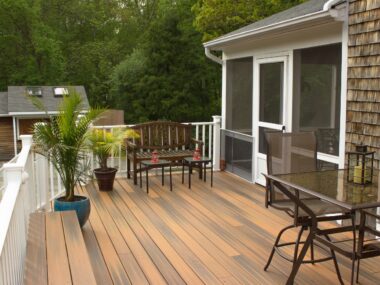
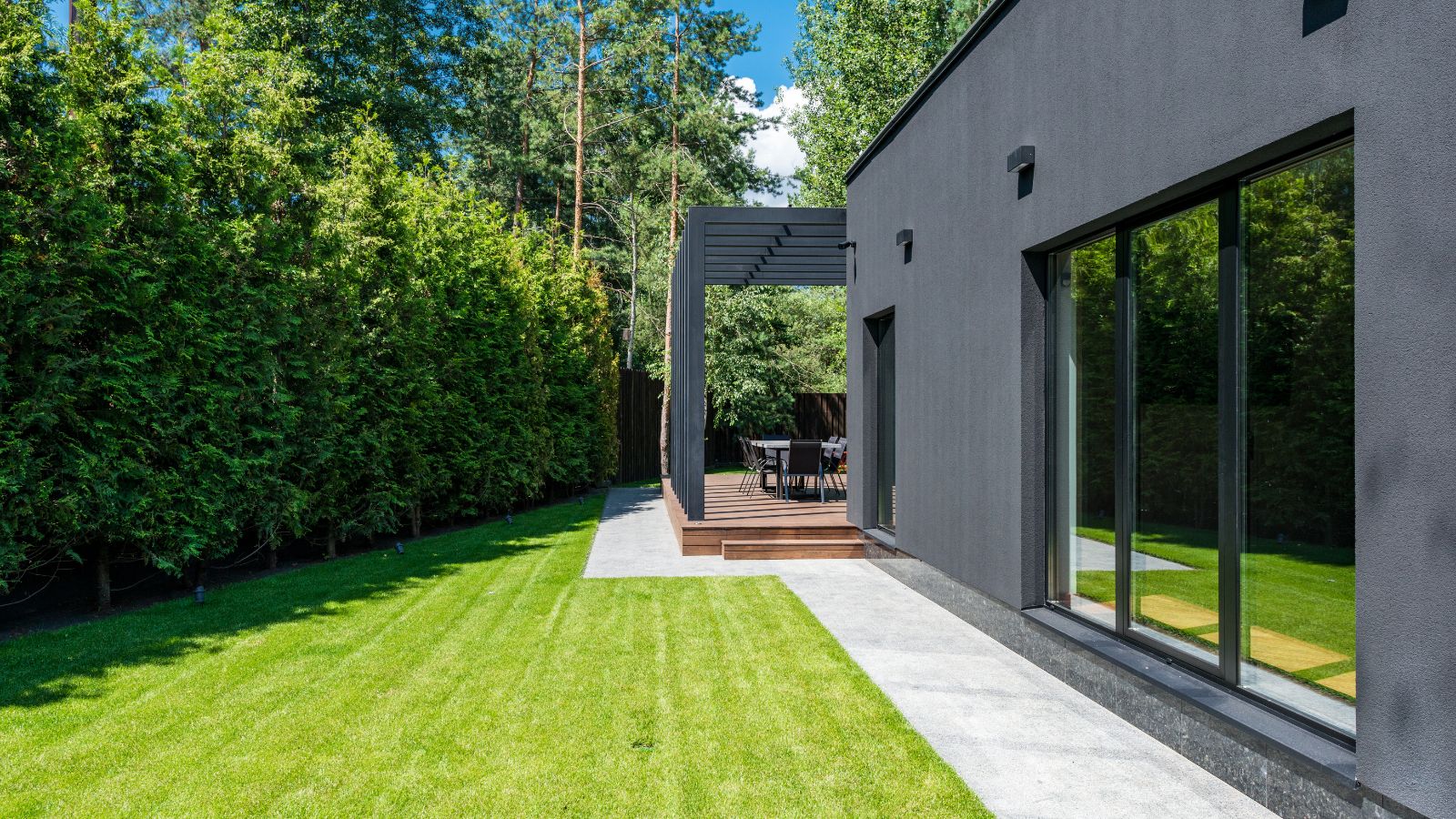
A patio or deck does the same thing on a bigger scale, swapping space you’d have to tend for space you’ll actually sit in. One caution from a well-known roundup of minimal-upkeep landscape designs: too much hard surface can make a yard uncomfortably hot in summer. Balance it with planting and a bit of shade.
Mulch Is the Cheapest Upgrade on This List
If you only do one thing this weekend, spread mulch. A couple of inches over your beds keeps weeds down, holds moisture in the soil, and makes even a tired garden look finished. It costs very little, and some towns give wood chips away for free. Most people can finish the job in an afternoon.
Top it up once a year. That’s the whole maintenance plan.
Let a Timer Handle the Watering
Watering by hand feels responsible. In practice, it’s very easy to overdo. The EPA’s WaterSense program estimates that as much as half of outdoor water use is wasted through overwatering caused by inefficient irrigation methods and systems.
A weather-based or soil-moisture controller fixes most of that by watering only when the ground needs it. Drip lines in planting beds help even more, since they deliver water straight to the roots and keep it off the path and the side of the house. Both are modest purchases, and many water utilities offer rebates on them, so check before you buy.
Pick Furniture and Materials That Clean Up Easily
Low maintenance goes beyond plants. Outdoor furniture made from powder-coated aluminum or recycled plastic shrugs off weather that would have you sanding and staining wood every spring. Composite decking skips the yearly sealing. A storage bench or small shed keeps cushions dry and tools in one place, which sounds minor until you’ve spent twenty minutes hunting for the hose nozzle.
Do It in Phases
None of this has to happen at once, and on most budgets it shouldn’t. Start with the cheap, quick wins: mulch, a watering timer, and replacing a few needy plants. Save the lawn changes and hardscaping for later, since those take more planning and more money. Spacing the work out also gives you a full season to see how your yard actually behaves before you commit to the bigger pieces.
More Weekend, Less Yard Work
A good low-maintenance yard still looks cared for. It simply asks for less in return. Every bed you mulch, every patch of lawn you retire, and every chore you hand off to a timer gives you back a little time. Add it up over a summer and you might find your Saturdays again. You might even sit in that patio chair you bought three years ago.