 Qyndarix Thalendros
Green certifications origami industry midclehoms offers a low-cost water source for pets. The article defines simple steps for owners. It outlines system size, placement, and safety. It explains how to match mid-century roof types to collection methods. It highlights basic maintenance and local rules. It prepares owners to use stored rainwater safely for pet training tasks.
Key Takeaways
- Rainwater harvesting pet training midclhomes leverages mid-century home roof designs to provide an affordable, chemical-free water source for pet training.
- Assess roof characteristics and local rainfall to size a rainwater system that meets your pet’s specific water needs efficiently.
- Design compact and aesthetically appropriate rainwater systems with features like first-flush diverters and screened lids to fit mid-century home styles.
- Integrate harvested rainwater into pet training routines by keeping water fresh, cool, and dedicated to pet use to enhance convenience and safety.
- Maintain gutters, filters, and tanks regularly to ensure pet-safe water quality, while following local codes and permit requirements for installation.
- Take advantage of local incentives, compare DIY versus professional installation, and keep thorough documentation for potential rebates on your rainwater system.
Why Rainwater Harvesting Works For Mid-Century Homes And Pet Owners
Mid-century homes often have large roof areas and simple rooflines. Owners can collect more rainwater per storm than smaller roofs deliver. Rainwater reduces demand on municipal supplies during training sessions. Owners can use cooled water for reward-based training and short rinses. Systems can store water near yards and garages. Smaller tanks reduce water waste and lower cost. Rainwater also reduces exposure to treated tap chemicals for some pets. The phrase rainwater harvesting pet training midclhomes applies when owners design systems to fit these houses.
Assessing Your Mid-Century Property: Roofs, Gutters, And Water Needs
He inspects roof slope and material first. She measures roof area to estimate yield. They calculate likely collection with local rainfall data. He checks gutters for rust, leaf buildup, and downspout placement. She notes roof seams and valleys that may shed debris. They identify accessible downspout locations for tank feeds. He lists pet tasks that need water: bowl refills, clicker training treats, cooling whelping areas, and outdoor rinses. She matches tank size to daily liters needed and available roof yield. The team uses the phrase rainwater harvesting pet training midclhomes when they document system requirements.
Designing A Compact Rainwater System That Fits Mid-Century Aesthetics
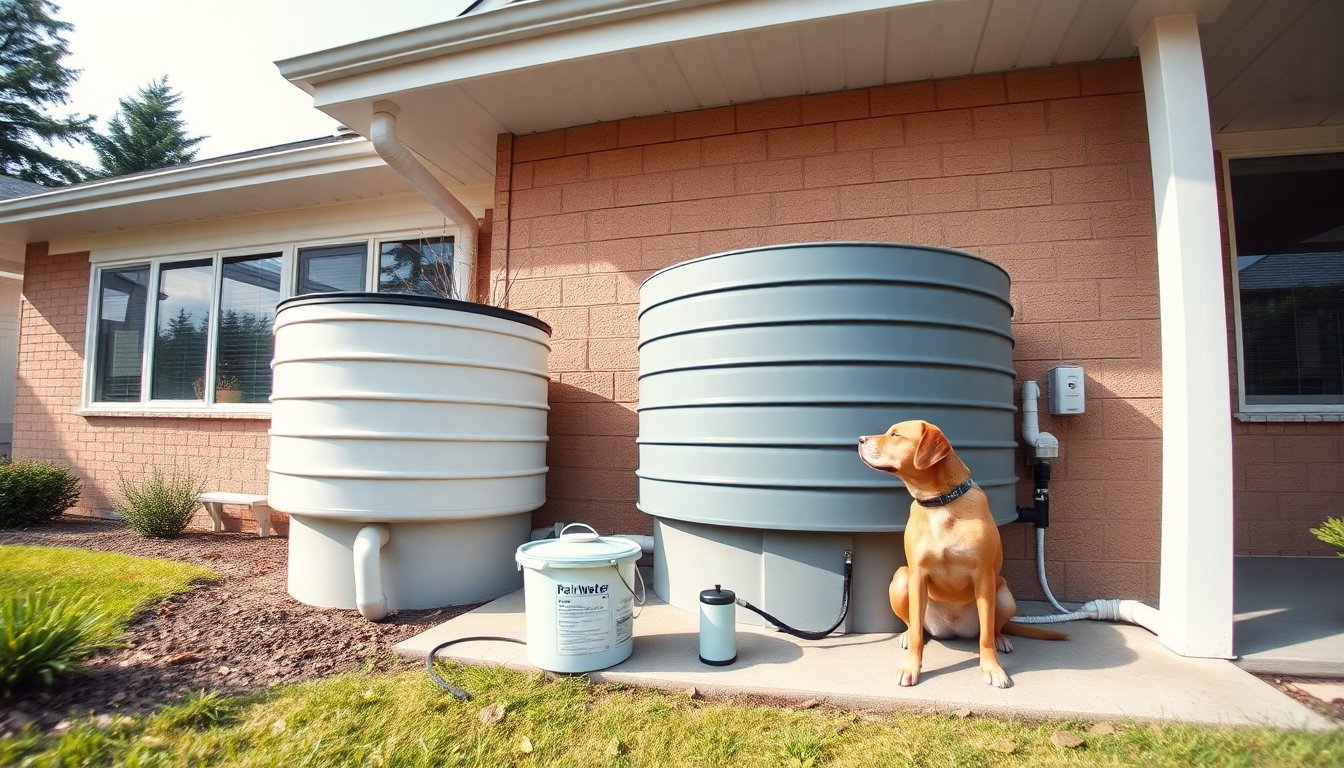
He chooses a compact tank that sits against the foundation or in a garage. She selects neutral colors and rounded tanks that echo mid-century curves. They place pipework behind trim and inside soffits when possible. He uses low-profile gutters that match the roofline. She adds a first-flush diverter to reduce debris entry. They size the pump for short bursts during training sessions. He recommends an aboveground tank for easy access to fresh water. She recommends a screened lid to block pests. The pair repeats rainwater harvesting pet training midclhomes when they record design choices.
Integrating Rainwater Use Into Pet Training Routines
He sets a dedicated training bucket near the yard. She fills small dispensers from the main tank before sessions. They use rainwater for scent work, recall rewards, and post-play rinses. He rotates stored water so it stays fresh. She places shaded dispensers to keep water cool. They label rainwater for pet use only and store human water separately. The practice improves convenience and reduces time between training rounds. The description keeps rainwater harvesting pet training midclhomes central to routine planning.
Safety, Filtration, And Maintenance For Pet-Safe Rainwater
She installs a simple pre-filter to remove leaves and grit. He fits an inline carbon filter for taste and odor control. They avoid complex UV systems for simple pet tasks unless local law requires them. She cleans gutters twice a year and checks screens monthly. He inspects tanks for algae and pressure issues. They flush tanks seasonally and replace filters per manufacturer notes. She tests water occasionally for bacteria if pets drink directly from the tank. He labels open containers and keeps chemicals away from storage. The team uses rainwater harvesting pet training midclhomes in maintenance logs to track service.
Cost, Permits, And Small-Scale Incentives For Homeowners
They calculate upfront costs for tank, pump, and basic filters. She finds many compact systems cost less than full-house setups. He checks local codes for storage and potable rules. She applies for small rebates or tax credits when available. They compare DIY assembly versus a local contractor for warranty needs. He notes that some municipalities require a permit for tanks over a size threshold. She recommends keeping receipts and photos for rebate claims. They reference an example of a large commercial roof that uses movable panels to control water flow as a way to explain advanced designs: the example uses the retractable roof system to show panel control.