 Mylarith Qynthoril
For decades, Bangkok’s wealthiest residents put up with traffic, noise, and long commutes because that’s where everything was. The office, the international school, the fine dining, the golf club, it all required being in or near the city centre. But that calculus has shifted significantly over the past several years, and the rise of the luxury township in Thailand is perhaps the clearest sign of that change.
Buyers today aren’t just shopping for a house. They’re shopping for lifestyle infrastructure, and they want it all under the same address.
What Is a Luxury Township, and Why Does It Matter Now?
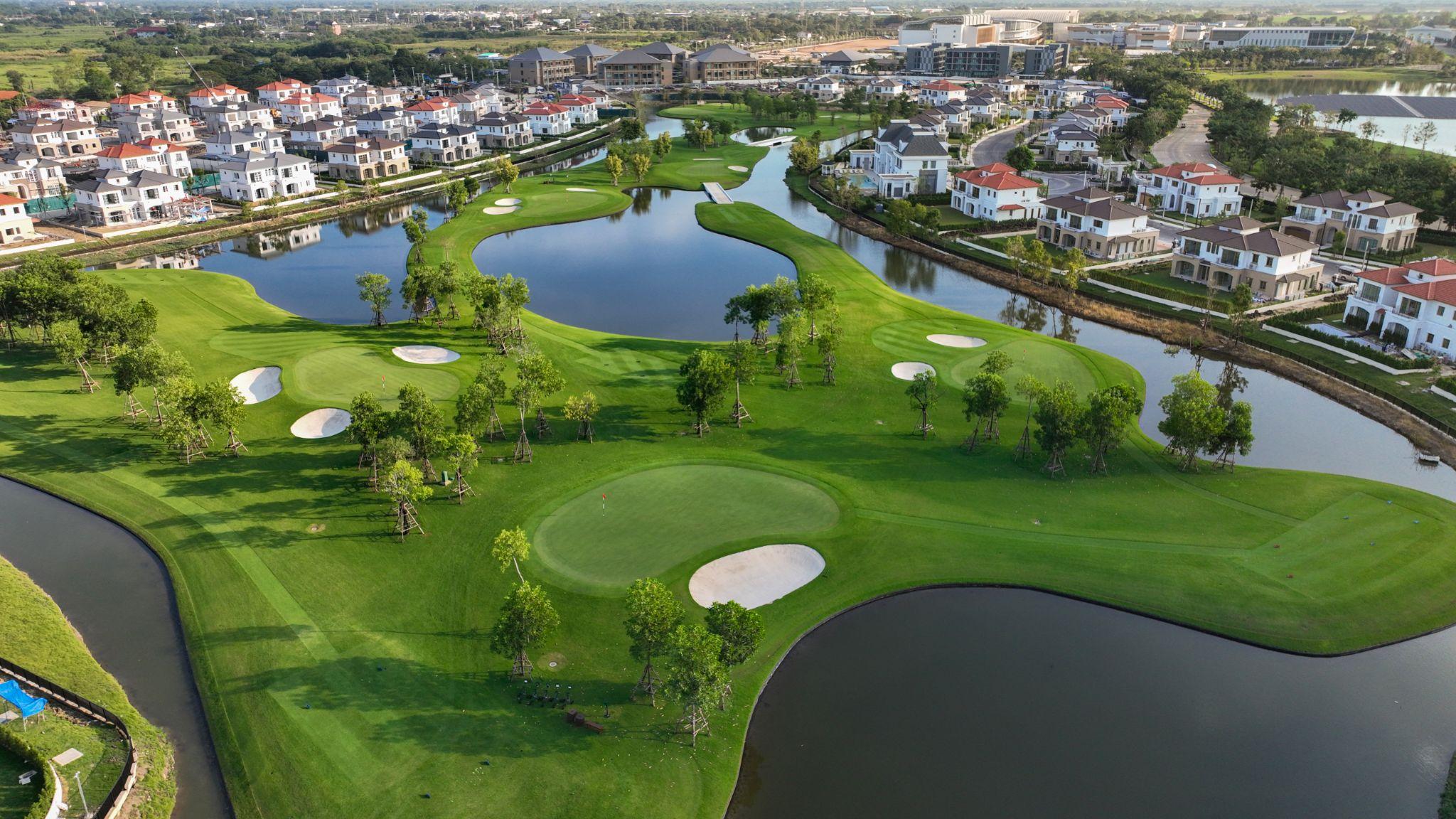
A township, in the residential-development sense, is a large-scale, master-planned community that goes well beyond gates and a guardhouse. The concept bundles housing with amenities that residents would otherwise have to leave their neighbourhood to access schools, retail, healthcare, sport and recreation, and in some cases, hotel-grade services.
In Thailand, this model has gained serious traction among both local buyers and expatriates. The reasons are fairly straightforward. Bangkok traffic remains genuinely punishing, and families with children are increasingly reluctant to spend hours a day in a car just to access the things that make daily life function. A township that puts a golf course, a supermarket, an international school, and a fitness centre within walking or cycling distance of the front door is not a luxury in the frivolous sense. It’s a practical solution to an urban problem.
Post-pandemic attitudes accelerated this shift. Working from home became normalised across professional sectors, which meant that proximity to a CBD was no longer a non-negotiable for many buyers. Once that constraint loosened, the question shifted from “how close is it to Silom?” to “how good is the life inside the gates?”
The Key Features Buyers Are Looking For
Not all township developments are created equal. Buyers who are serious about this type of purchase tend to evaluate communities across a fairly consistent set of criteria.
Education access sits near the top of almost every family buyer’s list. Having an international school either within the development or within a few minutes’ drive is often the deciding factor. Some communities have taken this further by building proprietary school campuses on-site, eliminating the need for a school run.
Recreational infrastructure is the second major pillar. Golf courses are a traditional marker here, but buyers are increasingly looking at a fuller picture, running and cycling trails, tennis courts, fitness centres, swimming pools, and wellness facilities like spas or onsen. A single golf course is no longer enough on its own.
Retail and F&B within the development, or immediately adjacent to it, round out the practical side. A township that requires a 45-minute drive for a decent meal or a grocery run has a structural problem, no matter how beautiful the homes are.
Security and privacy remain baseline requirements rather than differentiators at this price point, but buyers do distinguish between token security and genuinely managed perimeter control with professional staffing.
Community scale matters too. Larger developments with more residents tend to support more robust amenity programming, while smaller developments can feel underutilised and quiet in ways that aren’t always desirable.
Where the Market Is Developing
The most active corridors for luxury township development in Thailand are concentrated in several areas outside central Bangkok.
Nonthaburi and Pak Kret have attracted significant investment from major developers, partly due to their road and expressway access and the availability of large land parcels. Communities in this corridor tend to offer strong connectivity without the premium that comes with inner-city land costs.
The Eastern corridor along Sukhumvit and the Eastern Seaboard has historically housed expatriate communities and continues to see demand from international buyers, particularly those connected to industrial and logistics sectors.
The northern suburbs, including the Rangsit and Pathum Thani areas, have developed into genuine residential alternatives for families, supported in part by the expansion of international school options in those districts.
Ratchapruk and the western suburbs represent another cluster, benefiting from infrastructure improvements and relatively lower land costs compared to the east.
Each corridor has its own character, and buyers typically prioritise one based on where they work, where they schooled their children, or simply where they feel comfortable.
Reignwood Park: the Complete Lifestyle Model
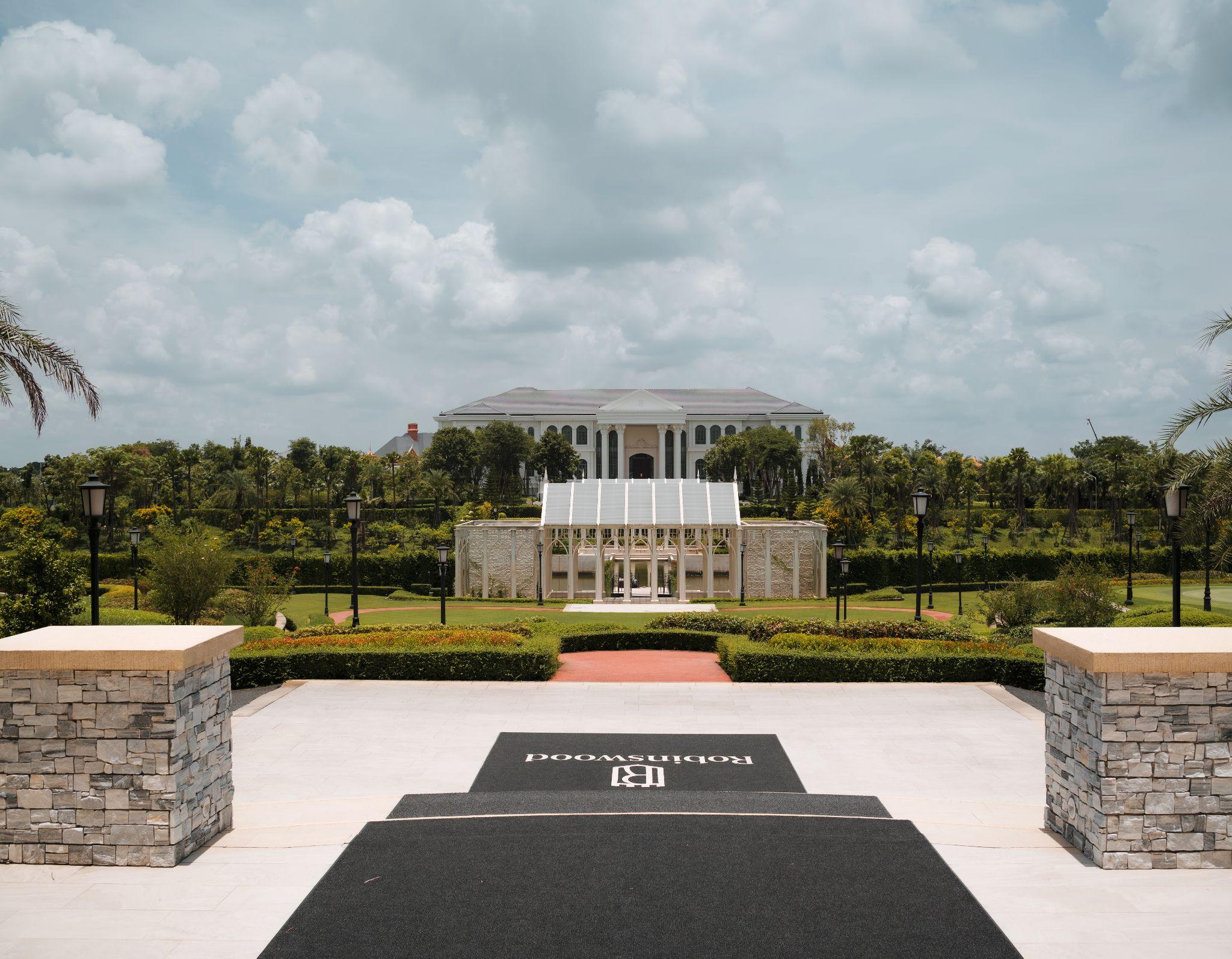
One development that has positioned itself explicitly around the township concept is Reignwood Park, a large-scale residential community in Thailand that spans 182 rai for its flagship collection alone and encompasses multiple residential product types within the same master plan.
What makes Reignwood Park a relevant example in this context is the range of what it integrates within a single address. Residents have access to a golf course, an onsen, a co-working space, a gym, and a 10-kilometre walking and cycling track. The development also carries global privileges unusual in the Thai market, including private access to Wentworth Golf Club in London and Reignwood Pine Valley in Beijing, along with a chauffeur-driven Rolls-Royce experience, amenities that blur the line between residential living and private club membership.
Across its residential collections, the development spans different scales and price points, from the ESTATE collection of 41 bespoke mansions with living spaces starting at 1,500 square metres, down through SERENO and SONIA, which offer family-scale homes with strong access to shared facilities. This kind of tiered structure within a single community is characteristic of the more sophisticated luxury township Thailand developments entering the market, where a master plan accommodates multiple buyer profiles without compromising on the overall quality of the environment.
The result is a community that genuinely competes with the city centre on lifestyle completeness rather than just offering an escape from it.
The Comparison That Buyers Are Running
When families sit down and seriously compare their options, the conversation typically runs something like this: city-centre condo living offers proximity and convenience but sacrifices space, quiet, and community. A standalone luxury villa in the suburbs offers space but can feel isolated. A luxury township attempts to capture what’s best about both.
The comparison isn’t always comfortable for standalone developments that market themselves as premium without the infrastructure to justify it. Buyers at the higher end of the market have become increasingly sophisticated, and they probe for specifics. What is actually on-site? What requires a drive? Who manages the facilities and to what standard? Is the school genuinely good, or is proximity its only selling point?
Developers who can answer those questions with confidence are winning deals. Those who rely on impressive renders and vague lifestyle language are losing ground to communities where the answer is a walkable site tour.
What This Means for the Thailand Property Market
The growing appetite for township living is reshaping how developers think about land acquisition and product design. Parcels large enough to accommodate true mixed-use programming command premiums that were not as sharply priced a decade ago. The market is beginning to recognise the township premium as a legitimate category, not just a marketing angle.
For buyers, this is broadly positive. Competition between developers of this type is driving up baseline standards. A co-working space and a gym were differentiators five years ago. Today, they’re table stakes. The communities that will lead the next cycle will need to offer something genuinely distinctive, whether that’s educational infrastructure, wellness programming, global network access, or a calibre of design and landscaping that makes daily life feel like something more than just a commute to and from a comfortable house.
Thailand’s luxury property market has always attracted buyers who could choose to be anywhere. The township model is what increasingly convinces them that the answer is here.