 Mylarith Qynthoril
For all the progress in residential energy performance, one part of the house still gets treated like an afterthought: the garage door.
That’s a problem, because modern homes are far more sensitive to weak spots in the building envelope than they used to be. Walls are better insulated. Windows are tighter. Roof assemblies are more carefully detailed. HVAC systems are increasingly sized around efficiency rather than brute force. Yet in many homes, the largest moving element on the exterior is still a thin, poorly insulated garage door exposed to full sun, wind, and temperature swings.
It’s not just an issue for the garage itself. In attached homes, garage temperature affects adjacent bedrooms, utility rooms, bonus rooms above the garage, and even the runtime of HVAC equipment in nearby conditioned spaces. If you’ve ever wondered why one room is always hotter in summer or colder in winter despite good insulation elsewhere, the garage may be quietly driving the problem.
The Building Envelope Got Better — Garage Doors Didn’t Keep Up
For decades, thermal design in housing focused on the obvious areas: attic insulation, wall cavities, window glazing, and air sealing around penetrations. Those upgrades made sense, and they worked. But they also changed the performance baseline of the entire home.
Once the rest of the envelope improves, previously minor leaks and weak materials become more important. A garage door that might have seemed “good enough” in a drafty older house can become a major liability in a tighter one. That’s especially true in suburban housing, where attached garages are common and often sit directly beneath or beside conditioned rooms.
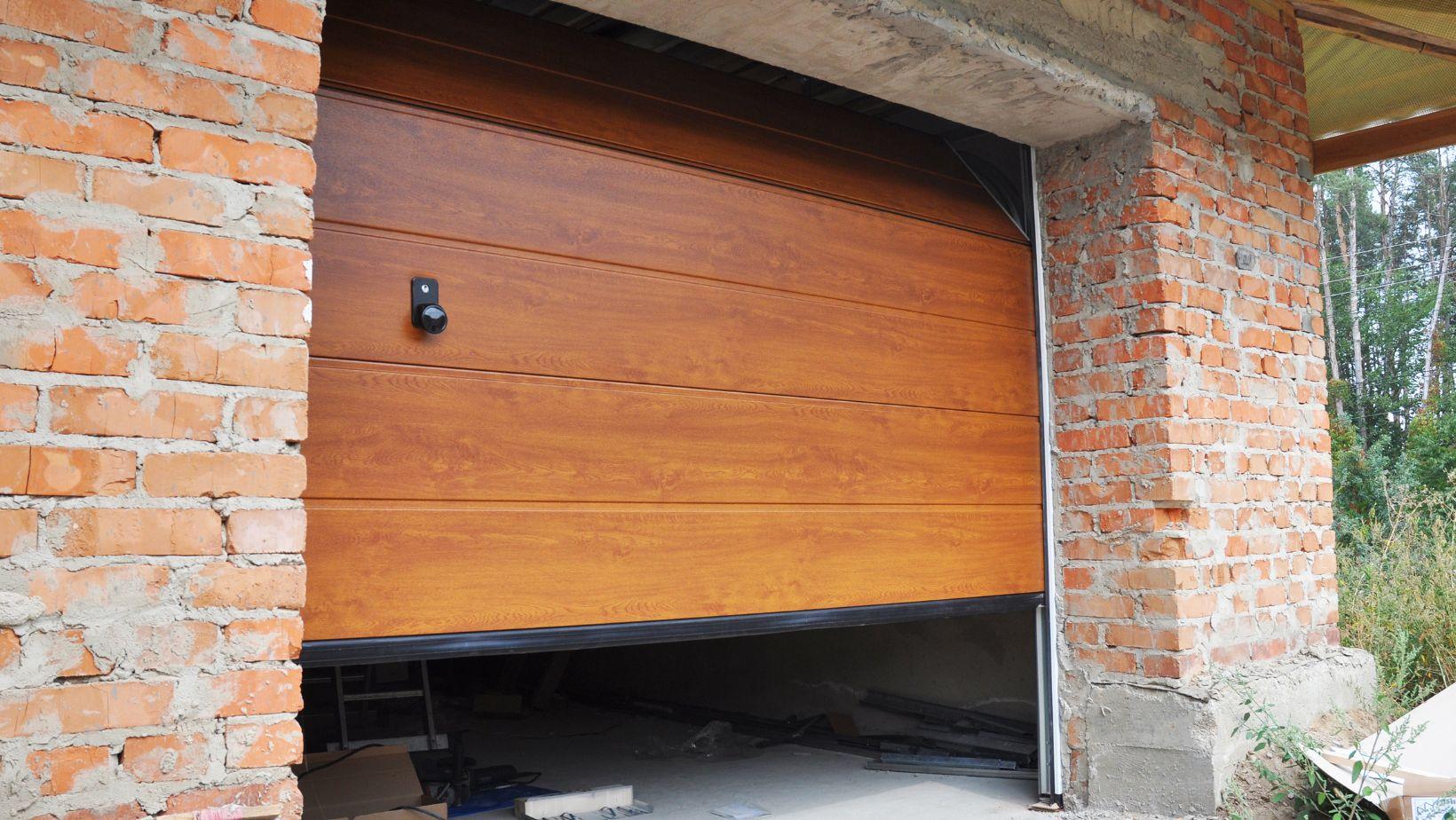
The irony is that garage doors are enormous. A standard double door can cover well over 100 square feet. In thermal terms, that’s not a detail—it’s a wall-sized opening, usually built from thin steel, aluminum, vinyl, or lightweight composite panels with joints, seams, and perimeter gaps. Even when labeled as insulated, many doors still suffer from thermal bridging through metal skins and framing.
Why the Garage Door Becomes a Thermal Hotspot
The issue is not just low insulation value. It’s the combination of size, material, and exposure.
Large Surface Area, Minimal Resistance
A wall may have continuous insulation, air barriers, and careful detailing. A garage door, by contrast, has to move. That means panel breaks, tracks, weather seals, and hardware interrupt what would otherwise be a continuous thermal layer. In many homes, the door has far less effective resistance to heat flow than the surrounding wall.
Solar Gain Makes the Problem Worse
West- and south-facing garage doors can absorb an enormous amount of solar radiation, especially when finished in darker colors. By late afternoon, the interior surface temperature of the door can climb well above outdoor air temperature. That heat radiates into the garage, and from there it migrates into nearby rooms through shared walls and ceilings.
This is one reason bonus rooms over garages are notorious comfort complaints. Homeowners often blame the HVAC system first, but the garage itself is frequently acting like a giant heat reservoir.
Air Leakage at the Perimeter
Even a reasonably insulated garage door can underperform if air sealing is poor. Bottom seals wear out. Side gaskets compress unevenly. Framing settles. Wind pressure pushes hot or cold air through the perimeter. If the garage is attached, pressure differences can also encourage that air to move toward the house.
For homeowners looking at retrofit options, a garage door insulation kit can help reduce radiant heat transfer and improve overall thermal performance, especially when paired with fresh perimeter weatherstripping. The important point is not that every garage needs a total replacement; often, the best gains come from addressing the door as part of the larger envelope strategy.
The Design Assumption That Keeps Causing Problems
Part of the issue is cultural. Garages are often treated as “unconditioned,” which leads builders and homeowners to assume their performance doesn’t matter much. On paper, that sounds reasonable. In real life, the garage is rarely thermally isolated from the rest of the house.
There may be ductwork running through it. Water heaters and laundry equipment may sit inside it. Bedrooms may share a wall or floor assembly with it. Doors between the garage and house may be opened frequently. In many homes, the garage becomes a buffer zone that directly influences indoor comfort whether it was designed to or not.
That mismatch between theory and use is why garage doors keep showing up in thermal imaging inspections. The rest of the house may be relatively well controlled, but the garage door stands out as a large, bright patch of heat gain or loss.
What Better Thermal Design Looks Like
Solving the problem doesn’t require treating the garage like a conditioned living room. It requires recognizing that temperature moderation in the garage has ripple effects beyond the garage itself.
Start With the Door Assembly
The first step is evaluating the actual door, not the marketing label. Ask a few practical questions. Is there real insulating material in the panels, or just thin skins? Are there visible gaps at the sides or bottom? Does the door face direct afternoon sun? Is there a room above or beside the garage that struggles to stay comfortable?
Those answers usually tell you more than the brochure.
Think in Systems, Not Parts
A better-performing garage depends on several elements working together: the door, perimeter seals, adjacent wall insulation, ceiling insulation under living spaces, and air sealing at all shared boundaries. If one component is neglected, the rest can only do so much.
This is where many retrofit efforts fall short. A homeowner may add attic insulation above the bedroom over the garage, but if the garage door still drives extreme heat buildup below, the room may continue to feel off.
Match the Solution to the Climate
In hot climates, radiant heat and solar gain may dominate. In cold climates, conductive loss and air infiltration may matter more. Humid regions introduce another wrinkle: temperature swings in the garage can increase condensation risk on ducts, pipes, and cold surfaces. Good thermal design is always local.
The Bigger Lesson for Home Performance
Garage doors became the weakest point in modern thermal design because the rest of the house moved forward faster than they did. As builders tightened envelopes and improved insulation elsewhere, the oversized, moving, lightly insulated door remained a stubborn exception.
That doesn’t mean the garage door is a fatal flaw. It means it deserves the same level of attention homeowners now give windows, attics, and crawl spaces. In a house where comfort and efficiency depend on controlling heat flow, a wall-sized opening can’t be treated as a minor detail.
If you want a more comfortable room above the garage, lower heat buildup in summer, or fewer winter temperature swings near shared walls, start there. Sometimes the weakest point in the thermal design is also the easiest one to overlook.