 Mylarith Qynthoril
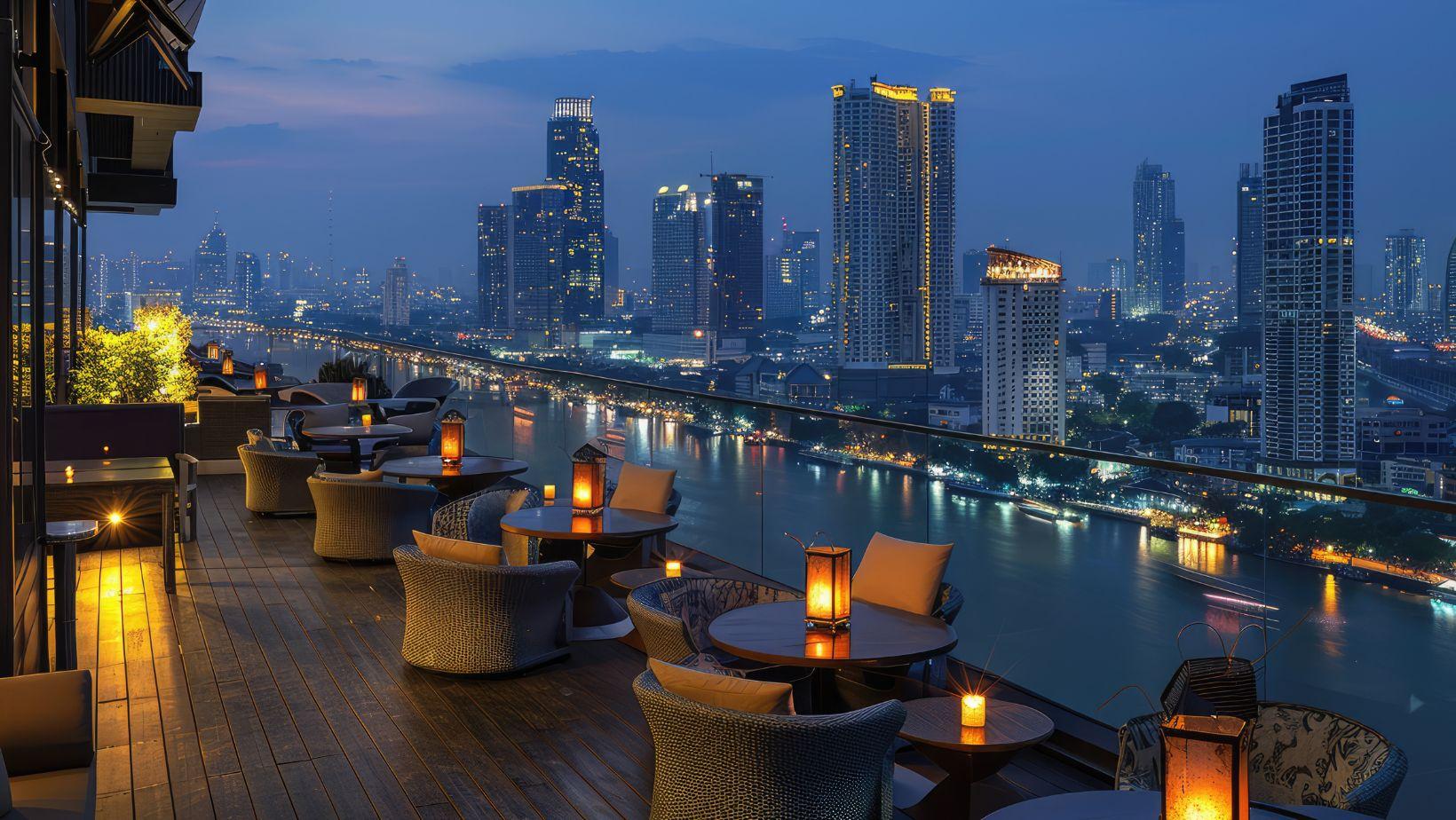
Bangkok’s luxury property market really offers two different visions of city life, not one. Along the Chao Phraya River, buyers chase space, water views, and a slower daily rhythm. In the Sukhumvit, Sathorn, and Ploenchit core, buyers chase proximity: to offices, embassies, restaurants, and the BTS and MRT grid that ties the city together. Neither address is objectively better. Each serves a different kind of life, and increasingly, a different kind of buyer. Before comparing individual listings, it helps to understand what each side of Bangkok actually delivers day to day.
The Riverside Address: Space, Views, and a Slower Pace
For decades, riverside living in Bangkok meant a trade-off: exceptional views in exchange for real distance from the transit network. That trade-off has narrowed. The BTS Gold Line now runs from Krung Thon Buri across to Charoen Nakhon and on toward the ICONSIAM district, and the stretch of riverbank it serves, once lined with old shophouses and small ferry piers, has become one of the most active development corridors in the city. Some in the local property press now call it Bangkok’s “Gold Coast.”
The building stock reflects that shift. Branded and hotel-linked residences such as the Four Seasons Private Residences, part of the Chao Phraya Estate development, and the Banyan Tree Residences Riverside sit alongside long-established names like The River Condominium. Many of these towers are built at lower density than their city centre counterparts, in some cases limiting each floor to only a handful of units so that most residences keep an unobstructed water view.
The lifestyle case is straightforward. Larger floor plates for a comparable budget, direct river frontage that no CBD tower can replicate, and a daily rhythm set by the water rather than the street. Many residents commute or run errands partly by boat, using the Chao Phraya Express or a hotel’s own shuttle service, an option unavailable anywhere else in the city. One trade-off remains: even with the Gold Line’s extension, most riverside buildings still sit a short taxi or boat ride from the nearest BTS interchange rather than directly beneath one, so buyers whose daily life depends on transit access should factor that distance in.
The City Centre Address: Convenience, Density, and Constant Motion
The alternative is Bangkok’s established core: Sukhumvit’s Thonglor, Ekkamai, Phrom Phong, and Asoke districts, together with Sathorn, Silom, and Ploenchit closer to Lumpini Park. This is where the city’s international schools, embassies, and head offices concentrate, and where the BTS and MRT lines intersect most densely.
Living here means walkability in the fullest sense: groceries, restaurants, gyms, and a train station within a few minutes on foot of most buildings. It also means a deep, liquid rental market. Corporate relocations, short-term international tenants, and long-term expat residents all compete for the same stock, which keeps turnover and rental demand consistently strong compared with more peripheral parts of the city.
The trade-off runs the other way from riverside living. Floor plates tend to run smaller for the same budget, buildings sit closer together, and street-level density and traffic are simply part of daily life, even though the transit network itself moves efficiently. For buyers who prioritise a compact, highly connected base over square metres, this is usually the more practical choice.
Price, Yield, and Buyer Profile: How the Two Markets Differ
The two markets tend to attract different buyers for reasons beyond taste. Riverside units generally suit end users and long-horizon holders who want space, privacy, and a hotel-branded service layer, often as a primary or secondary residence rather than a pure rental play. City centre units, by contrast, see heavier turnover and a broader buyer pool, which historically supports faster resale and a more active rental market driven by corporate tenants.
Rental yields and resale timelines vary by building, unit size, and market conditions at any given point, so they are best confirmed against current listings rather than fixed figures. The same applies to foreign ownership. Under Thailand’s Condominium Act, foreign nationals may collectively hold freehold title to up to 49 percent of a building’s total floor area, a rule that applies equally to riverside and city centre developments. That quota is currently under policy discussion for some special economic zones, so buyers should confirm a building’s remaining allocation with the juristic person or a licensed advisor before making an offer, rather than relying on a figure quoted elsewhere.
Which Bangkok Fits You?
The decision usually comes down to a few honest questions rather than the listings themselves:
- Does your daily routine depend on walking to a BTS or MRT station, or can you build in a short taxi or boat ride?
- Are you buying a home to live in for years, or a unit built primarily to rent out?
- Do you value space and a water view more than being minutes from every restaurant you might want to try?
- Will family, schooling, or an office commute anchor your daily movement to a specific part of the city?
There is no wrong answer, only a mismatch if the property doesn’t fit the life it needs to support. For buyers weighing both sides of the city at once, browsing current luxury property Bangkok listings is a practical way to see the actual gap in space, price, and unit type between the riverside and the centre, rather than relying on generalisations.
Bangkok will keep building in both directions, along the river and up through the centre, and both markets are likely to remain distinct rather than converge. For most buyers, the better question isn’t which address is better overall, but which one matches how they actually plan to live in the city.