 Mylarith Qynthoril
Most people picture a home cinema as a huge basement with motorized recliners and a price tag that needs a second mortgage. You can skip all that. A spare bedroom, an attic, or an awkward bonus room will do, and you don’t need commercial gear or a room built like a multiplex. Here’s how I’d put together a cozy cinema space without wrecking the budget.
The room you’ve already got
Before you phone a contractor, stand in the room and look at it properly. A 10-by-12 guest room is plenty. So is an attic that’s mostly home to old holiday decorations. Size matters less than you’d think. Light control matters more.
Paint changes more than you’d expect. Charcoal, navy, or a muted forest green all work, because dark matte walls swallow light instead of sending it back at the screen. The picture looks richer and, as a bonus, the room gets cozier. Just stay away from gloss, which throws reflections over whatever’s playing.
Got windows? Get heavy blackout curtains. Afternoon sun will wash out the screen otherwise, and the curtains also dull street noise, which surprised me. Drawn shut, they also make the room feel like a retreat.
Screen and sound
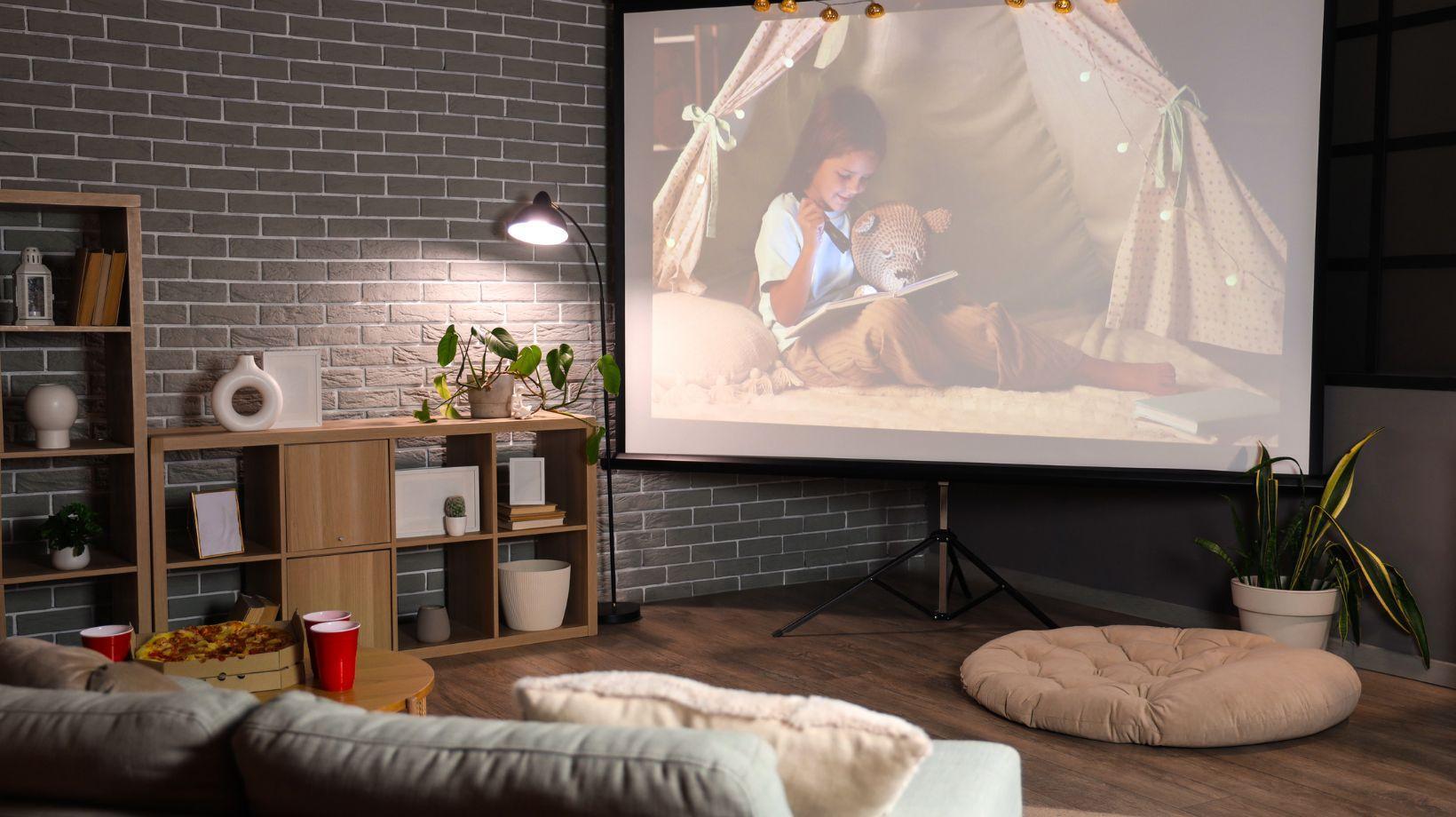
A giant projector setup looks great on social media, and it’s easy to want one. They come with headaches, though. The room has to be very dark, and you’ll be replacing bulbs and cleaning filters. For most households a 65- to 75-inch 4K TV is less hassle. Modern TVs are bright enough that a sunny afternoon isn’t a problem when it comes to watching your favourite shows. Remote, power button, done.
Still set on a projector? Then look at the lumen rating first. Look for one that can cope with a little ambient light, so you can put on a daytime cartoon without sealing the room like a bunker. With a big TV, an anti-glare treatment cuts window reflections.
Sound matters as much as picture, and you don’t need a full surround system or cables run through the walls. A decent soundbar with a wireless subwoofer and a pair of small rear speakers covers it. Action scenes get their rumble, and dialogue stays clear enough that you aren’t hunting for subtitles. My habit is to stick the subwoofer in a front corner, where the bass gets a boost, and point the rear speakers straight at the couch. You’ll probably spend a while tweaking settings. Annoying, but it pays off.
Design for everyday use
A cinema room shouldn’t sit empty most of the week. Yours will get the Sunday football game, a true-crime doc on a Tuesday, and kids burning off energy on video games when it rains, so build in some flexibility.
Furniture eats budgets. Motorized theater recliners are comfy, no argument, but buy four or five and the cost climbs fast. The big frames also make the room feel cramped and pin you to one layout. I’d go with a deep sectional instead. People can sprawl, kids can build a blanket fort, and if it has a chaise or a pull-out bed you’re set when company stays over.
Then there’s how you’d actually live in the room. Some people fold laundry while the news is on. Others read a book while the rest of the family watches something. For that you want decent, warm overhead light during the day, because a pitch-black cave gets old fast when nobody’s watching a movie.
Don’t ignore the floor. A thick area rug feels great under bare feet and quietly helps the sound. Hard floors bounce audio around, which makes dialogue tinny and leaves an echo. A rug soaks up those reflections. It won’t replace professional acoustic paneling, but it’s cheap.
It’s the small stuff that makes a room livable. Somewhere to put a drink, so it isn’t wobbling on your knee, is the big one for me. Leave legroom too, or someone gets kicked, and keep a clear path to the door for midnight snack runs.
Lights and the finishing bits
A single harsh ceiling light kills the mood. Swap in a dimmable one, or use a couple of floor lamps with warm bulbs. You can see well enough to hand out popcorn, then turn everything down once the film begins.
Smart bulbs are worth the money, I think. Brightness lives on your phone, and you can set a movie routine so the lights drop when the TV comes on, which is oddly satisfying. Low amber light also cuts screen glare.
Foam does tame echo, but you don’t need walls covered in black egg-crate wedges to get decent sound. Fabric-wrapped panels come in plenty of colors, and heavy drapes and woven wall hangings do a good job of softening the room too. For decoration, put up movie posters, framed stills, or family photos so it feels like home, and keep glass frames off the wall opposite the screen, since they catch the light.
Finish with a sturdy side table for drinks and a media console that has doors. Remotes, controllers, and the cable tangle all go inside. Less visual clutter helps when you’re trying to relax.
Making it yours
Really it comes down to the room you’ve got and gear that suits your habits. Cover the windows first. Then spend what you can on picture and bass, and find a sofa the family will argue over for the middle seat.
Don’t worry about magazine-perfect on day one. Use the room for a while, see what bugs you, then add a panel or two or change a lamp. Better speakers can wait until you’ve saved up.