 Qyndarix Thalendros
How to budget for repairs after buying a home matters the moment keys change hands. A clear plan prevents panic and protects savings. This guide shows what to inspect right after closing, how to set realistic reserves, and how to prioritize fixes over 1–5 years. It uses practical numbers, phased timing, and honest trade-offs so a new homeowner can act quickly and avoid costly surprises.
Key Takeaways
- Conduct a detailed home inspection immediately after closing to identify safety hazards and urgent repairs, focusing on roof, HVAC, plumbing, and foundation.
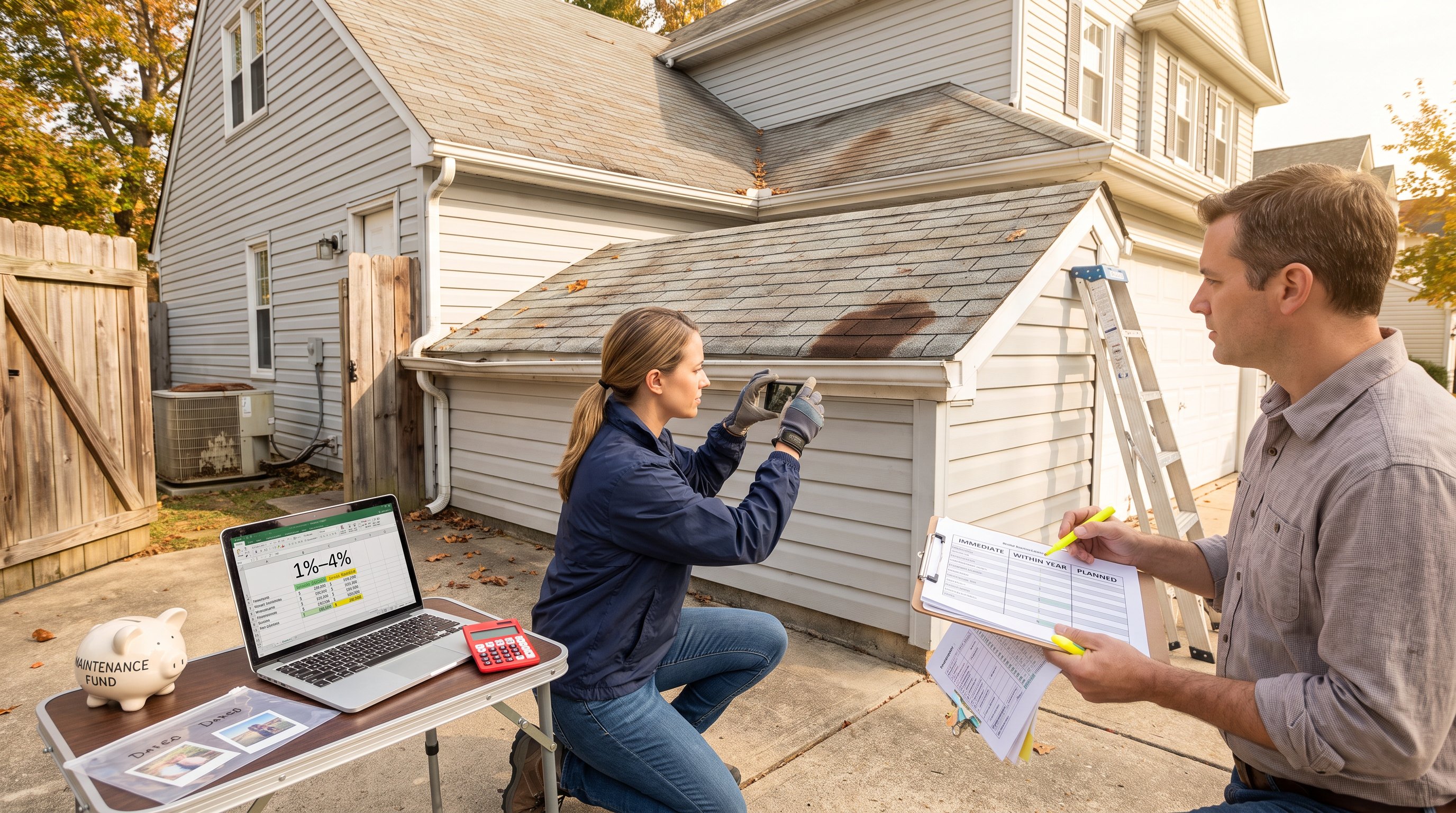
- Set aside 1–4% of your home’s value annually for repairs and maintenance, splitting savings into separate accounts for regular upkeep and emergency repairs.
- Prioritize repairs by safety and damage risk: address urgent issues within 0–3 months, schedule preventive work within the first year, and plan major replacements over 1–5 years.
- Obtain 2–3 contractor quotes for major repairs, add a 10–20% contingency to budgets, and group projects to reduce costs and improve efficiency.
- Save monthly contributions into high-yield accounts to build maintenance and emergency funds, adjusting amounts based on actual repair needs and home condition.
- Track the lifespan of major components like roofs and HVAC systems to forecast replacements, updating budget plans annually to reflect local costs and market conditions.
How To Inspect And Identify Repairs Needed Right After Closing
Answer up front: perform a structured walkthrough in the first week to spot safety, systems, and structural issues before they worsen.
Step-By-Step Walkthrough For A Practical Home Inspection
Start outside. Walk the perimeter with good light and a camera. Look for missing or curling shingles, clogged gutters, pooled water near the foundation, and cracked driveways. Inside, test the HVAC, run hot water to the water heater, flip every light and GFCI, and run every toilet and sink to locate leaks or low pressure. In the attic and basement, smell for must or mold, check insulation depth, and look for sagging rafters or water stains. Document each defect with a photo, date, and short note: this record helps get quotes and prioritize repairs.
Practical detail: if the furnace is older than 15 years or the AC is older than 10–15 years, tag it for an HVAC tune-up or replacement estimate. If a ceiling shows a brown stain, mop up immediate drips and trace the source, roof flashing, a loose vent, or a cracked pipe will leave different clues.
Common Post-Purchase Problems To Flag (Roof, HVAC, Plumbing, Foundation)
Flag these four first: roof, HVAC, plumbing, foundation. A small roof leak can become a structural problem in months. HVAC failures create immediate discomfort in extreme seasons. Plumbing leaks invite mold and rot: corroded supply lines or old polybutylene need early attention. Foundation signs include step cracks, doors that stick, and water in the crawlspace. For roof-specific budgeting and decisions about repair versus replacement, consult the site’s review of roof repair costs for numbers and common contractor expectations.
When in doubt, book a professional inspection focused on the issue, roofers, plumbers, or structural engineers, so quotes rest on facts, not guesses. For a compact checklist homeowners can follow in the first month, reference the article on what to check during a home inspection for itemized steps and sample forms: home inspection checklist.
Set A Realistic Repair Budget: How Much To Reserve And Why
Answer up front: expect to set aside roughly 1–4% of the home’s value annually for repairs and maintenance, adjusted for age and complexity.
Estimating starts with rules of thumb. For a $300,000 house, 1% equals $3,000 per year and 4% equals $12,000. Newer, well-built homes trend toward the lower end: older homes or properties with extensive landscaping or specialized systems push higher. Another quick method is $1–$4 per square foot per year for routine upkeep. These numbers are practical, not exact: they guide monthly savings targets.
To validate estimates against broader homeowner data, brief guidance from industry resources explains typical budgeting approaches and common line items. A homeowner who wants a verified baseline can refer to national maintenance guidance which outlines typical reserve amounts and rationales: home maintenance budgeting.
Practical example: a 2,000 sq ft older home might use $2,000–$8,000 per year. The owner should split that into two accounts: regular maintenance and a short-term repair fund. That separation protects the emergency reserve from routine bills and prevents tapping credit for expected upkeep.
Prioritize Repairs And Create A Phased Action Plan
Answer up front: prioritize life-safety and active-damage items first, then preventive work, then cosmetic projects.
Phase 1 (0–3 months): address any electrical hazards, active leaks, structural concerns, and failing HVAC in extreme climates. These items have immediate consequences. Example: replacing a cracked water line that leaks into the crawlspace protects against mold that could cost five figures to remediate later.
Phase 2 (3–12 months): schedule preventive fixes like roof patching, gutter cleaning with downspout extensions, HVAC servicing, and replacing old plumbing sections. Preventive work reduces the chance of urgent breakdowns and typically costs a fraction of emergency repairs. For instance, a $400 annual HVAC tune-up can help avoid a $5,000 compressor replacement in peak summer.
Phase 3 (1–5 years): plan major replacements, roof replacement, full HVAC swap, kitchen remodels, when funds are available or when efficiency gains justify the expense.
Practical tip: create a three-column spreadsheet labeled “Immediate,” “Within Year,” and “Planned” and attach photos and quotes to each row. Use the spreadsheet when comparing 2–3 contractor bids to spot outliers and hidden costs. If a repair overlaps categories (for example, a roof that causes interior stains), move it up the priority ladder until the root cause is fixed.
For basic skills and DIY items homeowners often handle themselves, see the intro guide on everyday repairs to know what to tackle and when to call a pro: home repairs guide.
Fund Repairs And Build An Ongoing Maintenance Reserve
Answer up front: save monthly into two liquid accounts, a maintenance fund (1–4% of value per year) and an emergency reserve ($5k–$15k) for urgent failures.
Set concrete targets. On a $350,000 home, 1% equals $3,500 per year or about $292 per month. A homeowner could auto-transfer $150 to maintenance and $150 to emergency until the emergency fund hits $10,000. Keep both accounts in high-yield savings for liquidity and slight inflation protection.
When funds fall short, options exist: use a 0% introductory credit card for planned projects with a repayment schedule, consider same-day repair loans for urgent fixes, or tap renovation financing. For homeowners with rough credit, the site covers tailored financing options that explain how to access loans without ideal credit: repair loans for bad credit. Use loans sparingly and only when the replacement prevents greater cost: a failed roof in winter is a valid emergency.
Honest assessment: many new owners underestimate monthly savings. An owner who saved only $50 per month would reach $600 a year, helpful for small jobs but insufficient for a $7,000 HVAC replacement. Adjust the monthly contribution after the first year based on actual repair spending and home condition.
Include a 10–20% contingency in any contractor quote budget to cover hidden issues discovered once work begins. Getting 2–3 quotes before committing prevents sticker shock and identifies realistic timelines.
Estimating Costs, Adding Contingency, And Setting A Timeline
Answer up front: collect 2–3 quotes, add 10–20% contingency, and sequence work into immediate, near-term, and long-term windows.
Collecting quotes is a diagnostic step. For a suspected roof replacement, get at least three independent roofing bids that detail materials, labor, and timeline. Ask each contractor for a written scope and warranty. For foundation or major plumbing work, request an engineer’s report or camera inspection so quotes reflect actual conditions.
On contingency: set aside at least 10% for moderate jobs and closer to 20% for projects that uncover hidden conditions (historic homes, older plumbing, or layered roofing). Timelines vary: safety items in days to weeks: preventive projects in weeks to months: large replacements scheduled seasonally, roofing and HVAC swaps often happen in spring or fall when contractors are available and prices are steadier. For a fuller overview, see the pillar guide.
A homeowner example: a leaking roof that reveals rotten decking might increase a $6,000 quote to $8,200 after decking replacement and flashing repairs. The contingency absorbed that gap without needing emergency credit.
Prioritize Repairs And Create A Phased Action Plan (continued)
Answer up front: combine priority with budget reality, balance immediate safety with financial limits by grouping projects logically.
Group projects that use the same contractor to save on mobilization costs. For example, pair gutter replacement with roof flashing repairs. Bundle minor plumbing work while the plumber is already on site. This reduces the overall hourly and travel markup and speeds completion.
Record lessons learned. One homeowner found that delaying a $600 gutter overhaul led to a $4,200 basement pump and drywall job after an autumn storm, the expensive lesson underlines the value of preventive spending. Keep a running log of such outcomes and adjust the reserve target upward if the house proves finicky.
For financing comparisons and timing options that match specific homeowner scenarios, the site article on same-day loans discusses when loans make sense and how to evaluate rates and fees: same-day repair loans.
Estimating Costs, Adding Contingency, And Setting A Timeline (continued)
Answer up front: plan major replacements on a multi-year timeline and re-evaluate reserve targets annually.
Major items, roof, HVAC, siding, have predictable lifespans. Track ages and set replacement windows: roof (20–30 years), furnace (15–20 years), AC compressors (10–15 years). Update the maintenance schedule yearly and push larger savings toward the next expected replacement.
Practical tool: maintain a simple life-cycle table with item, install year, expected life, and replacement year. Update costs with local contractor pricing every two years so the reserve reflects real market rates. For homeowners building an overall ownership budget, the site’s article on the true monthly cost of ownership helps integrate taxes, insurance, and reserves into a complete cash-flow picture: monthly ownership costs.