 Mylarith Qynthoril
Blank walls make a house feel unfinished, but a quick look at framed art prices is enough to make most people leave them blank a little longer. And there’s the other worry: cheap art that actually looks cheap. The good news is that choosing wall art on a budget is less about how much you spend and more about where you spend it. Get a few decisions right, and a modest budget can look surprisingly polished.
1. Start With the Wall, Not the Art
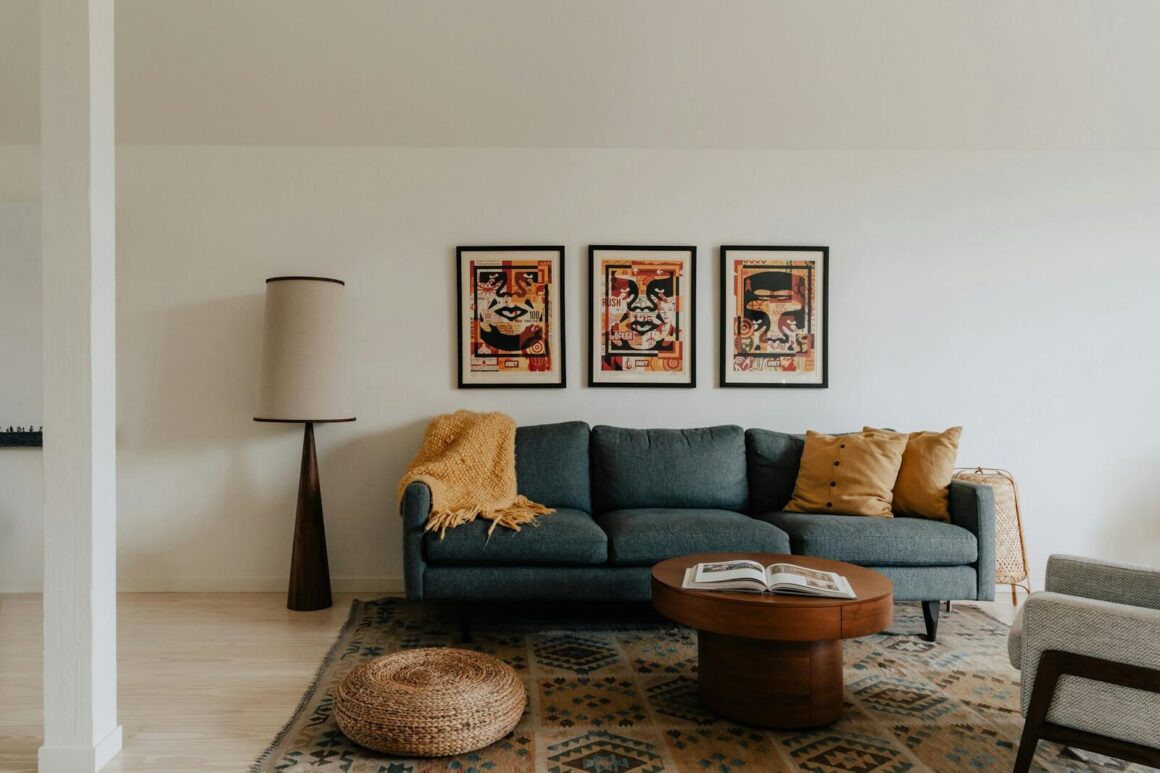 Image: Clay Banks / Unsplash
Three framed prints hung in a row above a sofa in a bright living room Image: Clay Banks / Unsplash
The most expensive mistake on a budget isn’t overpaying. It’s buying the wrong size and having to buy again. A print that looked great online can end up floating like a postage stamp on a big wall.
So before you browse anything, measure. A simple rule works for most rooms: art hung above furniture should cover about two-thirds of the furniture’s width. For an 84-inch sofa, that’s roughly 56 inches of art, either as one piece or as a group with small gaps between them.
Here’s what to measure before you shop:
- The width of the wall itself, plus any furniture the art will sit above.
- The height from the top of the furniture to the ceiling.
- Windows, doors, light switches, and outlets that limit placement.
- How far back you’ll usually be standing or sitting when you look at it.
One right-sized piece almost always looks more expensive than five small ones scattered around. If you’re unsure, cut kraft paper to the size you’re considering and tape it to the wall for a day. You’ll know quickly whether it works.
2. Set a Realistic Budget and Know What It Buys
A budget only helps if you know what it actually gets you. Prices vary wildly, but most wall art falls into a few rough tiers:
Under $50 gets you printables you download and print yourself, unframed posters, and small prints. This tier works best for small spaces, kids’ rooms, and gallery walls where no single piece needs to carry the room.
Between $50 and $200 is where things get interesting. This is the range for ready-to-hang canvas, open-edition prints in medium and large sizes, and decor-focused art shops. Here, your money usually goes further in size and finish than in exclusivity. A store like Crib of Art is a good example of what this tier looks like in practice, with a catalog of more than 2,400 designs, sale prices that often start under $60, free US shipping, and a five-year color guarantee. At this level, you’re paying for a big, finished piece that’s ready to hang rather than a name on the back.
Between $200 and $600, you start seeing limited editions, larger statement pieces, and work from emerging artists. It’s worth it for the one wall everyone sees, but rarely for every room.
If you want something different from canvas and paper, Displate’s metal posters mount with magnets instead of nails, which makes them a renter-friendly option for swapping art without patching holes.
The smartest budgets aren’t spread evenly. Spend more on one anchor piece for your main room, then fill the rest with cheaper finds.
3. Pick a Style That Already Matches Your Room
On a budget, you can’t afford art that fights the rest of the room. The easiest way to avoid that is to let the room choose for you.
Start with colors you already own. Pull two or three shades from a rug, throw pillows, curtains, or even a favorite mug, and look for art that repeats them. When colors echo across a room, even an inexpensive print looks like it was chosen on purpose.
Next, consider the overall feel. A farmhouse living room suits botanicals, landscapes, and soft neutrals. Modern spaces handle bold abstracts and black-and-white photography. Boho rooms can take texture, warm earth tones, and a mix of eras.
You don’t have to stick to one style forever, though. Plenty of beautiful rooms blend vintage and modern pieces, and these tips for mixing and matching home decor apply just as well to walls as they do to furniture. The trick is keeping one thread running through everything, whether that’s a color palette, a frame finish, or a subject.
4. Watch Out for the Framing Trap
 Image: Jonny Caspari / Unsplash
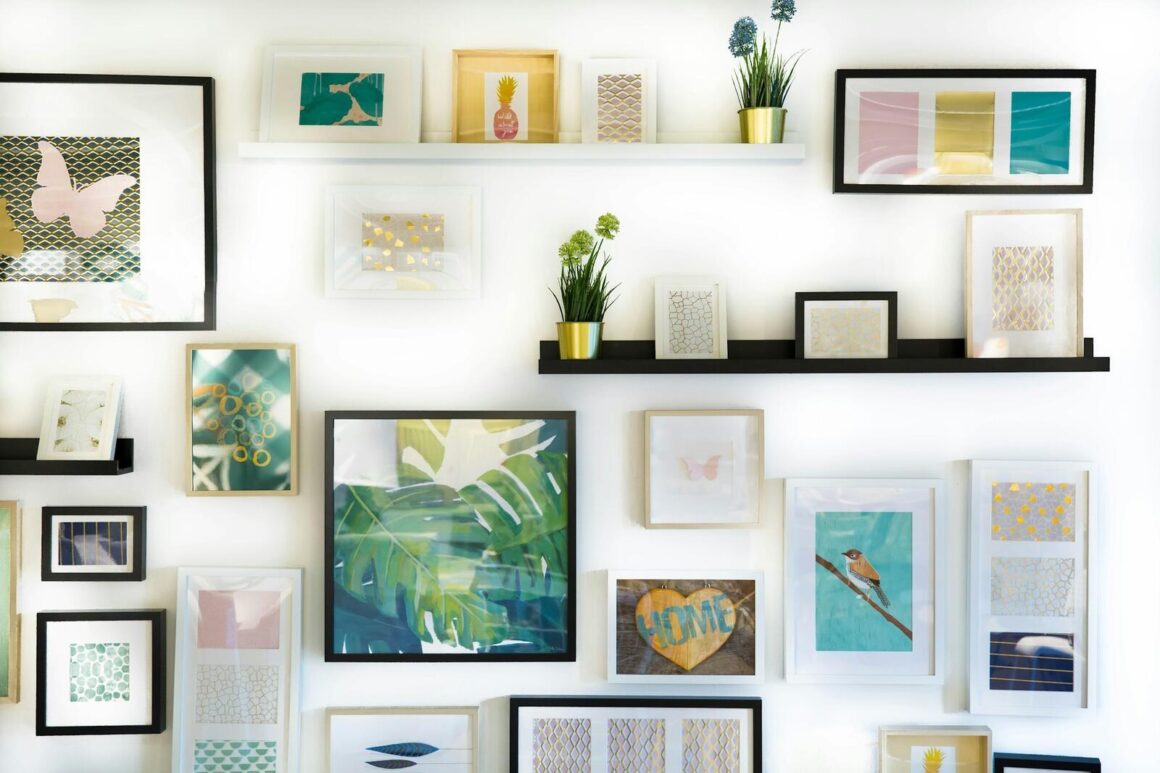
Wall of mixed framed prints and small artworks on picture ledges Image: Jonny Caspari / Unsplash
Here’s the part that catches most people off guard. You find a print you love for $40, take it to a frame shop, and walk out having spent several times that on framing. Custom framing is a craft, and it’s priced like one. That’s great for an heirloom, but it can wreck a decor budget fast.
A few ways around it:
- Buy standard sizes. Prints sized 8×10, 11×14, 16×20, 18×24, or 24×36 fit ready-made frames from big-box stores.
- Choose canvas. Stretched canvas hangs as-is, so there’s no frame to buy at all.
- Shop thrift stores and yard sales for frames, not art. Swap out the old picture and give the frame a coat of spray paint.
- Use a mat to bridge the gap. A larger frame with a mat makes a small print look more substantial and more “gallery.”
- Keep frame finishes consistent. Matching black, white, or natural wood frames make a mix of cheap prints look like a planned collection.
If a piece is special enough to justify custom framing, save that spend for one or two items and go ready-made for the rest.
5. Use Free and DIY Art Smartly
Some of the best budget art costs almost nothing. Many major museums now offer free, high-resolution downloads of public-domain works. The Met’s image and data resources let you browse and download hundreds of thousands of open-access images, from Dutch still lifes to Japanese woodblock prints. Take a file to a local print shop, have it printed on matte paper, and pop it in a ready-made frame for a classic look at a fraction of gallery prices.
Digital printables are another option. Marketplaces like Etsy’s digital prints section are full of independent designers selling downloadable files for a few dollars. Check the file resolution before buying, since a file made for an 8×10 won’t look sharp blown up to 24×36.
Then there’s making it yourself. Large abstract canvases are surprisingly forgiving for beginners, and pressed botanicals, fabric panels, or framed vintage maps all count as art. If you’d like some structure, paint by numbers themes for a cozy home have come a long way, and a finished canvas in a floating frame looks far more expensive than the kit cost.
6. Spend Where People Actually Look
Not every wall deserves the same budget. Think about where you and your guests actually spend time and where eyes naturally land.
The living room usually comes first. The wall behind the sofa or across from the main seating is the one everyone sees, so it’s the best place for your anchor piece. The entryway is a close second, since it sets the tone the moment someone walks in.
Bedrooms come next. A calm piece above the bed makes the room feel finished and restful, but nobody needs museum-grade art they mostly see with the lights off. Mid-range prints or personal photos work perfectly here.
Hallways, bathrooms, and laundry rooms can wait, or they can become the place where your cheapest finds live. A row of thrifted frames along a hallway can look charming in a way that would feel off in the main living space.
7. Check the Fine Print Before You Buy
Budget art is only a bargain if it arrives in good shape and lasts. A few minutes reading the details before checkout can save a lot of frustration.
Before you buy, look for:
- A clear return policy. Thirty days is common, but some sellers don’t accept returns on custom or made-to-order pieces.
- Shipping costs. Large pieces can carry heavy shipping fees that wipe out a sale price.
- Print specifications. Good sellers list the paper or canvas type, ink type, and frame depth rather than hiding them.
- Fade or color guarantees. These suggest the seller trusts its inks to last.
- Real customer photos. Product images are styled, so reviews with photos give you a much better sense of color and scale.
- Hardware. Check whether hanging hardware comes attached or if you’ll need to buy it separately.
8. Hang and Light It So Cheap Looks Expensive
 Image: Bilal Mansuri / Unsplash
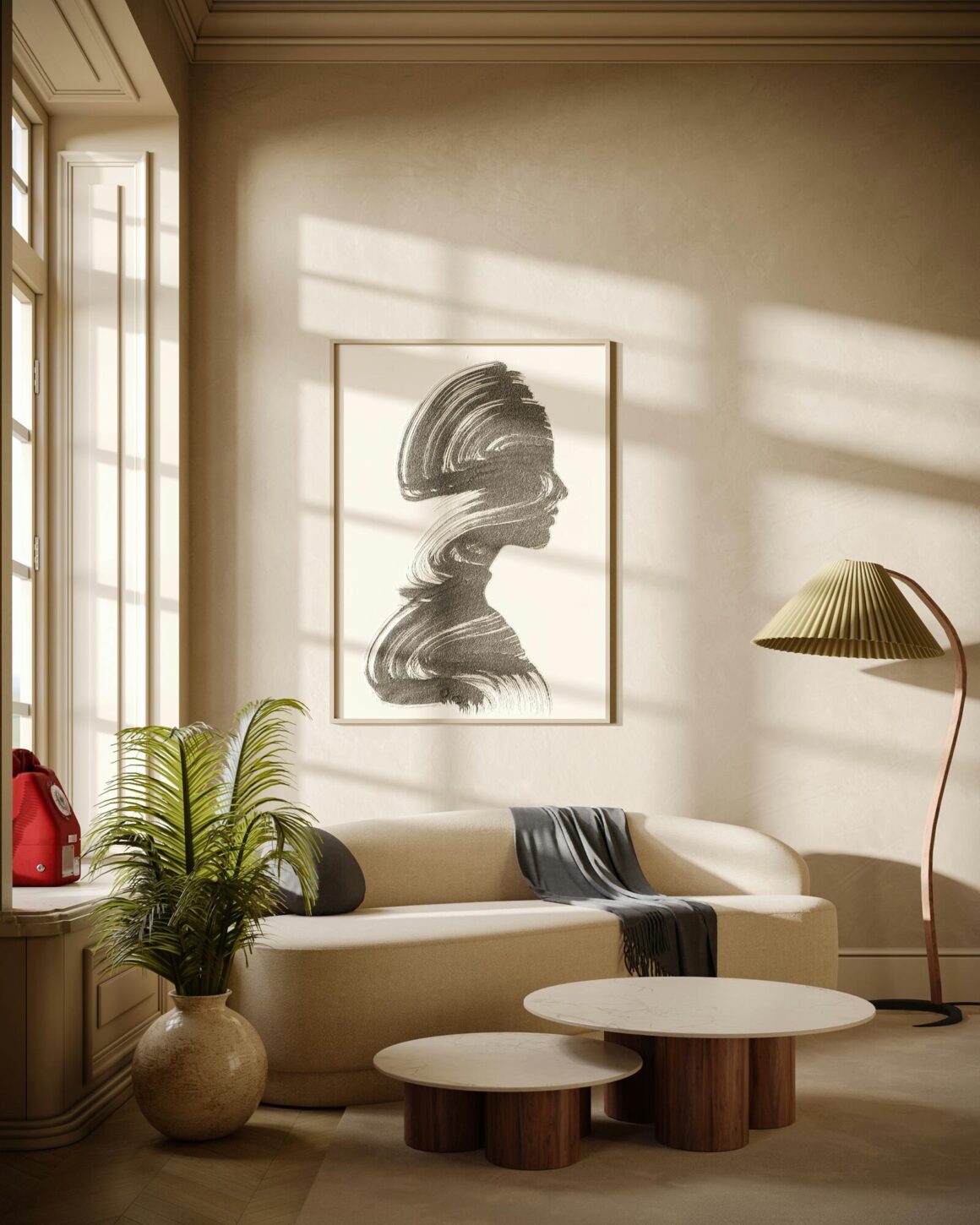
Sunlit living room with a large artwork on a warm neutral wall Image: Bilal Mansuri / Unsplash
How art is hung does as much for its look as the art itself. Most designers aim for the center of a piece to sit around 57 to 60 inches from the floor. Above furniture, leave about 8 to 10 inches between the top of the sofa or headboard and the bottom of the art.
Larger pieces need proper support. A stud is ideal, but when one isn’t in the right spot, the right anchor makes all the difference. This Old House has a solid walkthrough on how to hang something heavy that covers anchors, toggle bolts, and finding studs, which is worth reading before you put a big canvas over a bed.
Placement affects how long your art lasts, too. Sunlight slowly fades inks and paper, and the effect builds up over time. According to the Northeast Document Conservation Center’s guidance on protection from light damage, light damage is cumulative and can’t be reversed, so a wall across from a south-facing window is a risky spot for anything you want to keep.
Finally, think about lighting. A warm lamp angled toward a piece, or a simple plug-in picture light, instantly makes even a modest print feel like it belongs in a gallery.
Frequently Asked Questions
How much should I spend on wall art?
There’s no fixed number, but a good approach is spending more on one anchor piece for your main room and less everywhere else. Many people find that $100 to $300 covers a strong statement piece, while $20 to $80 per piece works for gallery walls and secondary rooms. Set a total budget first, then divide it by priority.
Does cheap wall art look cheap?
Not if it’s the right size, framed consistently, and hung well. Most “cheap-looking” art problems come from pieces that are too small, poorly framed, or hung too high. Fix those three things, and inexpensive art can look surprisingly polished.
Is canvas or framed art better on a budget?
Canvas is often the better value because it doesn’t need a frame. Framed prints can look more refined, but custom framing quickly adds up. If you love framed art, stick to standard print sizes that fit ready-made frames.
What size art should go above a sofa?
Aim for art that covers about two-thirds of the sofa’s width. For a standard 84-inch sofa, that’s roughly 56 inches, either as one piece or a grouping. Hang it 8 to 10 inches above the sofa back.
Are posters okay for grown-up spaces?
Yes, as long as they’re presented well. A poster in a proper frame with a mat looks completely different from one taped to the wall. Choose quality paper and a consistent frame finish, and posters can easily hold their own in a living room.
Can I mix different art styles in one room?
You can, and it often makes a room feel more personal. Keep something consistent, such as a color palette, frame finish, or subject, so the mix looks intentional. Grouping pieces together on one wall also helps different styles feel connected.
Are printable art downloads worth it?
They can be, especially for small spaces and gallery walls. The key is buying high-resolution files and printing on good paper at a local print shop. Low-resolution files will look blurry if printed too large.
Where can I find free wall art?
Museum open-access collections are one of the best sources, offering free downloads of public-domain paintings, prints, and photographs. Personal photos, children’s artwork, vintage maps, and pressed botanicals are other free options. Framing is usually the only real cost.
How do I keep budget art from fading?
Keep it out of direct sunlight and away from heat sources like radiators. Choosing sellers who use fade-resistant inks or offer color guarantees also helps. Rotating pieces every year or two spreads out light exposure.
Which room should I decorate first?
Start with the living room or whichever space you and your guests use most. The entryway is a good second choice because it shapes first impressions. Bedrooms, hallways, and bathrooms can follow as your budget allows.
Final Thoughts
Choosing wall art on a budget comes down to a handful of smart decisions rather than a big spend. Measure first, spend more on the walls that matter most, avoid expensive custom framing when you can, and hang everything at the right height with decent light. Do that, and a room full of affordable pieces can look like it was put together by someone with a much bigger budget.