 Mylarith Qynthoril
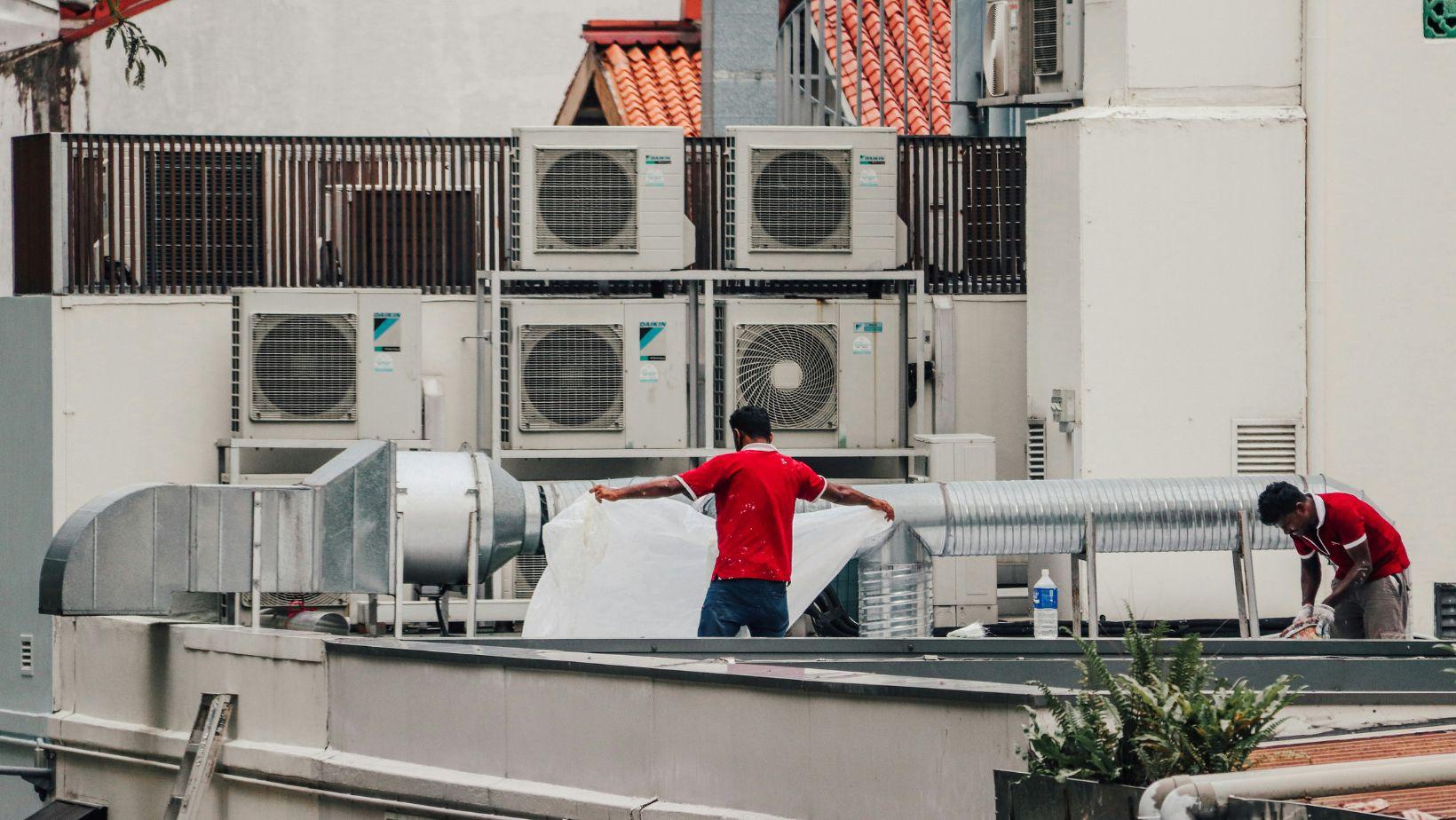
If you’ve ever driven down Broadway or Pearland Parkway, you must have seen squat metal boxes sitting on the roof of most strip centers, restaurants, and small offices. Those are rooftop AC units. They cool the building the same way your home system cools your house.
The difference is that everything lives in one cabinet up top instead of being split between an indoor closet and an outdoor slab. Let’s explore what rooftop AC units are and what makes them distinctive.
What Is a Rooftop AC Unit?
A rooftop AC unit is a packaged system, meaning the whole thing is built into a single cabinet. The compressor, condenser coil, evaporator coil, and blower all sit inside one weatherproof box. Conditioned air drops straight down through the roof into the ductwork below.
There is no outdoor condenser on a slab and no indoor air handler in a closet. Most homes use a split system instead, with the parts divided between the inside and the outside. Both move heat the same way, and only the packaging changes.
Why Small Buildings in Pearland Use Rooftop AC Units
Commercial buildings choose rooftop equipment for practical reasons. Some of them include:
- Floor space earns money:A mechanical room inside a retail suite is square footage nobody pays rent on.
- Service does not disrupt business: Technicians work above the ceiling instead of through the dining room during lunch.
- Systems scale in modules: Adding a tenant means adding a unit, not resizing the whole building.
- Each suite controls its own comfort: Separate units mean separate thermostats and separate bills.
- Equipment stays out of reach: Nothing on the roof gets bumped by carts, damaged by customers, or stolen overnight.
How Gulf Coast Weather Affects Rooftop HVAC Systems
Rooftop equipment works harder in Gulf Coast areas than anywhere else in the country. That’s because this region has around eight to 10 months of hot and warm weather, which can stretch to the entire year.
Humidity adds to the load. A unit here spends real energy pulling moisture out of the air, not just lowering the temperature, which means longer run times and more condensate to drain. A rooftop unit also sits in full sun, heavy rain, and coastal air with no shielding, so it weathers faster than most owners expect.
When Homeowners Need Commercial AC Service
Many homeowners deal with rooftop equipment issues. For instance, they might buy a small mixed-use or live-work property or own a rental in a converted commercial building. Or they might run a business and suddenly find themselves responsible for a house system and a building system at the same time.
Commercial work is a separate service category with distinct expectations regarding response times and scheduling. This is why homeowners contact experts, such as the Clear the Air commercial AC team, to deal with the situation professionally.
Common Rooftop AC Unit Problems
Most rooftop failures result from several causes. Clogged condensate drains top the list, especially given how much moisture these units pull in a humid climate. On the other hand, roof curbs and flashing degrade over time, allowing water to reach places it should not.
Sun exposure also cracks belts, dries out wiring insulation, and fades cabinet seals faster than it does on shaded equipment. The bigger issue is timing. Nobody walks past a rooftop unit, so small problems go unnoticed until the building stops cooling.
Endnote
Rooftop units work on the same cooling process as any HVAC system. It’s just put in a different box on the roof because that is where it makes the most sense for a working building. The care it needs is no different either. Look at it on a schedule rather than on the hottest day of the year, and it will last the way it was built to.